dsh-memory
Run the following command in DeepSeek Harness:
dsh plugin install chenhw7/dsh-memory
Paste the following prompt into your AI chat to install this plugin:
Run dsh plugin install chenhw7/dsh-memory in DeepSeek Harness to install; see the source at https://github.com/chenhw7/dsh-memory
About this plugin
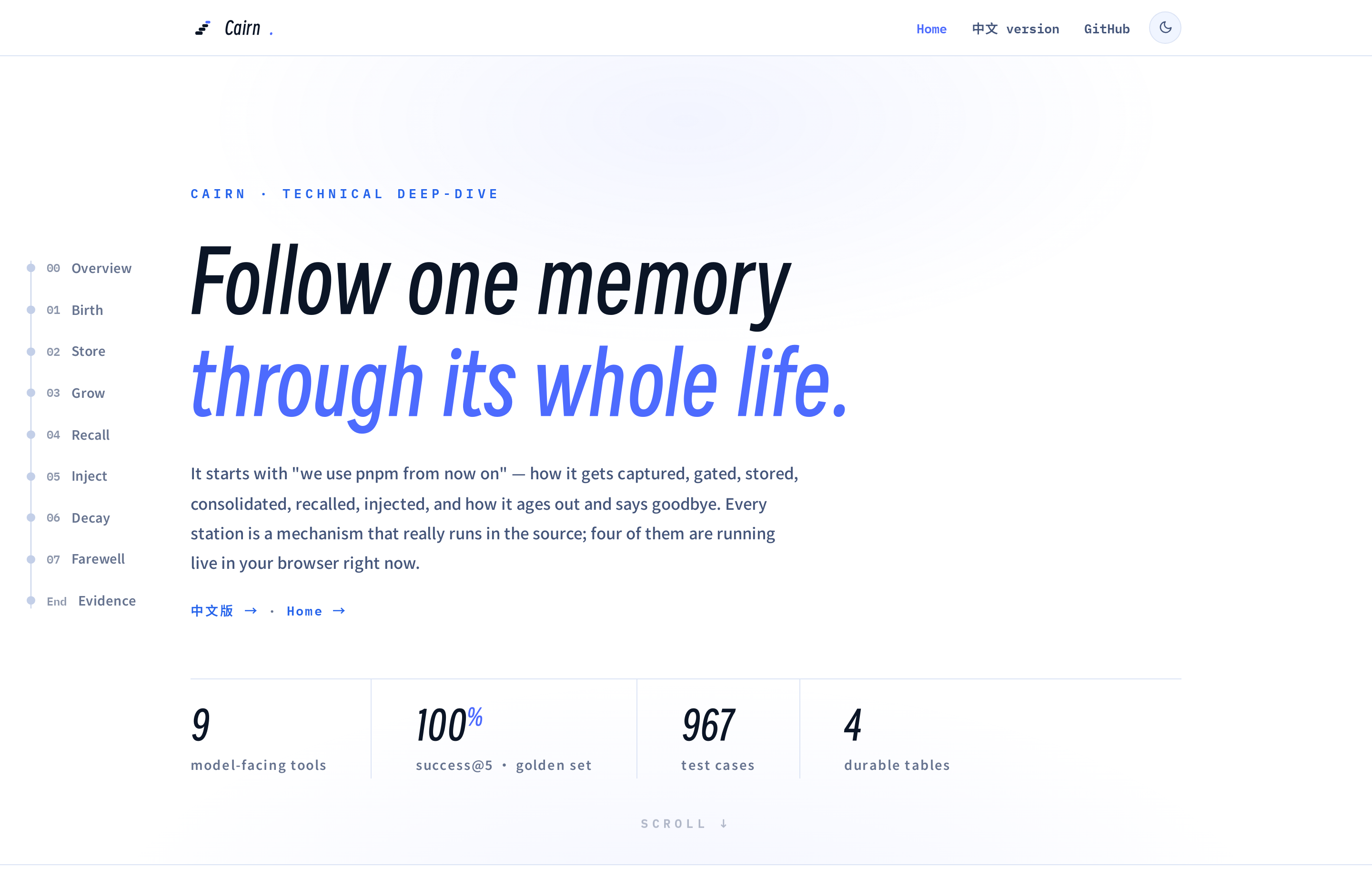
Every time you close a session, the DeepSeek Harness agent forgets the facts, preferences, and hard-won lessons it gathered along the way, forcing you to re-explain context from scratch. Cairn (@chenhw7/dsh-memory) persists what matters into a local KV store and re-injects it in subsequent sessions, giving the agent genuine long-term memory that survives across sessions and restarts.\n\nUnder the hood it offers CJK-aware BM25 relevance search, three-layer scoping (global, project, user), nine model-facing memory tools, an automatic learning pipeline that captures remember-intents, corrections, and verified failure-recovery patterns from live conversation, write- and load-time security scanning that blocks API keys and prompt-injection attempts, a pin / soft-decay lifecycle, and an optional human-review queue before anything is written. All settings are exposed through four live-apply cards in the Settings UI.\n\nIt is built for developers and teams who collaborate across projects over time and do not want to re-explain coding preferences and pitfalls every session, as well as for anyone who wants a structured memory layer in their agent workflow while keeping all data fully local and under their control.
Screenshots
Use Cases
- Retain coding preferences, project conventions, and pitfall logs across sessions without re-explaining
- Automatically learn fix patterns and failure-recovery lessons from conversation into searchable entries
- Share global preferences across projects while keeping per-repo context isolated
Best For
- Individual developers using DSH for day-to-day coding
- Engineering teams collaborating across repos with shared coding conventions
- Users who want a structured agent memory layer with fully local data control
Related Plugins

Memory layer for coding agents that indexes local session history and auto-recalls relevant context before edits, commands, and failures, with no manual search needed.
Traceable, searchable cross-session memory for AI agents that turns conversation knowledge into a typed knowledge graph and recalls relevant subgraphs instead of replaying full history, natively integrated with DeepSeek Harness.
Gives DSH AI cross-session long-term memory, to-do and skill management, plus multi-session orchestration, external AI delegation, and an infinite canvas that grows with you.
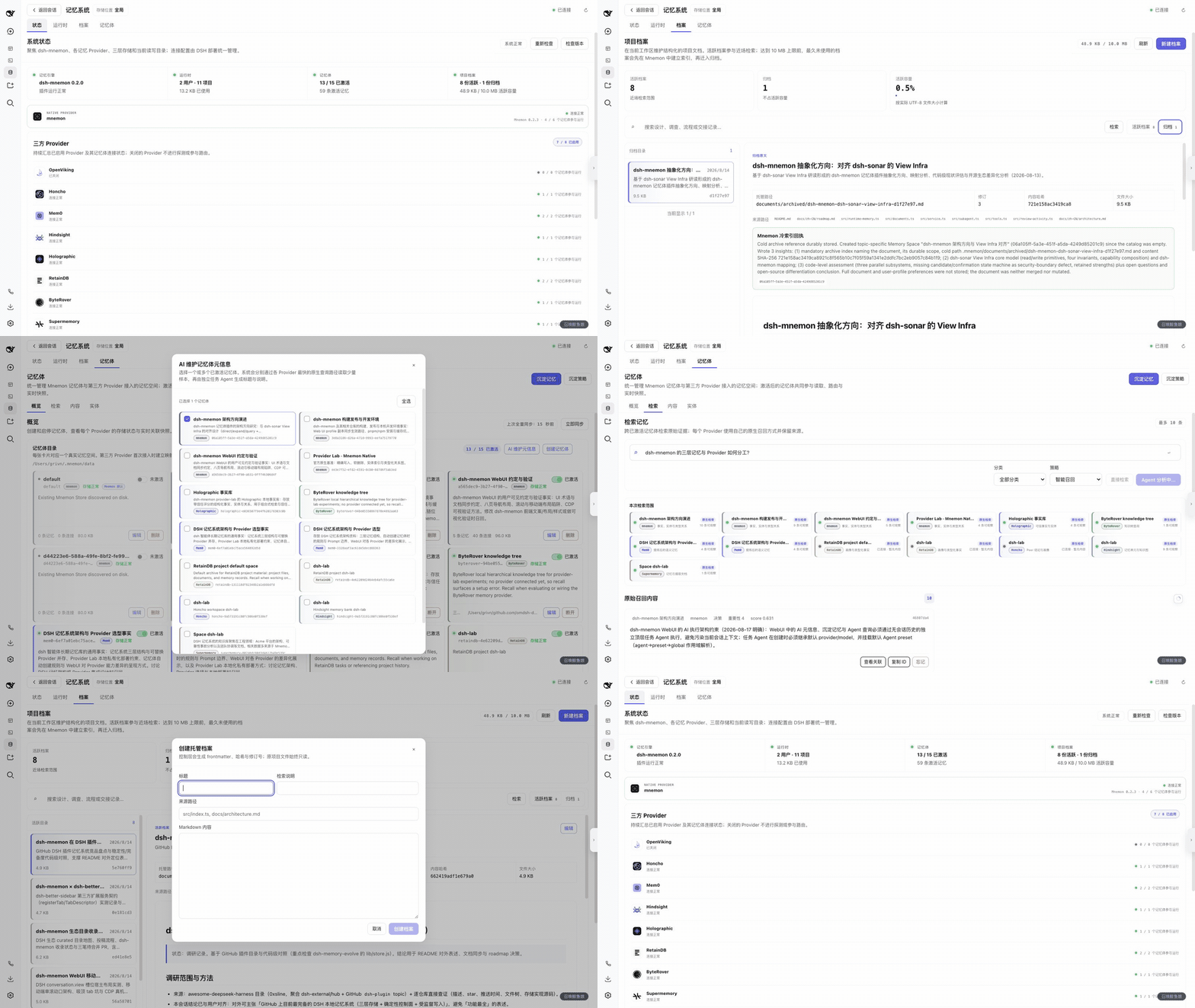
dsh-mnemon is a three-tier, pluggable, Agent-driven memory system for DeepSeek Harness, combining Runtime memory, Project Documents, and replaceable Memory Spaces with nine long-term providers.