dsh-llm-qwen-local
Run the following command in DeepSeek Harness:
dsh plugin install starefinger/dsh-llm-qwen-local
Paste the following prompt into your AI chat to install this plugin:
Run dsh plugin install starefinger/dsh-llm-qwen-local in your terminal to install the plugin; the full source code is available at https://github.com/starefinger/dsh-llm-qwen-local .
About this plugin
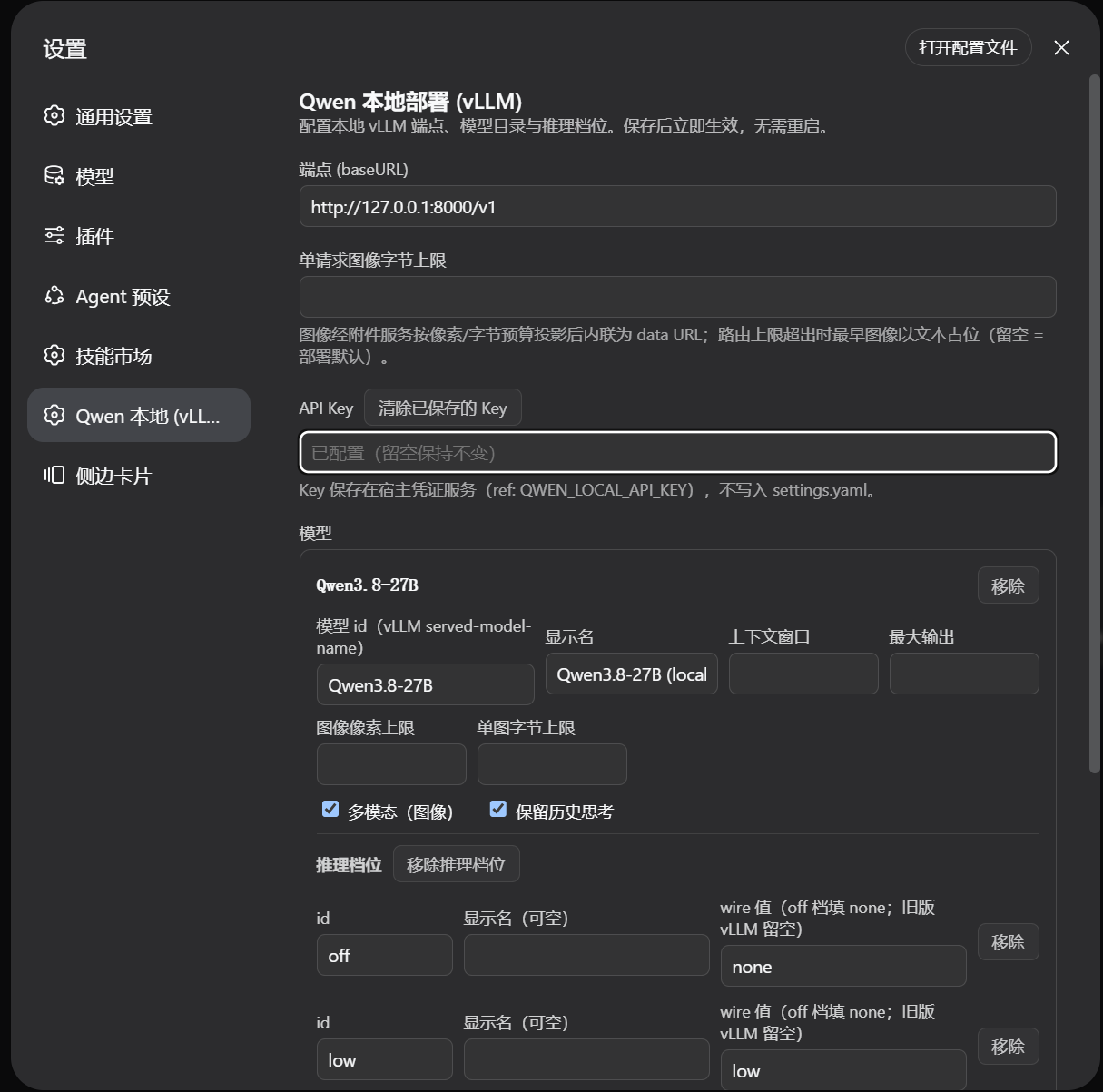
You have a locally deployed Qwen3.8-27B served by vLLM and want to plug it into DeepSeek Harness for unified CLI and Web UI workflows, but the native DSH adapters do not cover the Qwen lineup. dsh-llm-qwen-local fills that gap: it translates DSH requests into the OpenAI-compatible /v1/chat/completions endpoint behind your vLLM instance, so you can use your local Qwen model as naturally as a managed one.
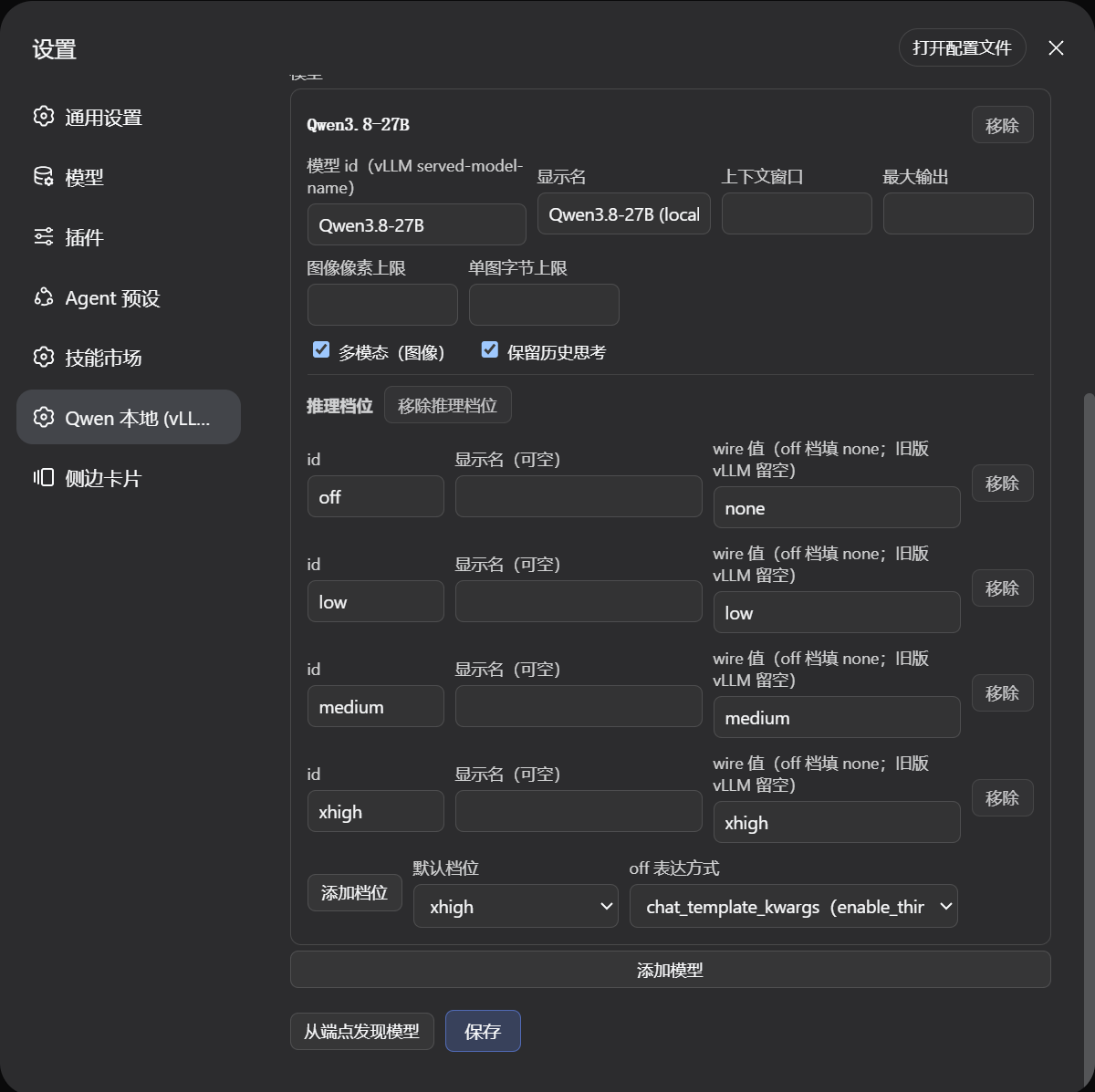
Two deployment-specific differences are treated as first-class configuration. A per-model multimodal switch honestly declares whether the endpoint serves vision reasoning, preventing silent image-to-placeholder degradation or mid-turn failures after an image message is persisted. Every reasoning-effort level, including its display name, wire spelling, default value, and how the off state is represented, is fully configurable, matching whatever vocabulary your vLLM build accepts without touching code.
Built for developers who already run Qwen models (especially the Qwen3.8-27B class) on vLLM in a local or intranet environment and want to fold them into the DeepSeek Harness workflow for daily development, tool calling, and multimodal understanding. No public-cloud API key, no DashScope or Qwen Cloud required, just a vLLM instance and DSH 0.1.1-rc.2 or newer.
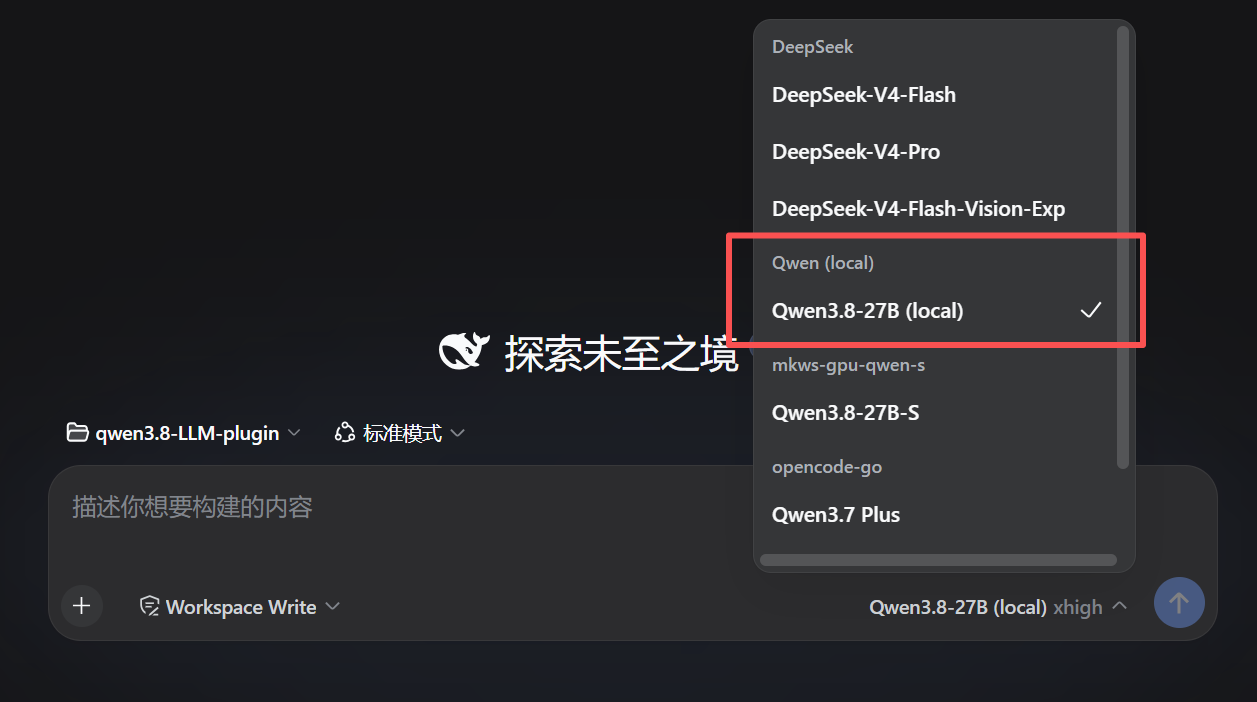
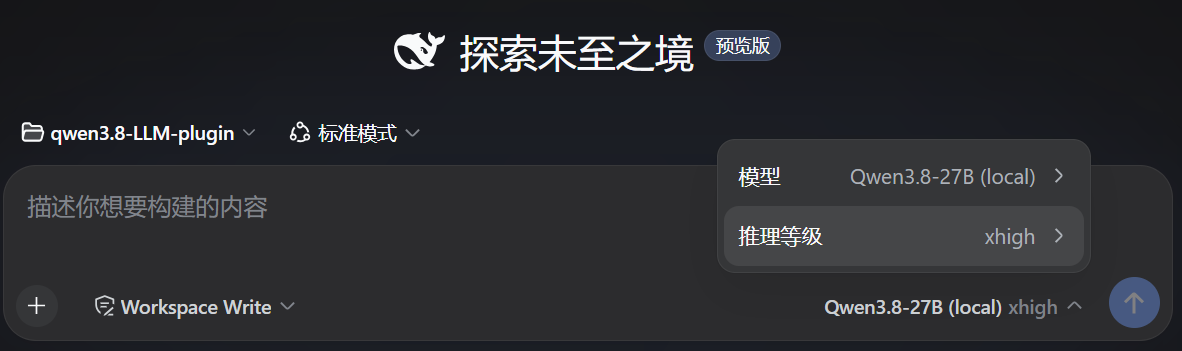
Screenshots
Use Cases
- Plug a locally vLLM-served Qwen model into the DSH unified CLI and Web UI workflow
- Control multimodal vision reasoning per model via the first-class multimodal switch
- Map reasoning-effort levels to the exact wire vocabulary your vLLM build accepts
Best For
- Developers running Qwen models on vLLM in local or intranet environments
- Users who want self-hosted models folded into the DeepSeek Harness unified workflow
- Independent developers needing multimodal understanding or tool-calling scenarios
Related Plugins
A unified suite combining hot runtime injection, task-aware thinking-mode routing, and a graded session protocol with red-team gates to sustain model diligence across long-horizon inference.
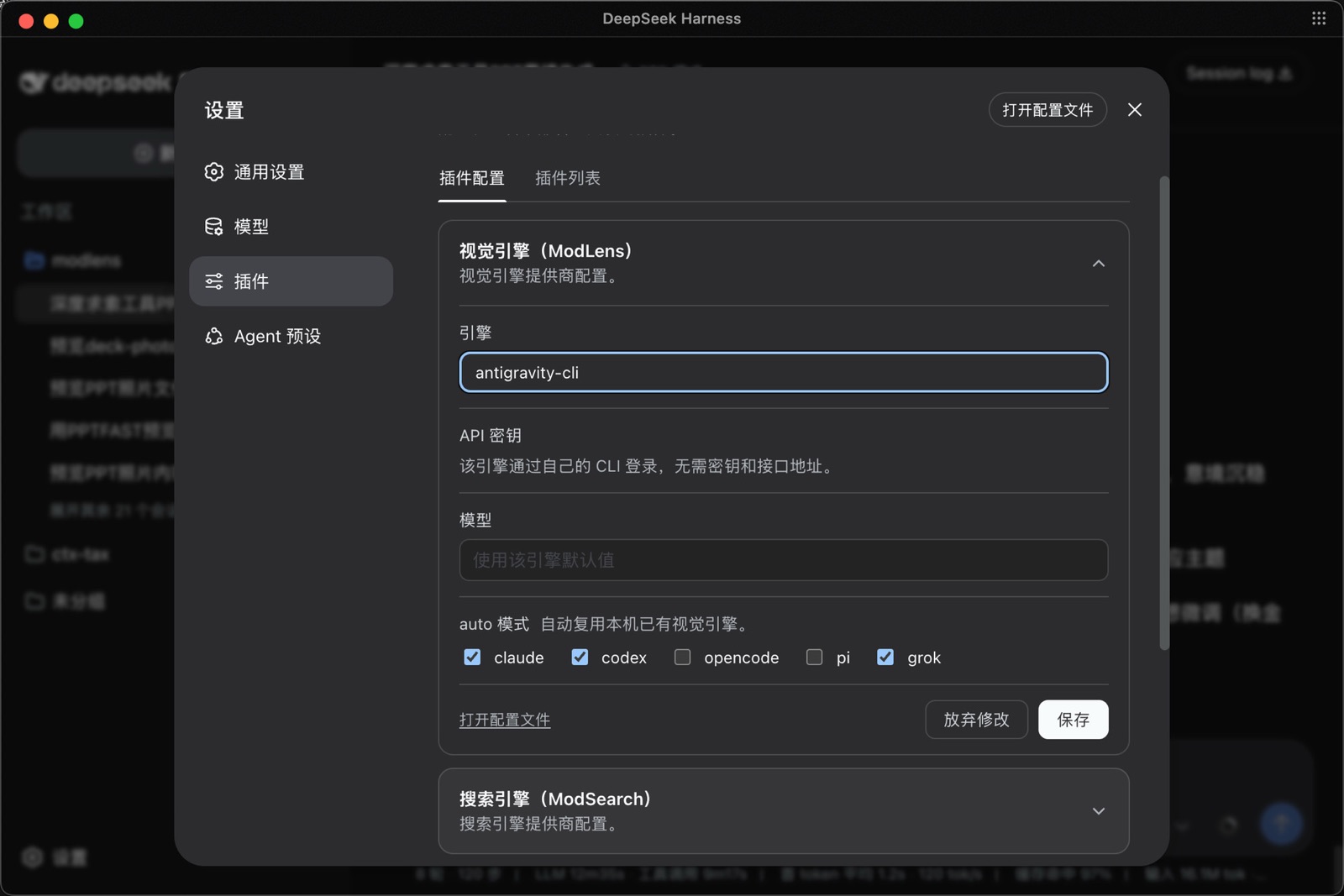
ModLens is a vision plugin for DeepSeek Harness that gives text-only models sight by reading images pasted directly into chat, with zero-config setup and multiple vision engines.
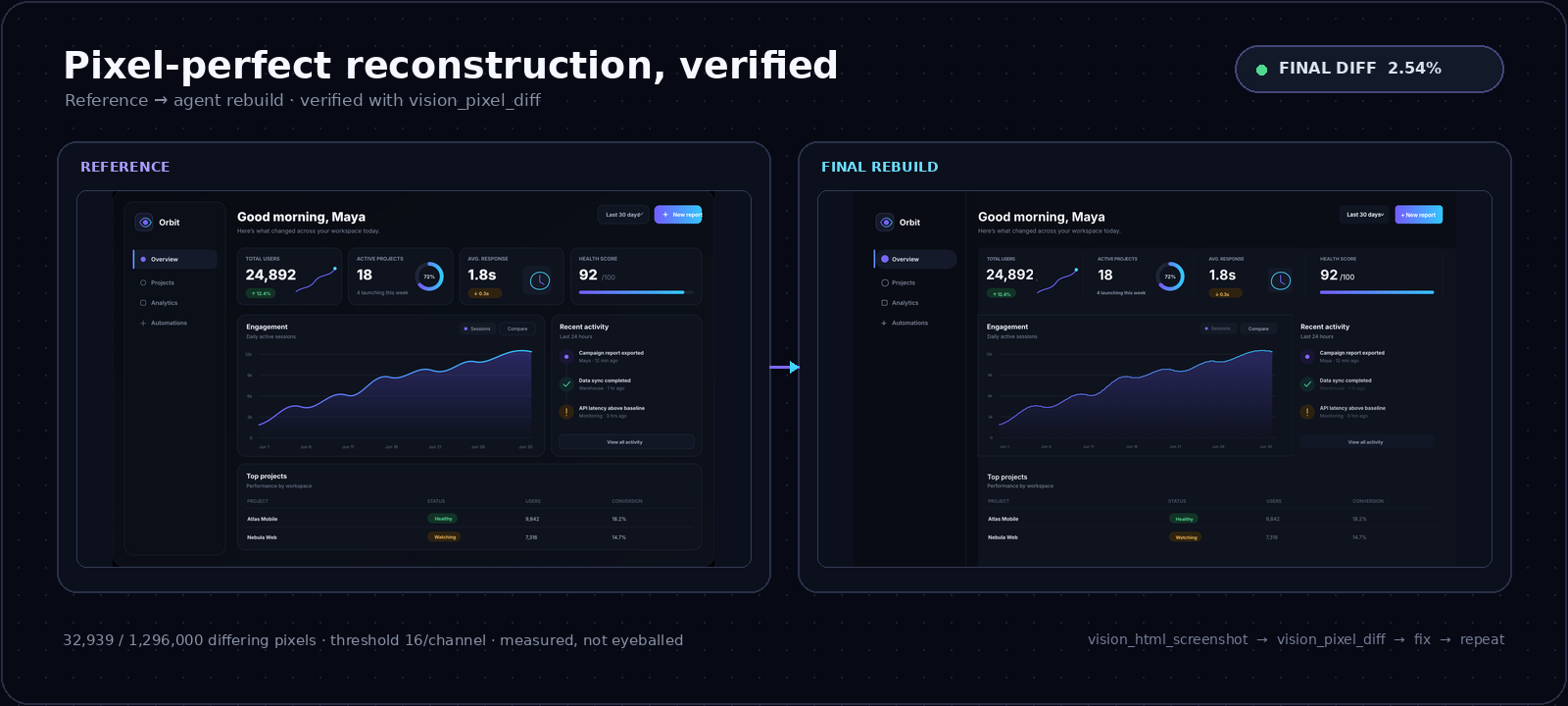
On-demand vision for text-only DeepSeek Harness agents: built-in free keyless vision chain and 14 vision tools, routing image turns as tool calls to vision models with pixel fidelity, no Python needed, one-command install.
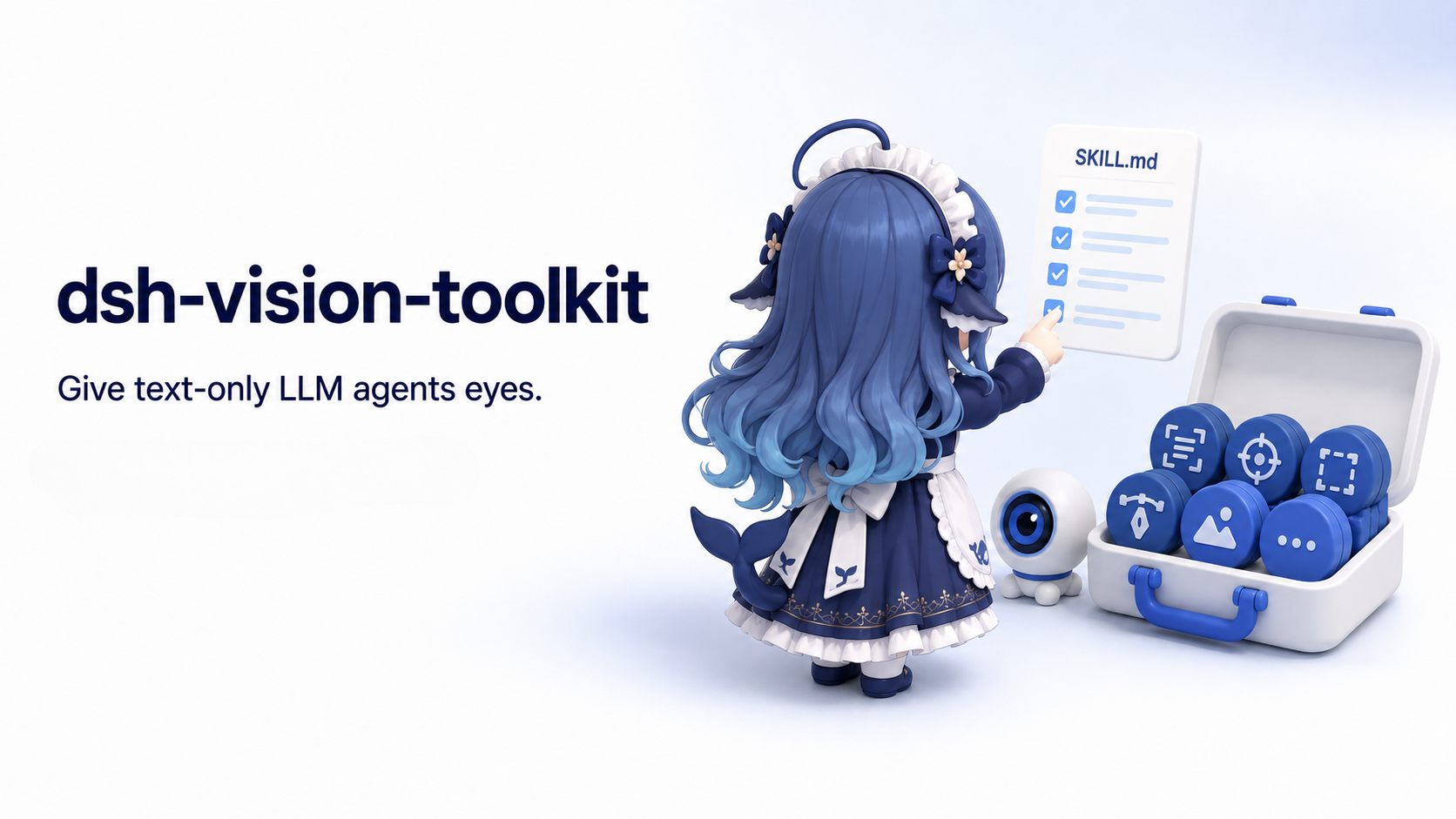
Give text-only models in DeepSeek Harness eyes, enabling image Q&A, long-screenshot OCR, UI restoration, and GUI visual tasks.