dsh-repo-analyzer
Run the following command in DeepSeek Harness:
dsh plugin install tkr520521/dsh-repo-analyzer
Paste the following prompt into your AI chat to install this plugin:
Run dsh plugin install tkr520521/dsh-repo-analyzer in DeepSeek Harness to install this plugin; source available at https://github.com/tkr520521/dsh-repo-analyzer
About this plugin
When you ask an agent to modify code in an unfamiliar repository, it typically burns a large number of tokens probing files one by one to figure out the tech stack, module boundaries, and dependency flow. dsh-repo-analyzer collapses that into a single millisecond-range local scan: it detects the tech stack via manifest files, parses dependency lists from package.json, pyproject.toml, go.mod, and Cargo.toml, and builds an import/require reference graph using heuristic regex matching — all in one structured JSON response. The agent can then identify architectural hot spots, assess change impact, and pinpoint which file to read first, without trial and error.
The design philosophy is zero extra services: no background processes, no LLM calls, no child agent spawns. Everything runs on the local filesystem via node:fs, with dsh-tools and schemastery as the only runtime dependencies. Security defaults are baked in — every user-supplied path is validated by resolveWithin to ensure it stays inside the configured root, node_modules, .git, dist, and build artifacts are excluded by default, oversized files are skipped automatically, and a hard maxFiles cap prevents runaway scans.
It fits any workflow where an agent needs to understand a repository before touching code: quickly mapping architecture when onboarding to a legacy project, evaluating how many modules reference a given dependency before a refactor, or letting the model independently locate the right starting file without wasting context window. The three tools — repo_scan, repo_deps, and repo_refs — each handle a distinct slice, and together they cover the full analysis chain from a high-level overview down to single-dependency impact.
Use Cases
- Understanding repo tech stack and module structure before agent-driven edits
- Assessing which local modules reference a given dependency before refactoring
- Generating a cross-language architecture overview when onboarding to legacy code
Best For
- Harness developers using agents for autonomous code modification
- Engineering teams managing polyglot repos (JS/Python/Go/Rust)
- Toolchain users who prefer zero-service, local-only workflows
Related Plugins
A unified suite combining hot runtime injection, task-aware thinking-mode routing, and a graded session protocol with red-team gates to sustain model diligence across long-horizon inference.
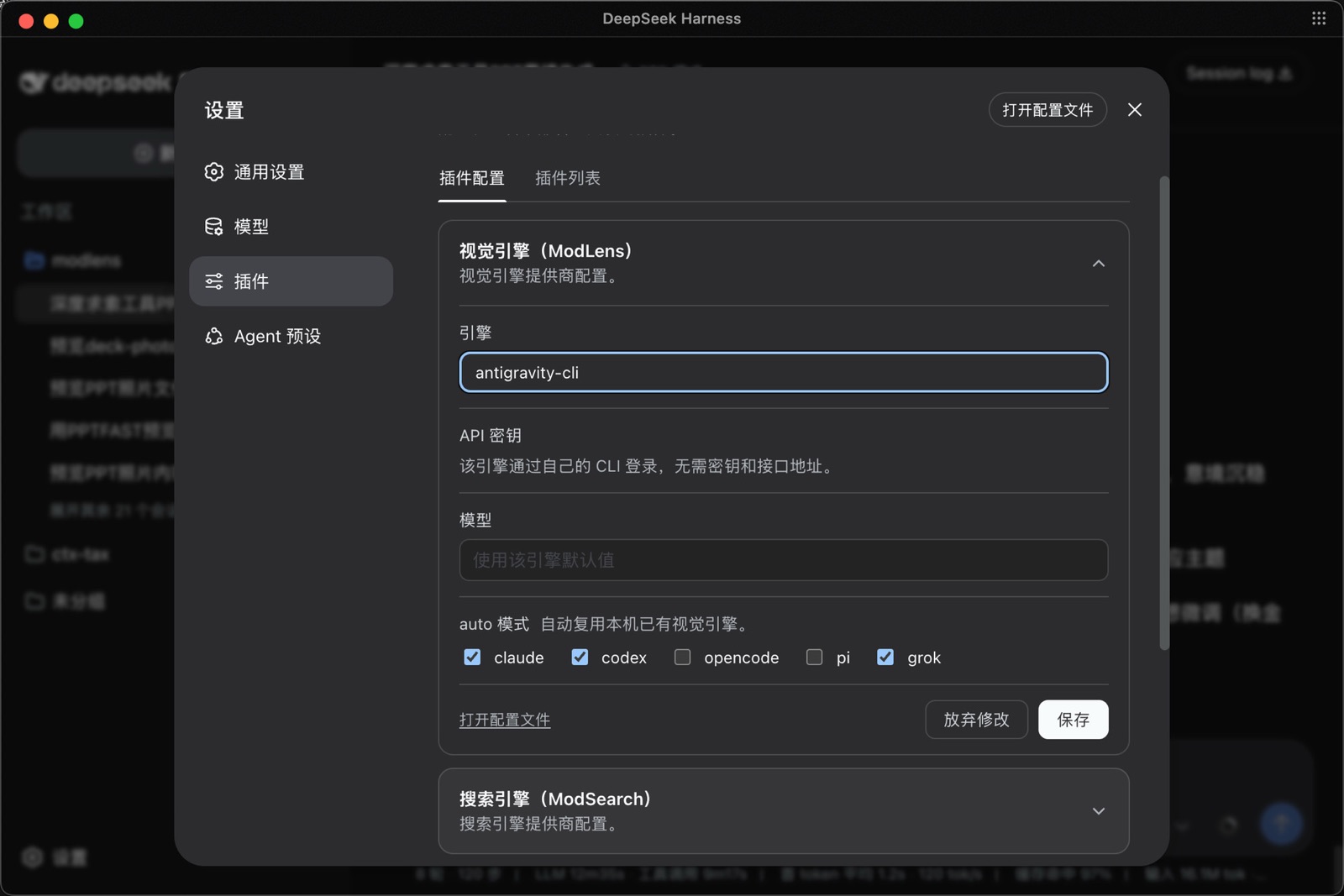
ModLens is a vision plugin for DeepSeek Harness that gives text-only models sight by reading images pasted directly into chat, with zero-config setup and multiple vision engines.
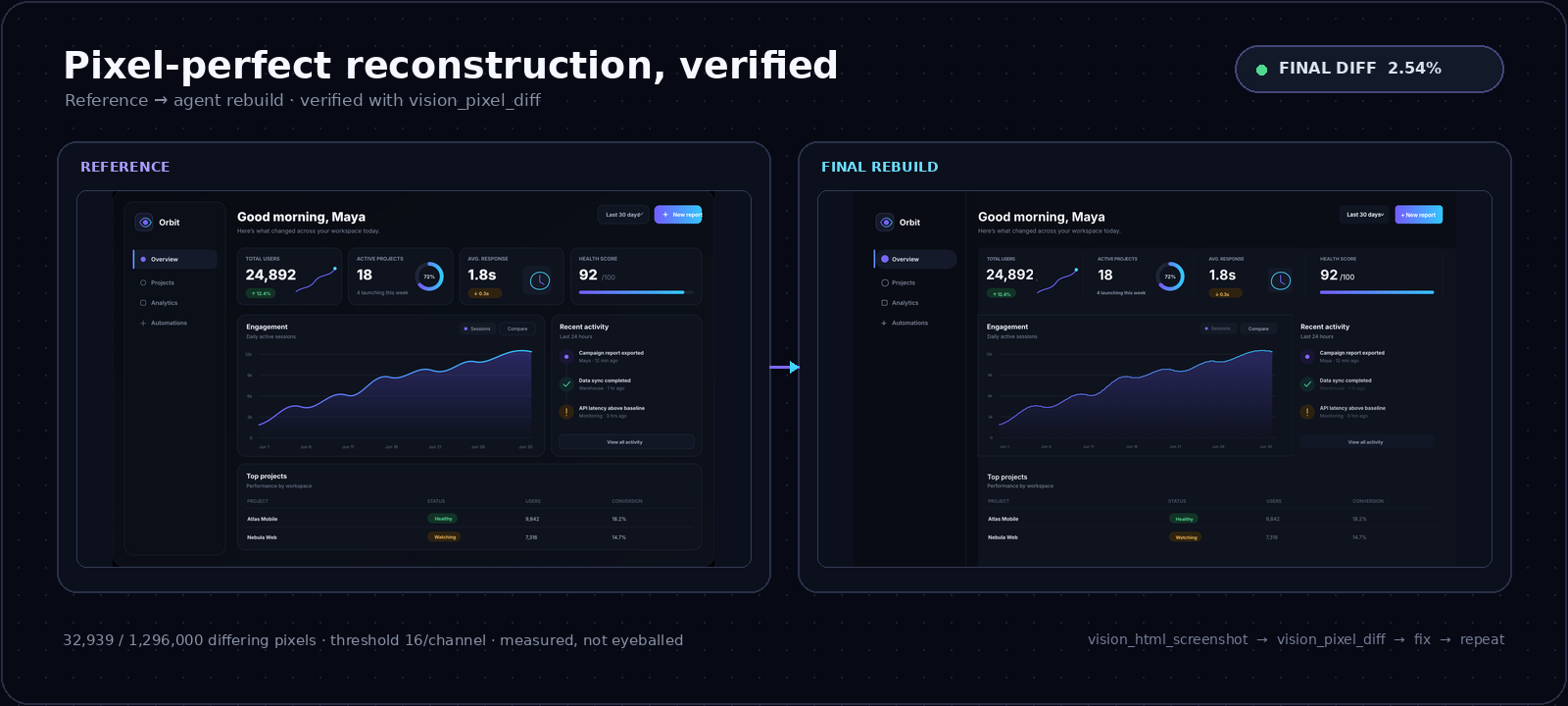
On-demand vision for text-only DeepSeek Harness agents: built-in free keyless vision chain and 14 vision tools, routing image turns as tool calls to vision models with pixel fidelity, no Python needed, one-command install.

Give text-only models in DeepSeek Harness eyes, enabling image Q&A, long-screenshot OCR, UI restoration, and GUI visual tasks.