dsh-lesson-outline
Run the following command in DeepSeek Harness:
dsh plugin install mhtdm/dsh-lesson-outline
Paste the following prompt into your AI chat to install this plugin:
In DeepSeek Harness, run dsh plugin install mhtdm/dsh-lesson-outline to install this plugin; the source code is available at https://github.com/mhtdm/dsh-lesson-outline.
About this plugin
When generating teaching materials with an LLM, the most common frustration is structural drift: run the same topic three times and you get three different section splits, bullet-grain levels, and time allocations, forcing the instructor to manually reorganize every output. dsh-lesson-outline removes the outline from free-form model generation and hands it to a deterministic, pure-logic module, making the structure fully predictable.
At its core is a single lesson_outline tool: supply a topic, a section count (1-8, default 3), and a learner level (beginner / intermediate / advanced), and it returns a normalized outline JSON in which every section carries a title, key points, suggested duration, and learning activity. The model then receives this scaffold and only needs to flesh out each section into complete teaching content, rather than inventing its own chapter structure on the fly. The entire process makes no external API calls and consumes no extra tokens, running purely in the local logic layer.
Ideal for teachers, corporate trainers, and online-course creators who want a stable, reproducible course skeleton while still letting the model generate rich prose around it, saving the time previously spent reworking outlines on every run.
Use Cases
- Generate a stable section skeleton for a course, then let the model flesh out full content
- Batch-produce courseware at different levels on the same topic with consistent structure
- Lock down the outline structure in a teaching-material pipeline to prevent model drift in chapter planning
Best For
- Teachers and corporate trainers who need reproducible course structures
- Online educators batch-producing courseware content
- Prompt engineers who want to reduce structural variance in LLM outputs
Related Plugins
A unified suite combining hot runtime injection, task-aware thinking-mode routing, and a graded session protocol with red-team gates to sustain model diligence across long-horizon inference.
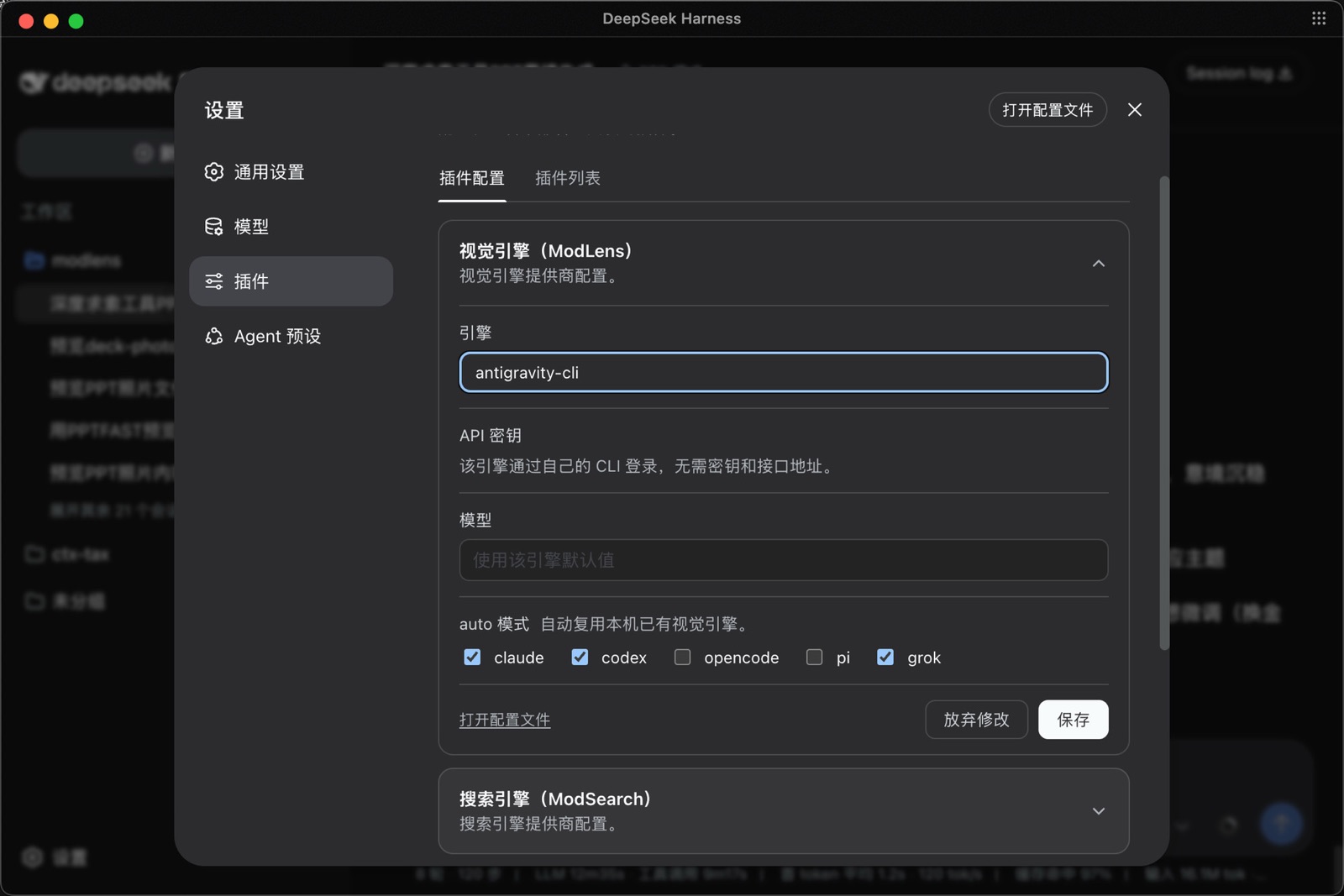
ModLens is a vision plugin for DeepSeek Harness that gives text-only models sight by reading images pasted directly into chat, with zero-config setup and multiple vision engines.
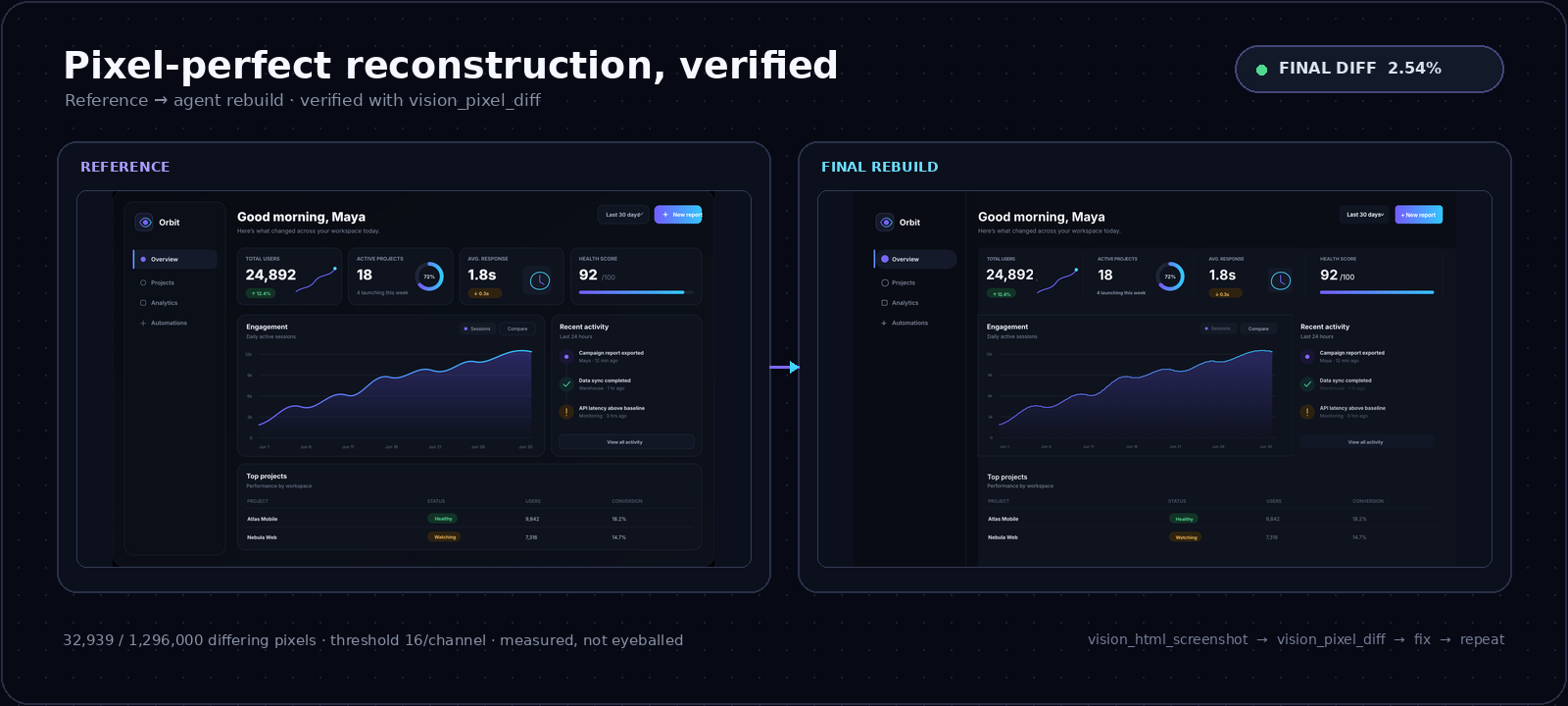
On-demand vision for text-only DeepSeek Harness agents: built-in free keyless vision chain and 14 vision tools, routing image turns as tool calls to vision models with pixel fidelity, no Python needed, one-command install.

Give text-only models in DeepSeek Harness eyes, enabling image Q&A, long-screenshot OCR, UI restoration, and GUI visual tasks.