dsh-plugin-amdgpu-inspect
Run the following command in DeepSeek Harness:
dsh plugin install yujiaoliang/dsh-plugin-amdgpu-inspect
Paste the following prompt into your AI chat to install this plugin:
Run dsh plugin install yujiaoliang/dsh-plugin-amdgpu-inspect inside DeepSeek Harness to install this plugin; the full source is available at https://github.com/yujiaoliang/dsh-plugin-amdgpu-inspect .
About this plugin
Letting an agent in DeepSeek Harness actually read AMDGPU binaries used to mean piping giant llvm-objdump dumps into context and hoping for the best. dsh-plugin-amdgpu-inspect replaces that with two structured tool calls: amdgpu_object_inspect lists the kernels in a file and reports code-object metadata plus instruction-category counts, while amdgpu_isa_query walks a single kernel's normalized instruction stream page by page, capping each response at 200 records with a deterministic cursor so the full disassembly never floods the model window. The plugin reports static facts only—no source compilation, no HSA runtime loading, no GPU execution, no performance prediction.
On top of the raw API, a bundled Kernel X-Ray Skill gives an agent a structured playbook: compile before/after artifacts, query this plugin, form a hypothesis, and demand a workload measurement before anyone claims a speedup. Under the hood, a single-artifact cache keyed by absolute path, size, and modification time keeps repeated calls cheap; child processes run without a shell and honor tool-call cancellation; inputs are limited to regular files up to 256 MiB.
It fits engineers who already have an HSACO or ELF in hand and want to inspect which kernels it contains, where a specific opcode lives, or how the instruction stream changed between two builds—without standing up a separate disassembly pipeline. The plugin stays a low-level facts layer; the strategy and conclusions live in the Skill or your own prompt, making it easy to slot into larger agent orchestration.
Use Cases
- Inspect which kernels and code-object metadata an HSACO or ELF file contains
- Page through a single kernel's normalized ISA stream to locate specific opcodes and operands
- Diff instruction streams between two builds to gather static evidence for optimization hypotheses
Best For
- Engineers with existing AMDGPU build artifacts who need kernel structure without executing GPU code
- Developers orchestrating GPU-related agent workflows in DeepSeek Harness
- Researchers who rely on the ROCm LLVM toolchain and need static ISA analysis
Related Plugins
A unified suite combining hot runtime injection, task-aware thinking-mode routing, and a graded session protocol with red-team gates to sustain model diligence across long-horizon inference.
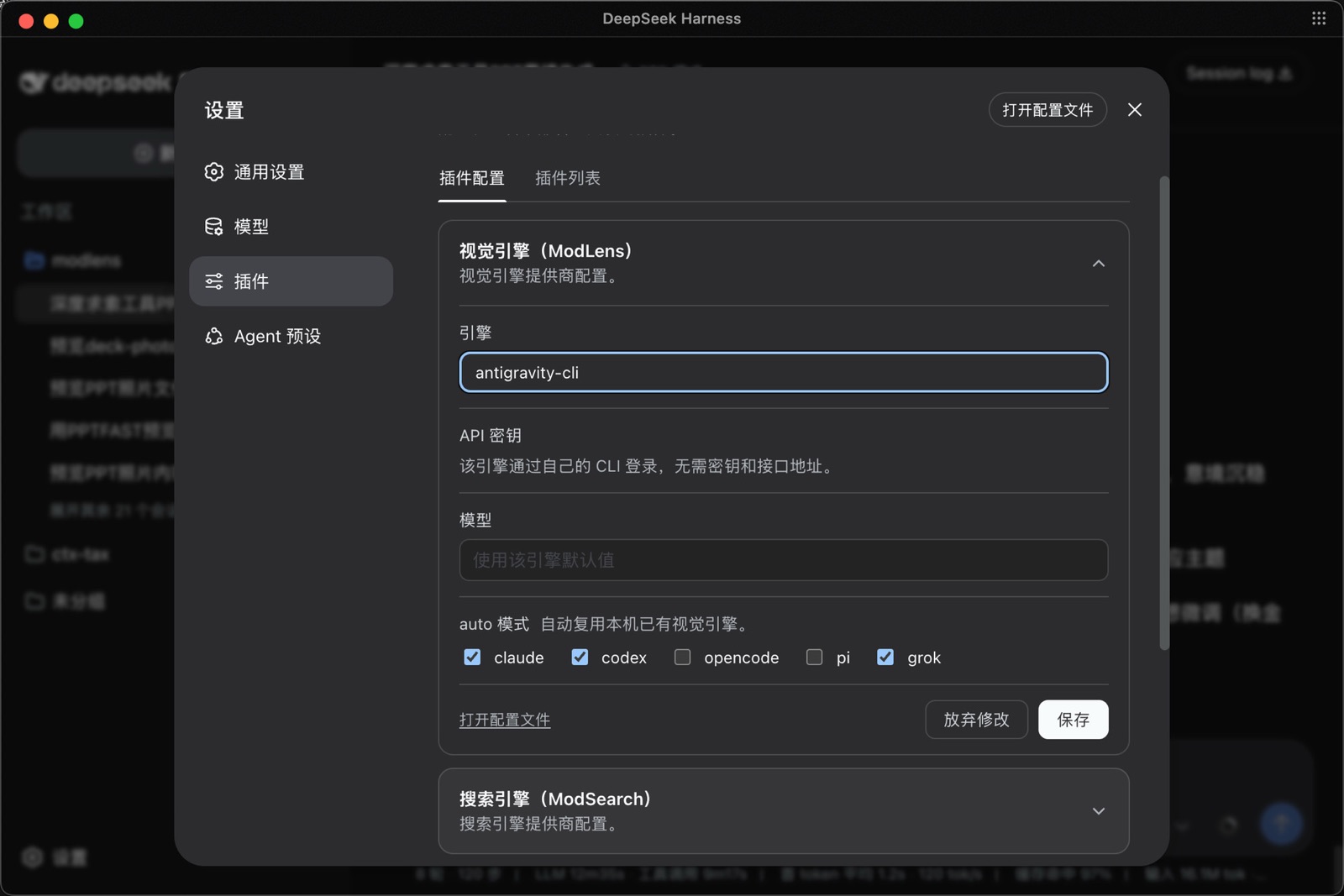
ModLens is a vision plugin for DeepSeek Harness that gives text-only models sight by reading images pasted directly into chat, with zero-config setup and multiple vision engines.
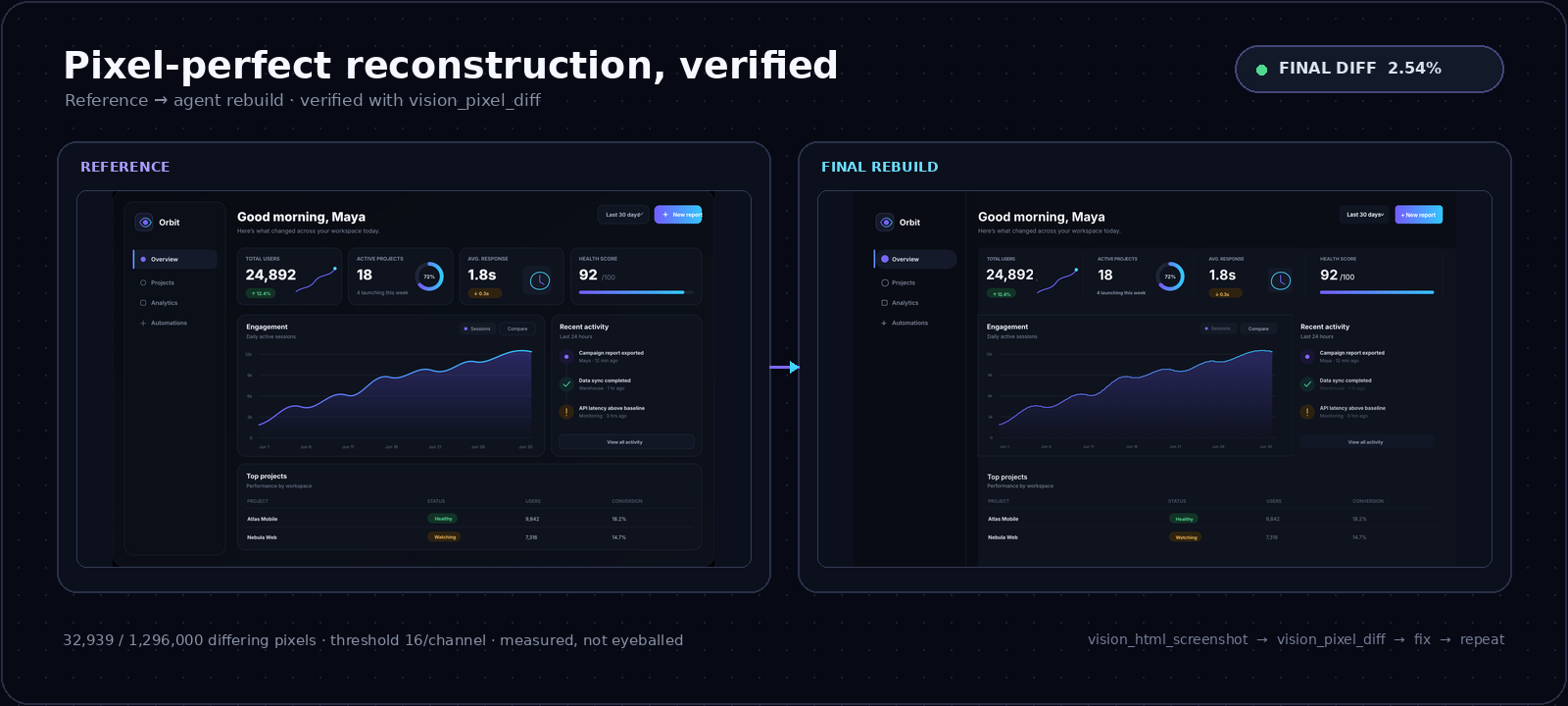
On-demand vision for text-only DeepSeek Harness agents: built-in free keyless vision chain and 14 vision tools, routing image turns as tool calls to vision models with pixel fidelity, no Python needed, one-command install.

Give text-only models in DeepSeek Harness eyes, enabling image Q&A, long-screenshot OCR, UI restoration, and GUI visual tasks.