dsh-json-types
Run the following command in DeepSeek Harness:
dsh plugin install uckkk/dsh-json-types
Paste the following prompt into your AI chat to install this plugin:
Run "dsh plugin install uckkk/dsh-json-types" in DeepSeek Harness to install this plugin. Source code: https://github.com/uckkk/dsh-json-types
About this plugin
You have a real JSON payload in hand and need a TypeScript interface, a JSON Schema, or a Pydantic model for it. Fields are scattered, nesting runs several levels deep, arrays contain objects, and an optional field is easy to miss. dsh-json-types exists for exactly this moment: paste the sample in and get a ready-to-use type definition out.
The plugin ships three tools: json_to_ts for TypeScript interfaces, json_to_schema for JSON Schema (draft-07), and json_to_python for Pydantic models. Inference covers primitive field types, nested objects with auto-generated named interfaces or models, array element types, and missing fields automatically marked as optional. Everything runs locally in Node with zero network calls or external services.
If you work with JSON data in front-end, back-end, or data-pipeline code and need quick type constraints for API responses, config files, or log samples, this plugin compresses repetitive typing into a single paste. Inference is sample-based, so edge cases such as a string that is really an enum or a date may need a light manual tweak after generation. Purely local, no external dependencies, MIT licensed, and suited to any developer who would rather not install a whole separate tool just for type definitions.
Use Cases
- Turn an API response JSON sample into a TypeScript interface in seconds
- Generate a JSON Schema from a config file's JSON structure for validation
- Convert a data-pipeline JSON output into a Pydantic model for type safety
Best For
- Front-end or back-end developers who need type constraints on JSON data
- Data engineers processing JSON in pipelines and requiring Pydantic models
- Developers who prefer lightweight local plugins over installing a full toolchain
Related Plugins
A unified suite combining hot runtime injection, task-aware thinking-mode routing, and a graded session protocol with red-team gates to sustain model diligence across long-horizon inference.
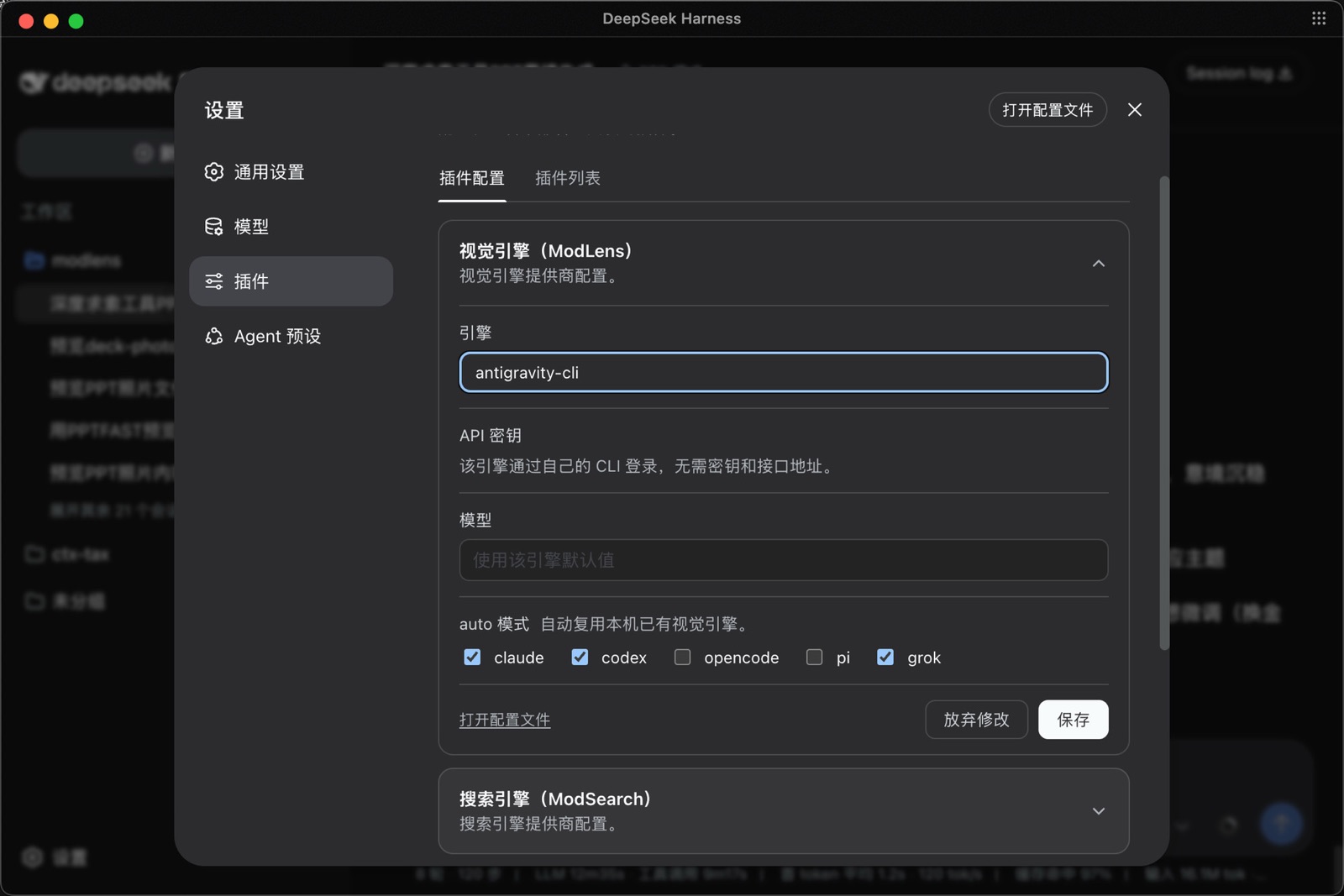
ModLens is a vision plugin for DeepSeek Harness that gives text-only models sight by reading images pasted directly into chat, with zero-config setup and multiple vision engines.
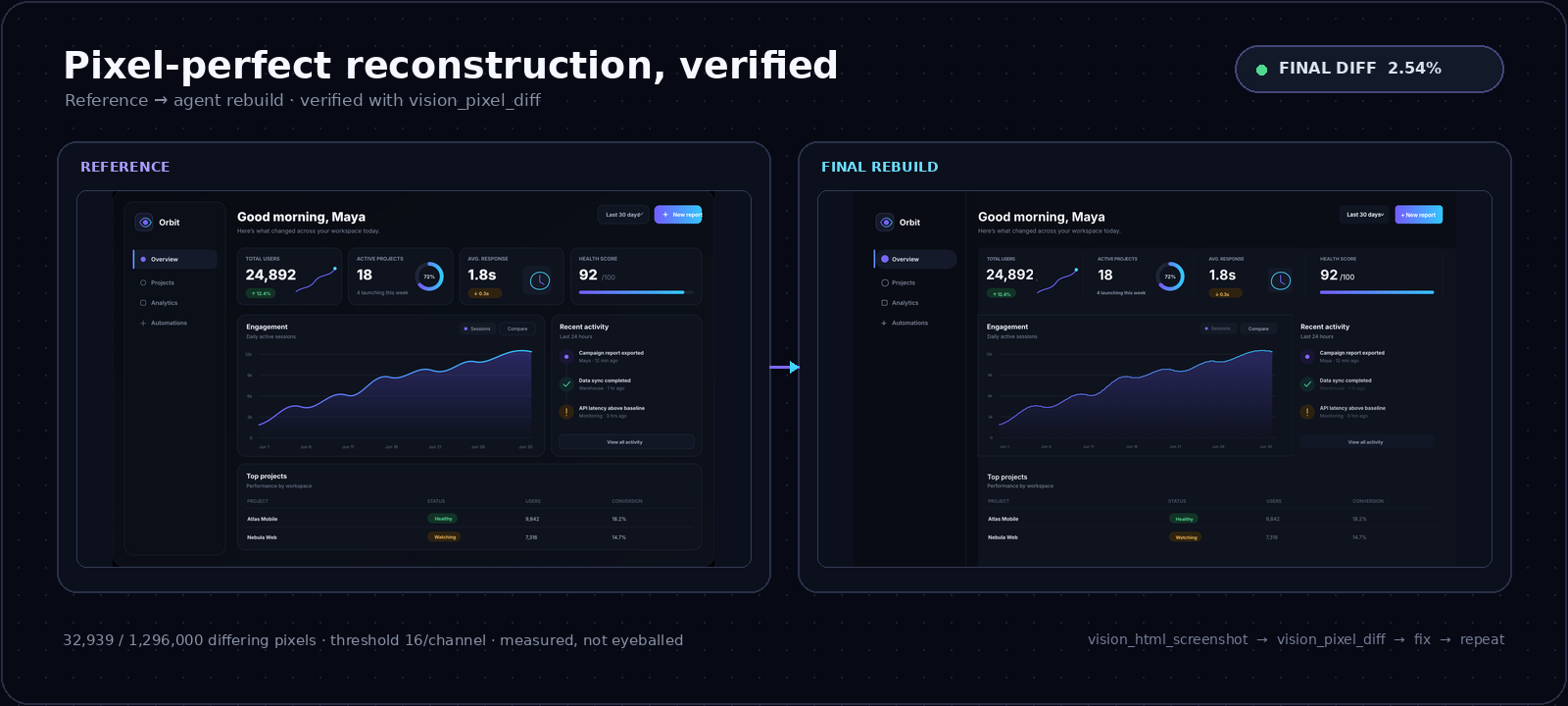
On-demand vision for text-only DeepSeek Harness agents: built-in free keyless vision chain and 14 vision tools, routing image turns as tool calls to vision models with pixel fidelity, no Python needed, one-command install.

Give text-only models in DeepSeek Harness eyes, enabling image Q&A, long-screenshot OCR, UI restoration, and GUI visual tasks.