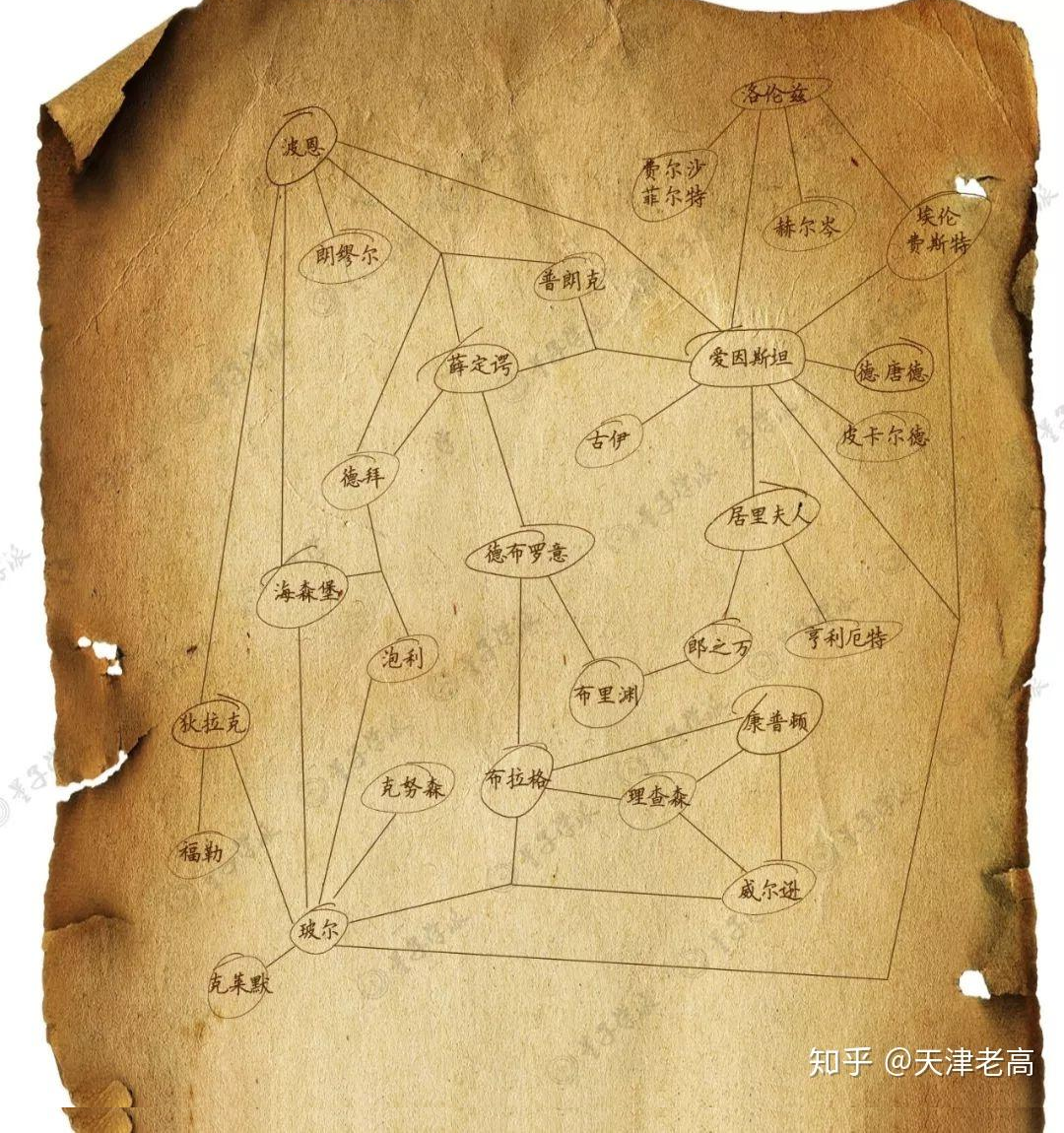
dsh-tool-accurate-vision
Run the following command in DeepSeek Harness:
dsh plugin install imkingjh999/dsh-tool-accurate-vision
Paste the following prompt into your AI chat to install this plugin:
Run dsh plugin install imkingjh999/dsh-tool-accurate-vision in DeepSeek Harness to install; the source repository is available at https://github.com/imkingjh999/dsh-tool-accurate-vision
About this plugin
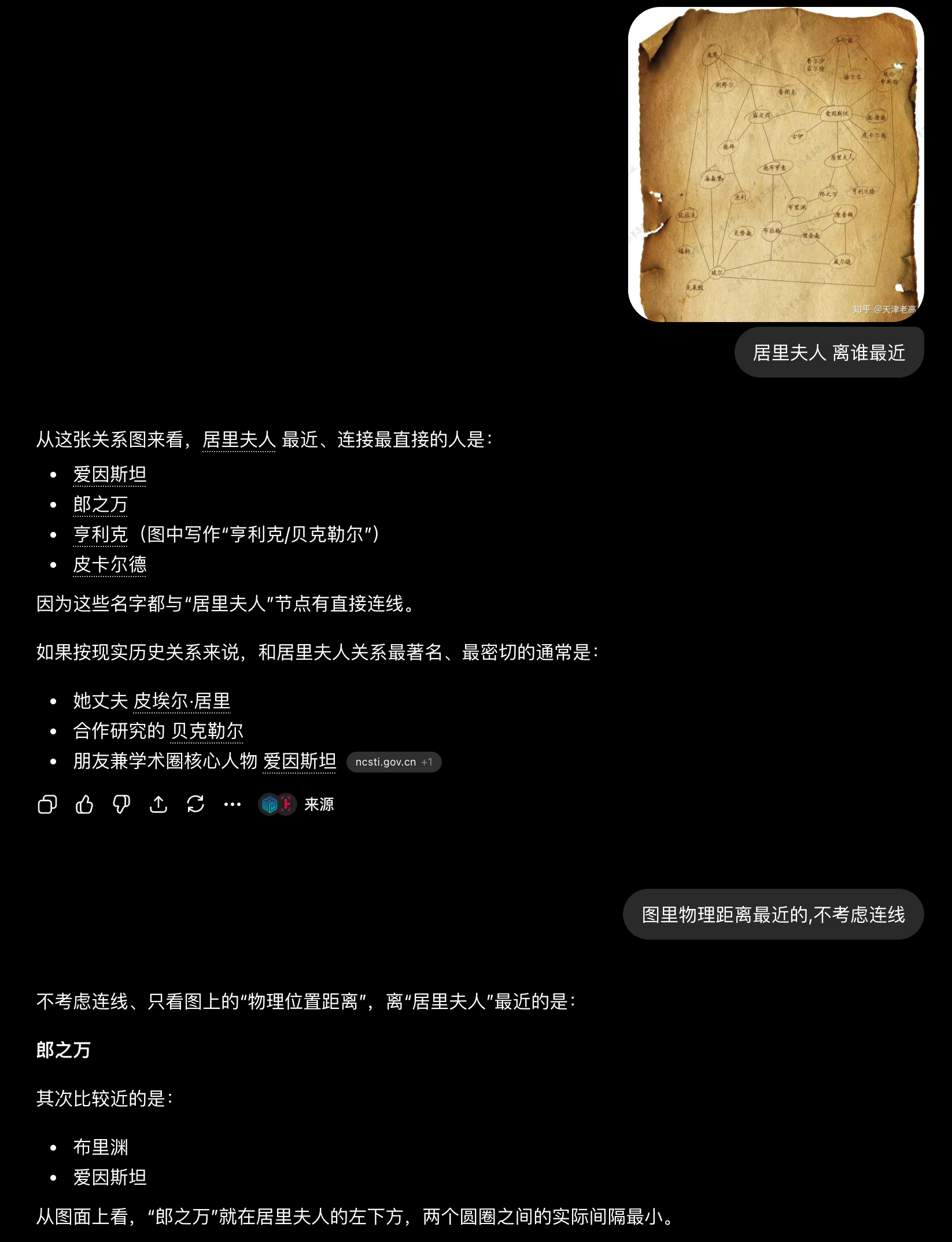
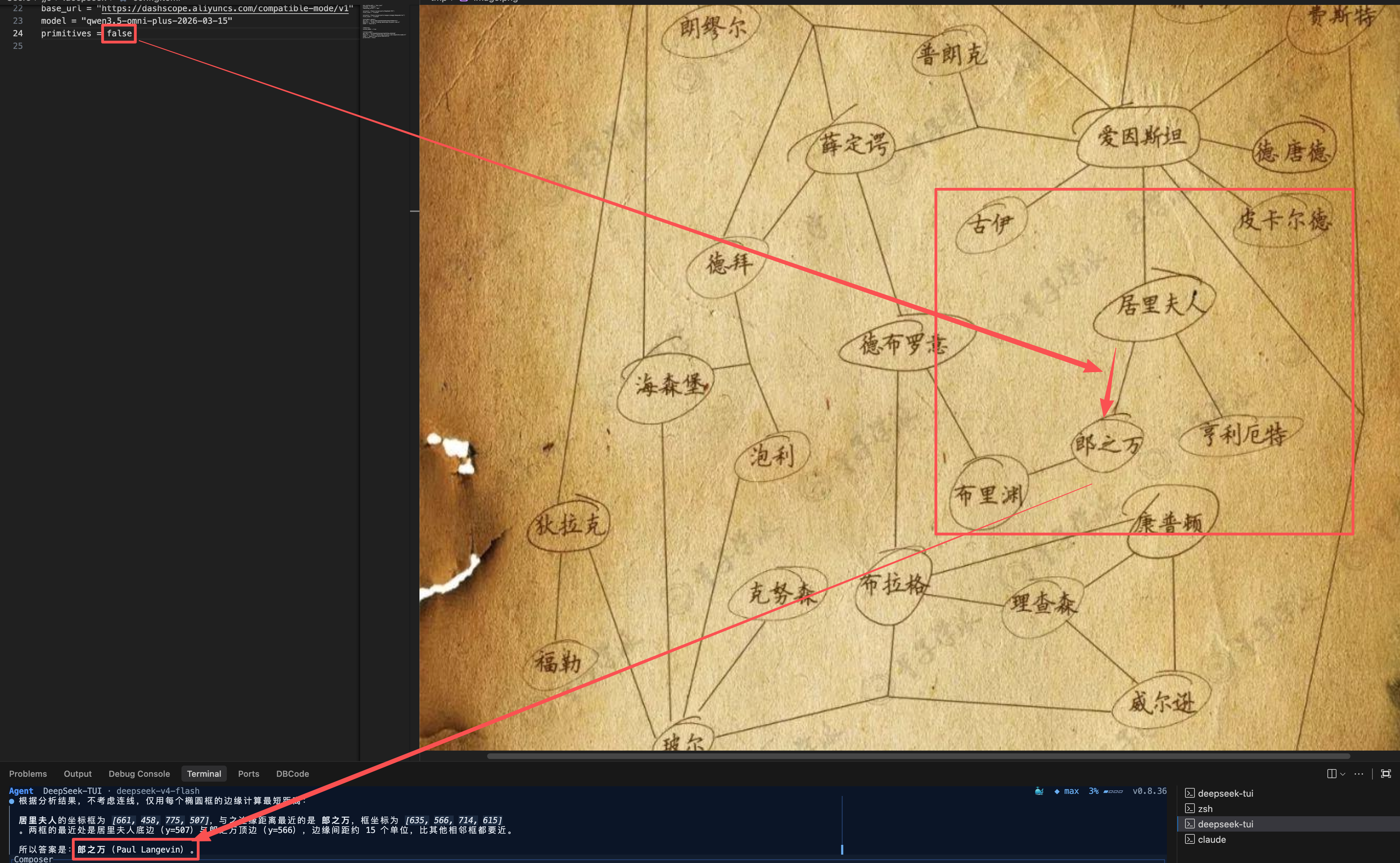
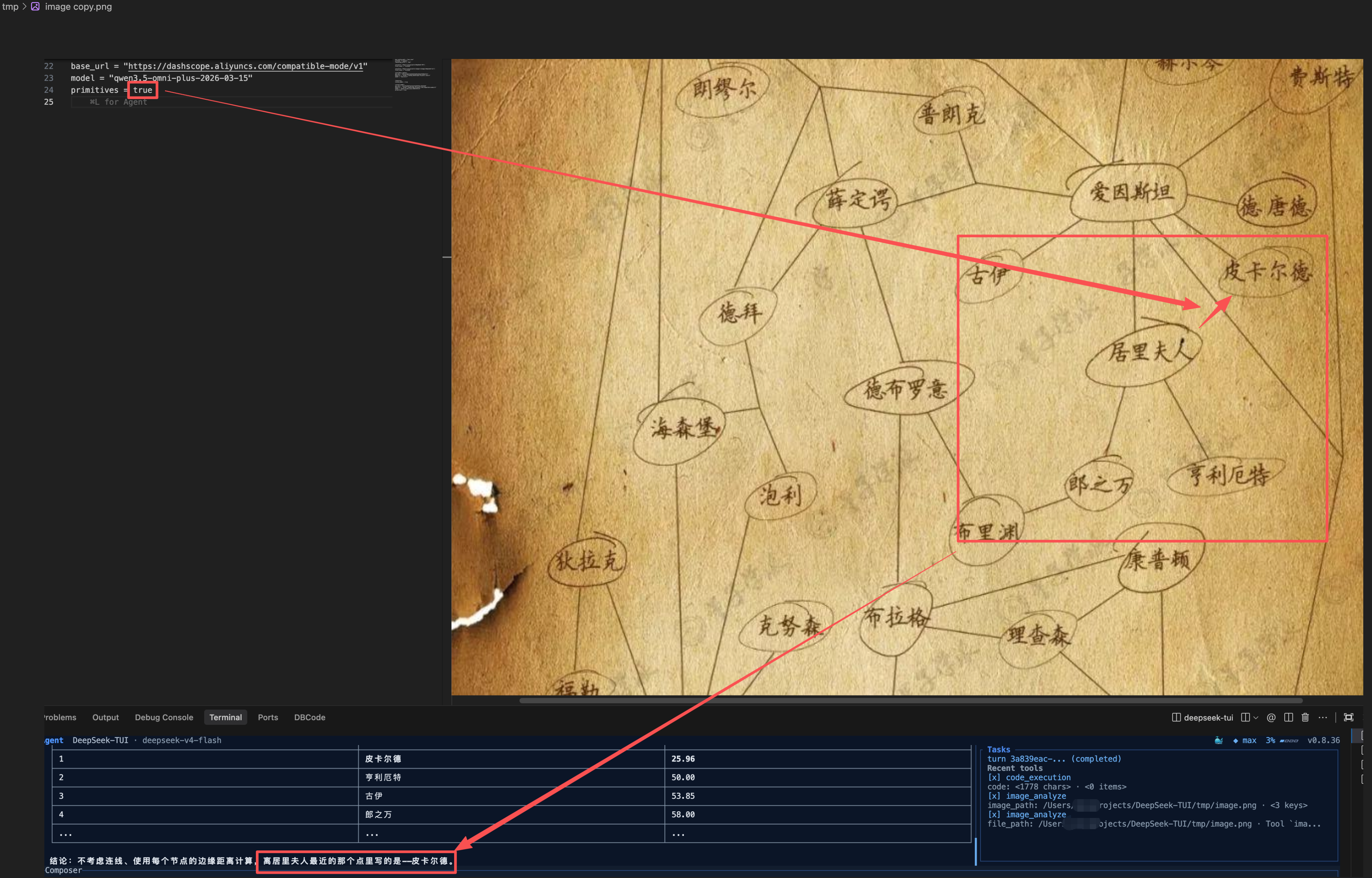
When a text-only agent needs to reason about an image, the bottleneck is clear: it can only rely on a vague verbal description from a vision model to infer spatial relationships—how far apart two objects are, which label sits where, or what the true pixel-level distance looks like. dsh-tool-accurate-vision closes that gap by calling any OpenAI-compatible vision model, extracting bounding boxes normalised to the 0–1000 range, and formatting them into a structured text block the next model turn can consume. Object positions, layout, and OCR text become computable, verifiable numbers rather than impressions to trust blindly.
Every call also emits a self-contained SVG that overlays all bounding boxes and labels on the original image, so a developer can eyeball the annotations instead of accepting them on faith. The package ships with a ready-made edge-to-edge distance helper that pairs facing edges per axis and returns the true shortest gap, keeping downstream agents from accidentally measuring wrong edges.
It is built for developers constructing text-only agents that need precise spatial reasoning from images—chart and diagram interpretation, layout analysis, object-distance queries, or any workflow where geometric accuracy must be provable, not approximate.
Screenshots
Use Cases
- Determining true distances and relative positions between nodes in diagrams or network graphs
- Precisely locating buttons, labels, and elements in UI layout analysis
- Extracting OCR text with exact spatial coordinates from screenshots
- Visually verifying vision model output via auto-generated SVG annotated images
Best For
- AI developers building text-only agents that require image spatial reasoning
- Application engineers working on chart parsing, layout analysis, or object-distance queries
- Architects integrating OpenAI-compatible vision pipelines who need structured spatial primitives
Related Plugins
A unified suite combining hot runtime injection, task-aware thinking-mode routing, and a graded session protocol with red-team gates to sustain model diligence across long-horizon inference.
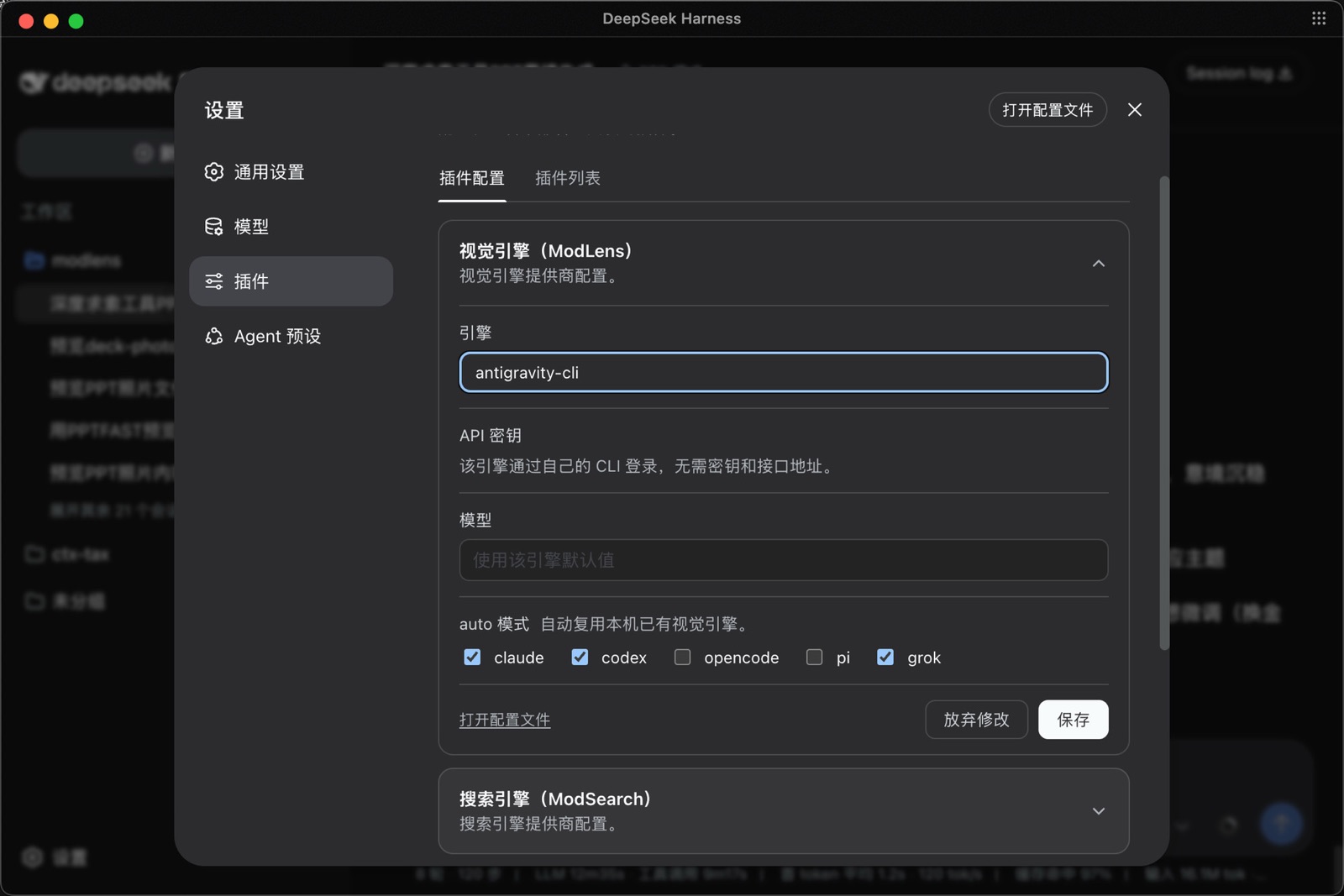
ModLens is a vision plugin for DeepSeek Harness that gives text-only models sight by reading images pasted directly into chat, with zero-config setup and multiple vision engines.
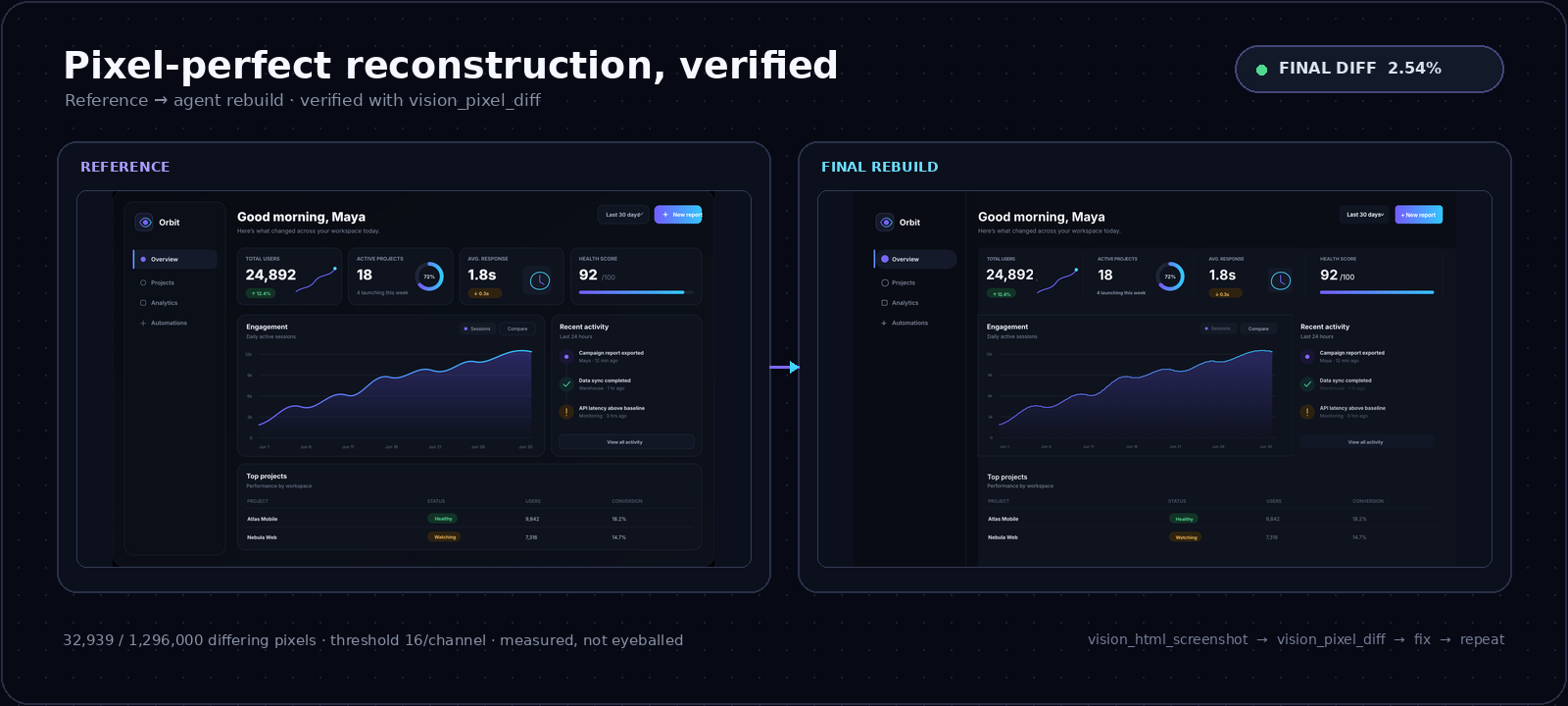
On-demand vision for text-only DeepSeek Harness agents: built-in free keyless vision chain and 14 vision tools, routing image turns as tool calls to vision models with pixel fidelity, no Python needed, one-command install.

Give text-only models in DeepSeek Harness eyes, enabling image Q&A, long-screenshot OCR, UI restoration, and GUI visual tasks.