dsh-tool-stat
Run the following command in DeepSeek Harness:
dsh plugin install omdsh-dev/dsh-tool-stat
Paste the following prompt into your AI chat to install this plugin:
To install the dsh-tool-stat plugin in DeepSeek Harness, run the command 'dsh plugin install omdsh-dev/dsh-tool-stat'; the source code is available at https://github.com/omdsh-dev/dsh-tool-stat.
About this plugin
When agents process numerical data, they often need to perform aggregation analysis on arrays extracted from CSV or JSON files—such as computing means, percentiles, distributions, or correlation coefficients. However, existing tool chains fall short: single-expression calculators can't handle complex statistics, CSV tools only report structure without aggregation, and model-based mental math is error-prone and hard to verify. The dsh-tool-stat plugin addresses these challenges by offering a zero-dependency, pure-function, and deterministic set of statistical tools designed to efficiently cover everything from descriptive statistics to correlation calculations.
The plugin's core capabilities revolve around four key actions: 'describe' provides a comprehensive data summary including mean, variance, quartiles, and more; 'percentile' supports custom quantile computations; 'frequency' reveals distribution patterns; and 'correlation' calculates Pearson or Spearman coefficients. All algorithms are hand-written—such as Neumaier compensated summation and Welford online variance—to ensure numerical stability, with strict constraints to keep inputs and outputs finite, avoiding NaN or overflow issues. A single function call returns a structured JSON report in milliseconds, entirely without external dependencies or state.
This plugin is ideal for developers, data scientists, or agent builders who need quick and reliable statistical analysis. Whether you're constructing data analytics pipelines, validating model outputs, or handling real-time data streams, dsh-tool-stat delivers reproducible computations that let you focus on business logic rather than low-level implementations. Its deterministic design ensures identical outputs for identical inputs, enhancing trustworthiness and debugging efficiency.
Use Cases
- Performing aggregate analysis on numerical arrays extracted from CSV files by agents
- Quickly computing percentiles and correlation coefficients for datasets
- Validating the reproducibility of statistical results in data processing pipelines
Best For
- Agent developers who need to process numerical data analysis
- Data scientists performing quick statistical calculations and validations
- Software engineers building data processing pipelines
Related Plugins
A unified suite combining hot runtime injection, task-aware thinking-mode routing, and a graded session protocol with red-team gates to sustain model diligence across long-horizon inference.
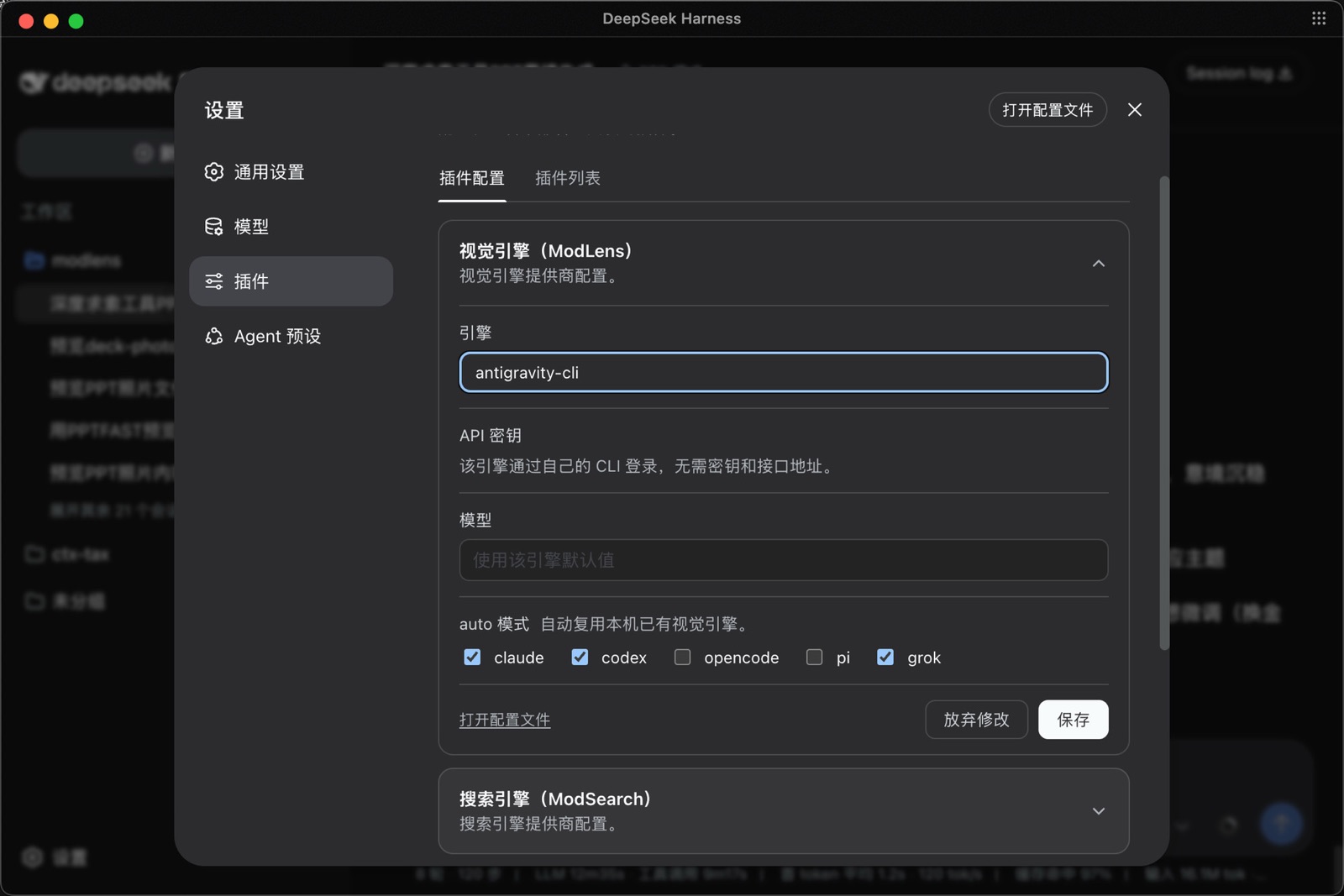
ModLens is a vision plugin for DeepSeek Harness that gives text-only models sight by reading images pasted directly into chat, with zero-config setup and multiple vision engines.
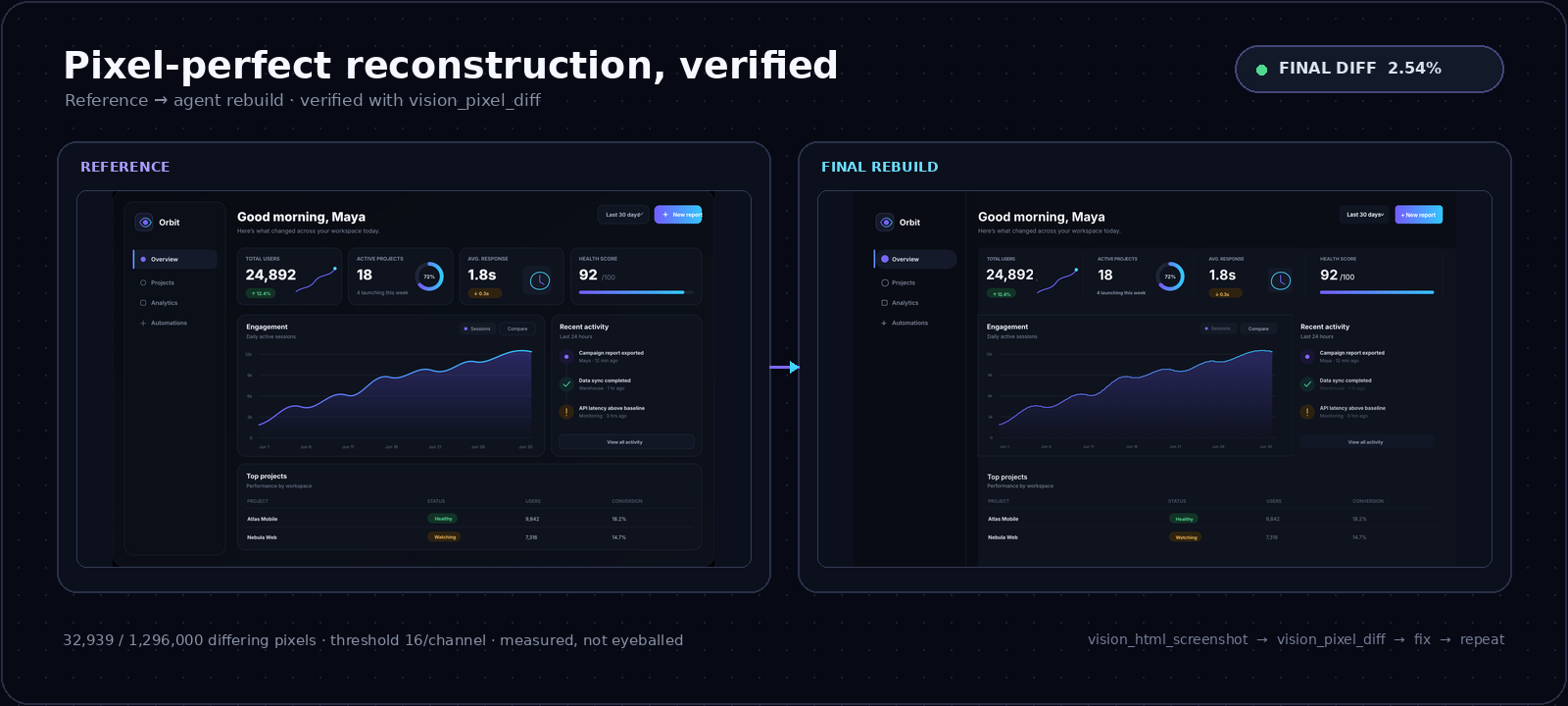
On-demand vision for text-only DeepSeek Harness agents: built-in free keyless vision chain and 14 vision tools, routing image turns as tool calls to vision models with pixel fidelity, no Python needed, one-command install.

Give text-only models in DeepSeek Harness eyes, enabling image Q&A, long-screenshot OCR, UI restoration, and GUI visual tasks.