dsh-voice-input
Run the following command in DeepSeek Harness:
dsh plugin install jinhuoooo/dsh-voice-input
Paste the following prompt into your AI chat to install this plugin:
Run dsh plugin install jinhuoooo/dsh-voice-input in the DeepSeek Harness terminal; the source is at https://github.com/jinhuoooo/dsh-voice-input. Restart DSH after installation to activate the plugin.
About this plugin
Typing is slow, inconvenient, or simply unnecessary. For elderly users, newcomers to personal computing, or anyone who just wants to spare their wrists, voice input is not a productivity nicety — it is a usability prerequisite. Most off-the-shelf solutions mangle Chinese, demand a VPN, or ship your audio to a third-party server. dsh-voice-input solves all three inside the DSH chat window: tap the microphone, speak, and the text lands in the input box. No keyboard, no cloud, no external service.
Under the hood, faster-whisper runs as a persistent local process. The model loads once into memory; every subsequent transcription returns in milliseconds. Output is forced through OpenCC to simplified Chinese, so traditional characters never leak into the result. Anti-hallucination thresholds guarantee that silence stays silence — the UI reports no speech detected instead of Whisper inventing a paragraph from a cough. Models download from ModelScope domestic nodes with a direct connection, no VPN required. The default small tier stays around 500 MB. Want cloud speed? Drop a Groq or SiliconFlow API key into the config and the backend switches with zero code changes.
Who is this for? Parents fumbling through pinyin stroke by stroke, new computer users who freeze at the keyboard, remote workers with typing fatigue, and anyone who treats voice data as sensitive by default. The entire interaction is two taps — start, stop — with no modal dialogs and no setup wizard. A small white card appears under the microphone button, never blocking the chat. Tap, speak, done.
Use Cases
- When typing is slow or painful, speak instead of tap
- When voice data is sensitive and must stay on-device
- When you need Chinese speech-to-text with no VPN or API key
Best For
- Elderly users or newcomers who struggle with typing
- Remote workers with typing fatigue
- Privacy-conscious users who keep audio on-device
Related Plugins
A unified suite combining hot runtime injection, task-aware thinking-mode routing, and a graded session protocol with red-team gates to sustain model diligence across long-horizon inference.
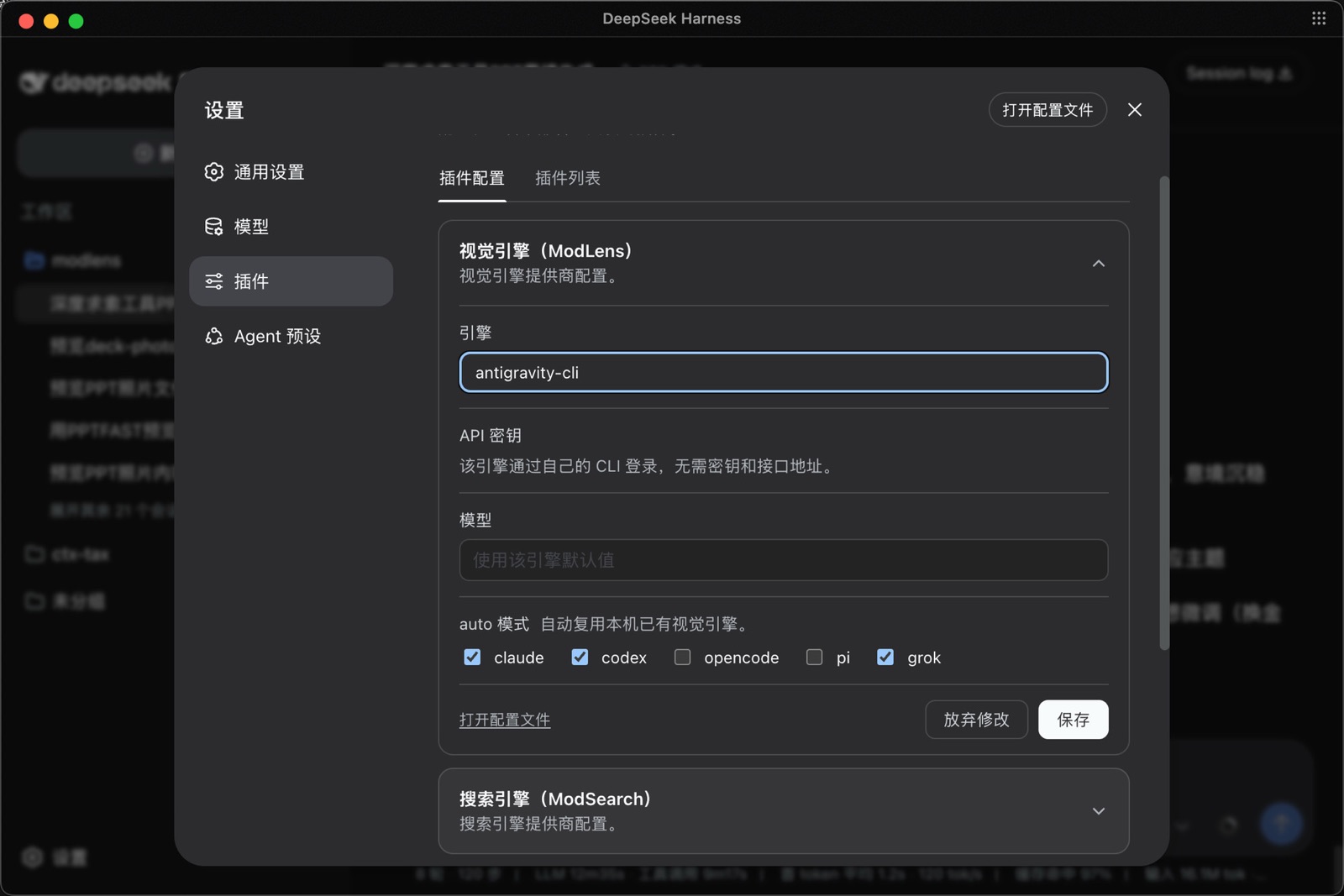
ModLens is a vision plugin for DeepSeek Harness that gives text-only models sight by reading images pasted directly into chat, with zero-config setup and multiple vision engines.
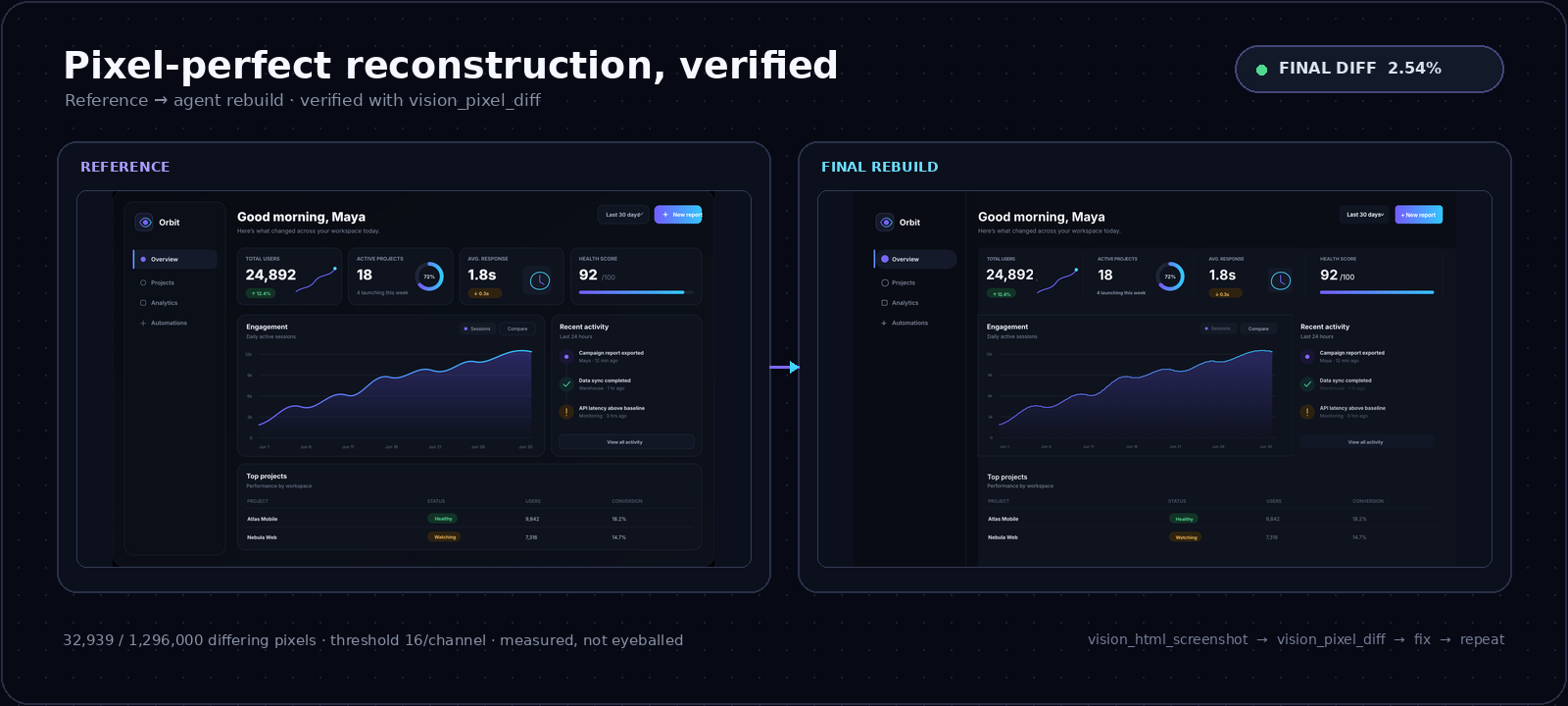
On-demand vision for text-only DeepSeek Harness agents: built-in free keyless vision chain and 14 vision tools, routing image turns as tool calls to vision models with pixel fidelity, no Python needed, one-command install.
Give text-only models in DeepSeek Harness eyes, enabling image Q&A, long-screenshot OCR, UI restoration, and GUI visual tasks.