dsh-runtime-xray
Run the following command in DeepSeek Harness:
dsh plugin install hollis-openlab/dsh-runtime-xray
Paste the following prompt into your AI chat to install this plugin:
Install by running dsh plugin install hollis-openlab/dsh-runtime-xray in DeepSeek Harness (source: https://github.com/hollis-openlab/dsh-runtime-xray), then restart the same Web profile to see the X-Ray panel in the session sidebar.
About this plugin
Day to day with DeepSeek Harness, the trajectory view tells you what happened in the past, but the present runtime state is often a blur. Which services are actually active? What fragments made it into the model context and from which sources? Which plugin owns which service? dsh-runtime-xray adds a read-only X-Ray panel beside Conversation and Trajectory that lays out the live runtime along a single chain: runtime base, then Skill / Tool, then model context, so every node and its provenance is visible at a glance. It does not modify configuration, reload plugins, or inject tools into the model; it only looks.
The panel is deliberately restrained in its information design. Hierarchy navigation replaces flat dumps; scope inheritance is presented as the override order of application, preset, and current session; plugin-to-service edges use solid lines for definitive ownership and dashed lines for ctx.provide inferences; lifecycle resources are grouped by registration source with expandable depth. Every data point carries an evidence level—exact, inferred, or unavailable—so speculation is never dressed as fact. If one inspection domain fails, the others remain fully functional. A one-click export produces a redacted JSON snapshot for bug reports, with credentials, prompt bodies, and variable values excluded by default.
If you maintain or debug DeepSeek Harness environments and want to confirm which Skills survived a hot reload, how many context segments come from Harness versus tools versus deployment, or which plugin actually registers a given service, this is the mirror you have been missing. It requires no API key, makes no external connections, and writes no data directory. MIT licensed; install, restart the same Web profile, and it is ready to use.
Use Cases
- Confirm which Skills and services are active after a hot reload
- Investigate model context composition and scope inheritance
- Export a redacted diagnostic snapshot for runtime issue reports
Best For
- Developers maintaining DeepSeek Harness environments daily
- Engineers debugging multi-plugin collaboration and lifecycle resources
- Technicians who need to file evidence or audit runtime state
Related Plugins
A unified suite combining hot runtime injection, task-aware thinking-mode routing, and a graded session protocol with red-team gates to sustain model diligence across long-horizon inference.
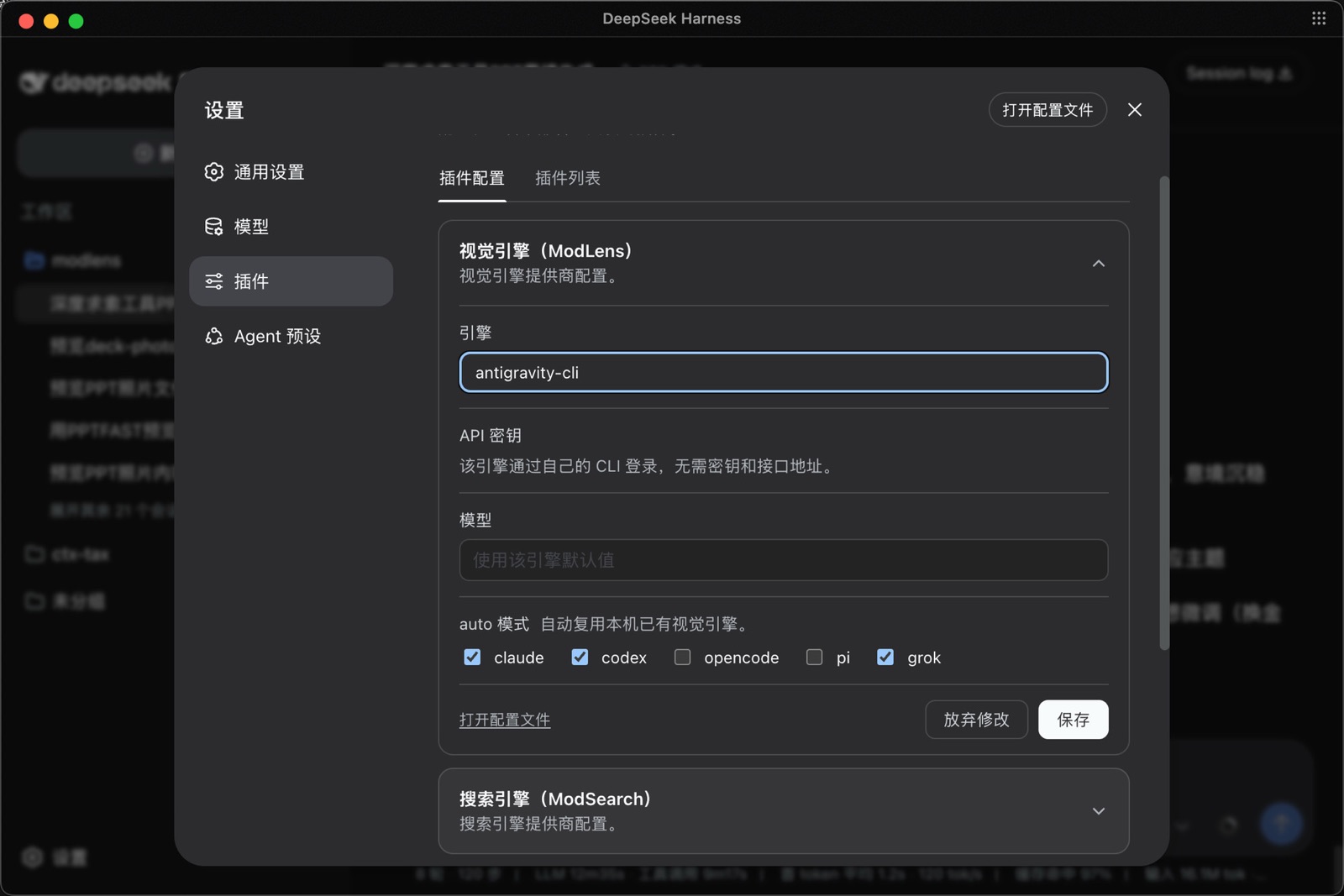
ModLens is a vision plugin for DeepSeek Harness that gives text-only models sight by reading images pasted directly into chat, with zero-config setup and multiple vision engines.
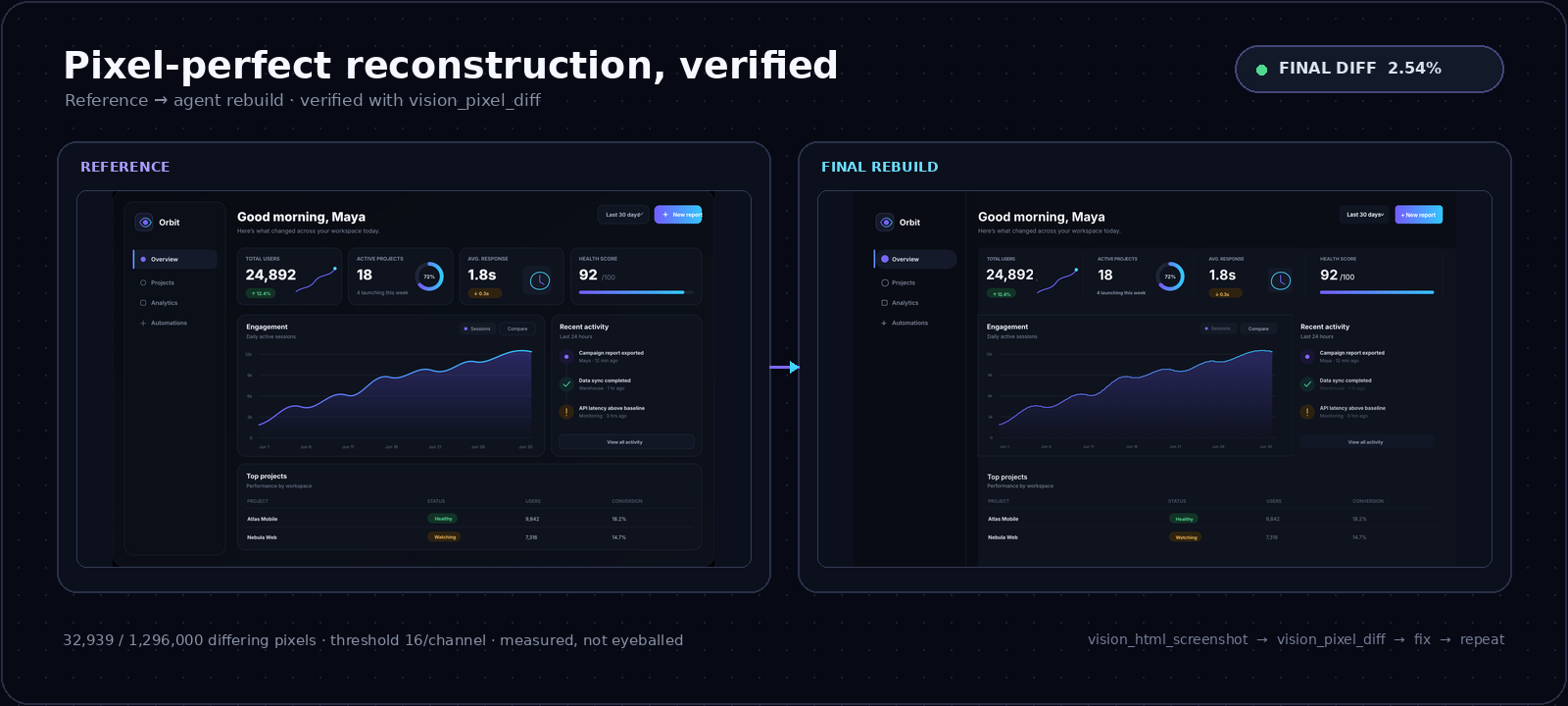
On-demand vision for text-only DeepSeek Harness agents: built-in free keyless vision chain and 14 vision tools, routing image turns as tool calls to vision models with pixel fidelity, no Python needed, one-command install.
Give text-only models in DeepSeek Harness eyes, enabling image Q&A, long-screenshot OCR, UI restoration, and GUI visual tasks.