dsh-model-deploy
Run the following command in DeepSeek Harness:
dsh plugin install lhwwxy/dsh-model-deploy
Paste the following prompt into your AI chat to install this plugin:
Run dsh plugin install lhwwxy/dsh-model-deploy in your terminal to install; the source code is at https://github.com/lhwwxy/dsh-model-deploy
About this plugin
Before committing a large language model to specific hardware, the most common questions are: will it fit in memory? How long is the time-to-first-token? How many concurrent requests can it serve? Is the power bill acceptable? These judgments have traditionally relied on personal experience and repeated trial-and-error. dsh-model-deploy turns them into an auditable, structured report via a set of published first-order analytical formulas.
Its core capability is to take model parameters, precision, context length, concurrency, and interconnect bandwidth as inputs and produce four result blocks: memory breakdown (weights / KV cache / activations / runtime, per-GPU and cluster-level), latency (TTFT and total, idle and saturated), throughput (per-request and system tok/s, req/s, prefill tok/s), and power (idle / typical / peak, including PUE and energy per token). It also automatically searches for the optimal TP x PP x DP parallelism combination and explains the rationale. The catalog covers 38 mainstream models and 20 GPU/NPU types, spanning NVIDIA, AMD, Huawei Ascend, Pingtouge Hanguang, Cambricon, Iluvatar, MetaX, and Moore Threads. All formulas and coefficients are public, and results can be cross-checked against real deployment anchors.
It is designed for inference cluster planners, MLOps engineers, and architects who need a rapid technical sanity check before procuring or self-deploying large models. No prototype build is required: enter the model and hardware parameters to get an assessment report with remediation suggestions and explicit assumptions, helping narrow down candidates across dozens of hardware combinations.
Use Cases
- Determine whether a model fits on a given GPU cluster
- Compare throughput and latency across precision and TP/PP/DP configurations
- Estimate inference cluster power draw and energy per token
Best For
- Inference cluster planners
- MLOps engineers
- Architects evaluating model procurement or self-deployment
Related Plugins
A unified suite combining hot runtime injection, task-aware thinking-mode routing, and a graded session protocol with red-team gates to sustain model diligence across long-horizon inference.
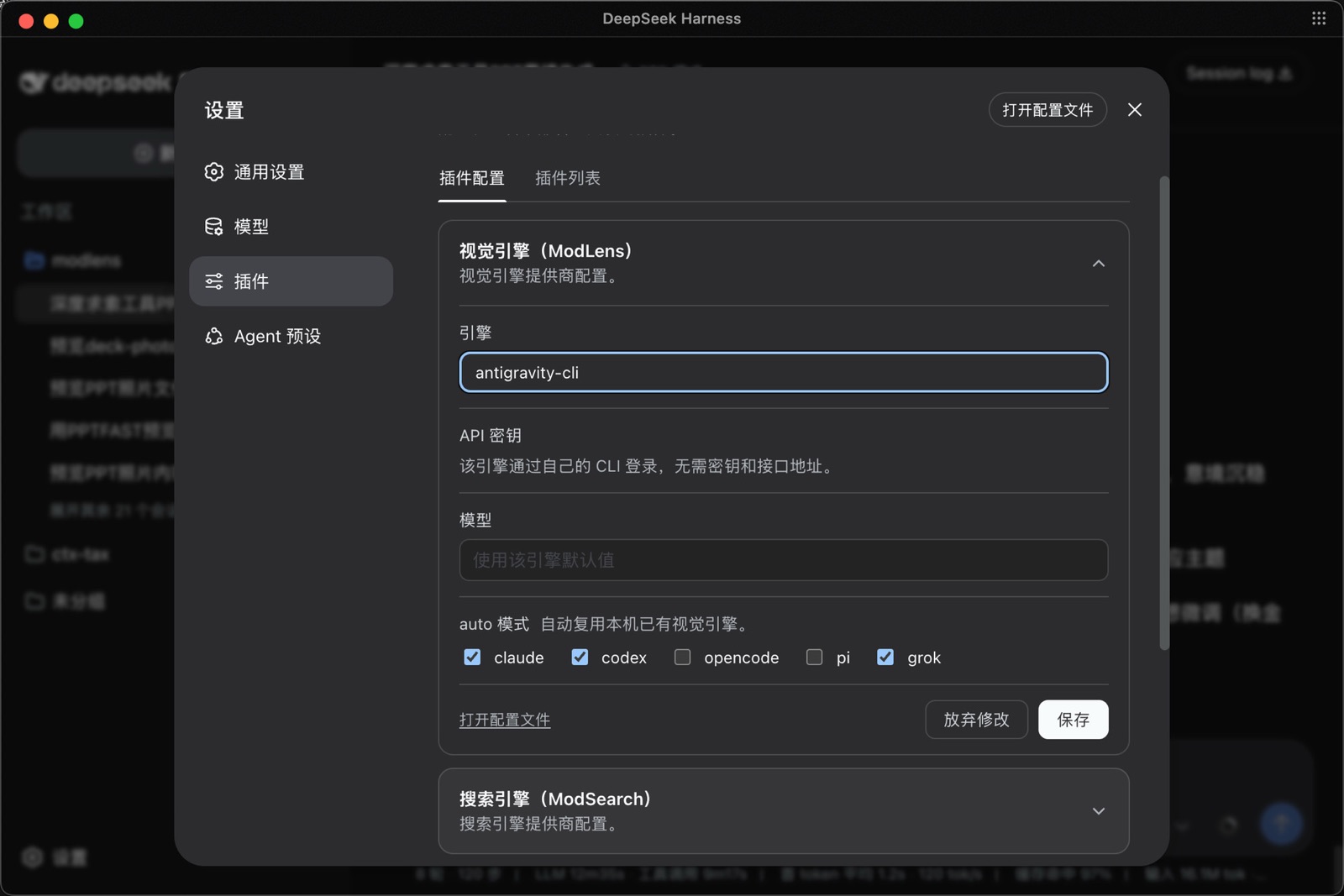
ModLens is a vision plugin for DeepSeek Harness that gives text-only models sight by reading images pasted directly into chat, with zero-config setup and multiple vision engines.
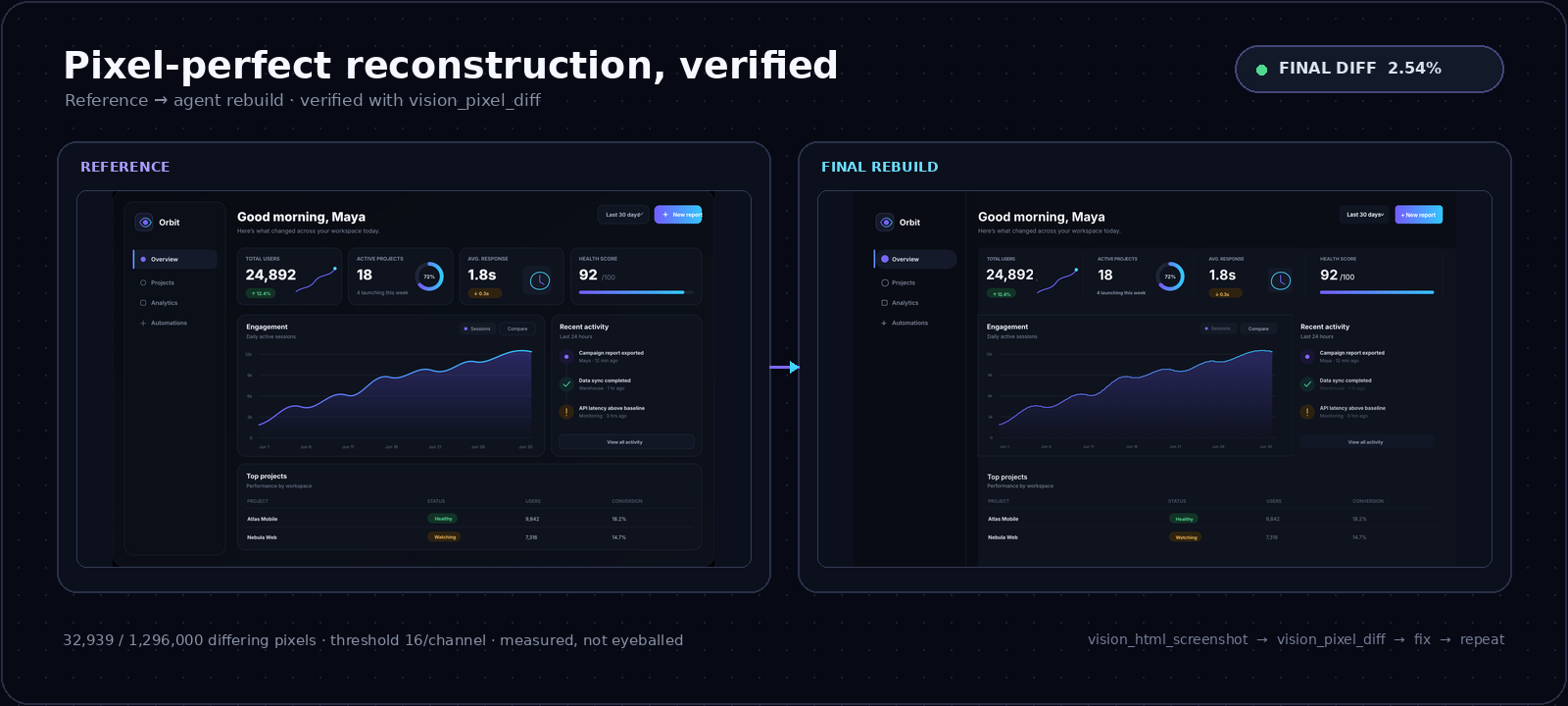
On-demand vision for text-only DeepSeek Harness agents: built-in free keyless vision chain and 14 vision tools, routing image turns as tool calls to vision models with pixel fidelity, no Python needed, one-command install.

Give text-only models in DeepSeek Harness eyes, enabling image Q&A, long-screenshot OCR, UI restoration, and GUI visual tasks.