dsh-usage-info
Run the following command in DeepSeek Harness:
dsh plugin install shenzhantu/dsh-usage-info
Paste the following prompt into your AI chat to install this plugin:
Run dsh plugin install shenzhantu/dsh-usage-info in your terminal to install the plugin; the full source is at https://github.com/shenzhantu/dsh-usage-info
About this plugin
DSH's web interface has long lacked a straightforward usage overview: how many model API calls were made today, which model consumed the most tokens — this information is buried inside session logs with no dedicated page to view. dsh-usage-info fills that gap by adding a Usage Info page under Settings > Plugins, breaking down per-vendor and per-model request counts and token usage (cache-hit input, cache-miss input, output) across two time scopes: today and this month.
The plugin is entirely local in design. It reads only DSH's session logs on your machine, does not compute pricing, does not query official balances, and makes zero upstream network requests. On server start it rebuilds full statistics from logs once, then syncs incrementally, so reopening the page never triggers a re-scan. Persistence is a single local JSON file with no database dependency and no API key requirement. Delete the cache file and it rebuilds automatically on the next start — your data stays yours.
If you run multiple models through DSH's web profile and want to quickly see which vendor accounts for the most calls this month, or you simply prefer a local ledger view that touches no third-party service and generates no extra network traffic, this plugin is ready to use the moment you open Settings.
Use Cases
- Instantly check per-model API call counts and token usage for today or this month
- Compare usage distribution across vendors and models to spot concentration
- Get a pure local usage ledger without triggering any network requests
Best For
- Developers running multiple models via DSH Web who want a full usage picture
- Users who prefer strictly local data and want stats to stay on their machine
- Teams or individuals who need to quickly identify which vendor drives the most calls this month
Related Plugins

Memory layer for coding agents that indexes local session history and auto-recalls relevant context before edits, commands, and failures, with no manual search needed.
Traceable, searchable cross-session memory for AI agents that turns conversation knowledge into a typed knowledge graph and recalls relevant subgraphs instead of replaying full history, natively integrated with DeepSeek Harness.
Gives DSH AI cross-session long-term memory, to-do and skill management, plus multi-session orchestration, external AI delegation, and an infinite canvas that grows with you.
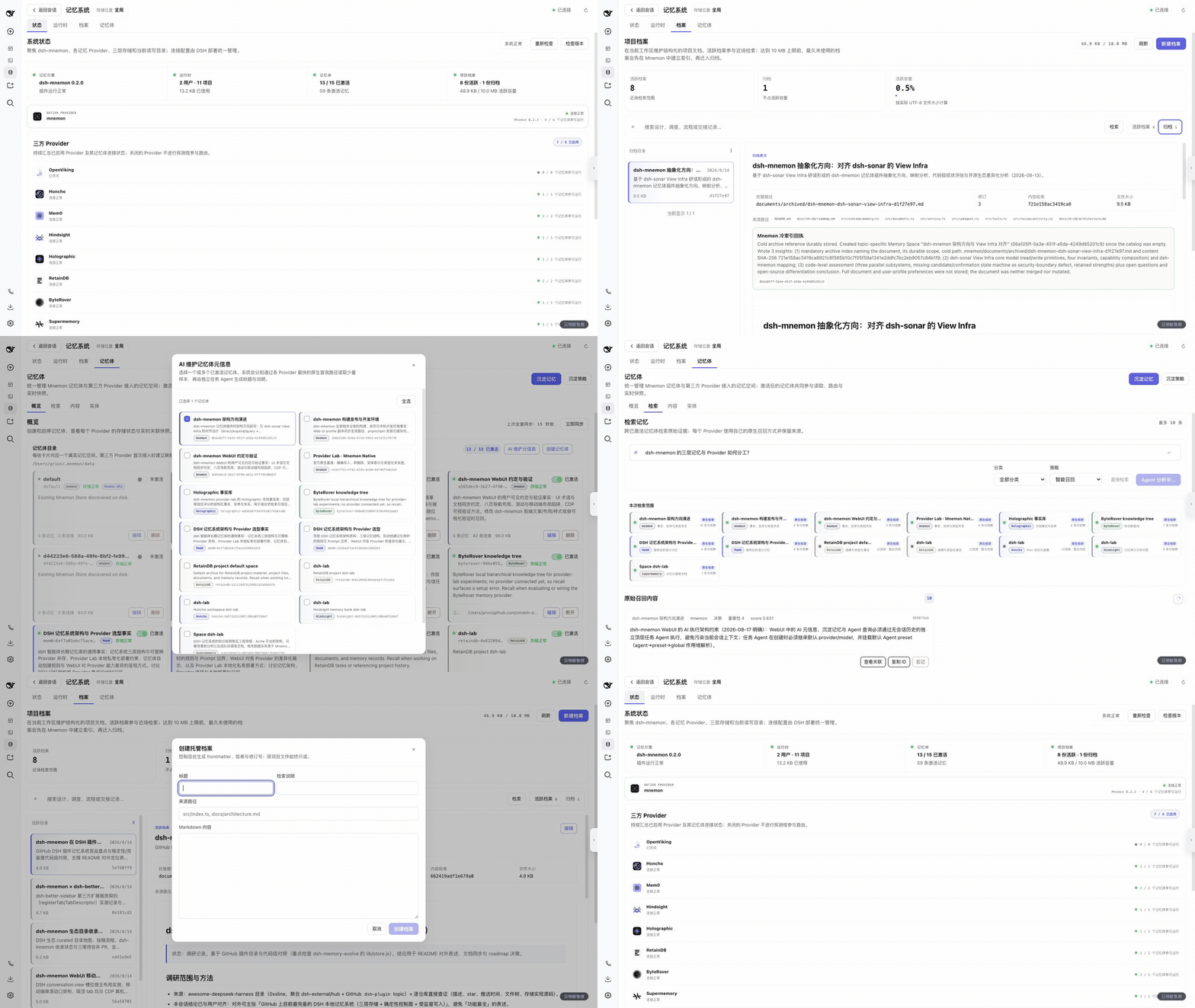
dsh-mnemon is a three-tier, pluggable, Agent-driven memory system for DeepSeek Harness, combining Runtime memory, Project Documents, and replaceable Memory Spaces with nine long-term providers.