dsh-subagent-model
Run the following command in DeepSeek Harness:
dsh plugin install shenzhantu/dsh-subagent-model
Paste the following prompt into your AI chat to install this plugin:
Run dsh plugin install shenzhantu/dsh-subagent-model in your DeepSeek Harness terminal to install the plugin; the source repository is available at https://github.com/shenzhantu/dsh-subagent-model . After installation, restart your DSH web session and the Subagent Model menu will appear to the left of the official model selector.
About this plugin
By default, DSH subagents inherit the main agent's model, so while your flagship model handles core reasoning, every delegated retrieval, cleanup, and audit task also runs on the same expensive model. dsh-subagent-model separates the two concerns: the main model stays under DSH's native management, while subagents get their own provider, model, and reasoning-effort assignment that applies globally without touching the session's primary model.
The plugin revolves around three configuration layers: the subagent model decides who does the work, reasoning effort controls how deep the thinking goes, and the subagent profile applies a persona-plus-tool-filter combination that is functionally equivalent to an Agent preset and covers roughly 90 percent of preset behavior. All three draw from the same shared model directory, the menu mirrors the official UI one-to-one, and every selection persists instantly with no save button. On first launch the plugin also registers two ready-made profiles, Quick Execute and Read-only Research, as real user presets, so renaming, editing, or deleting them in Settings syncs back to the plugin menu automatically.
Built for developers who run a flagship model as the main agent and want to offload independent retrieval, code auditing, or document organizing to a cheaper or more specialised model. Once installed, a Subagent button appears to the left of the official model menu; two clicks are all it takes to switch, and the provider/model/effort/profile tag in the subagent tree lets you verify the actual configuration at a glance.
Use Cases
- Run the main agent on a flagship model while delegating retrieval and summarization to a cheaper one
- Assign read-only tool profiles to subagents during batch code audits to prevent accidental file edits
- Switch subagent model and reasoning effort globally across all parallel projects in one click
Best For
- Developers running a flagship model as the main agent who want delegated tasks on a budget model
- Platform users needing fine-grained control over subagent tool profiles and persona behavior
- DSH web users building AI workflows who care about inference cost and latency
Related Plugins
A unified suite combining hot runtime injection, task-aware thinking-mode routing, and a graded session protocol with red-team gates to sustain model diligence across long-horizon inference.
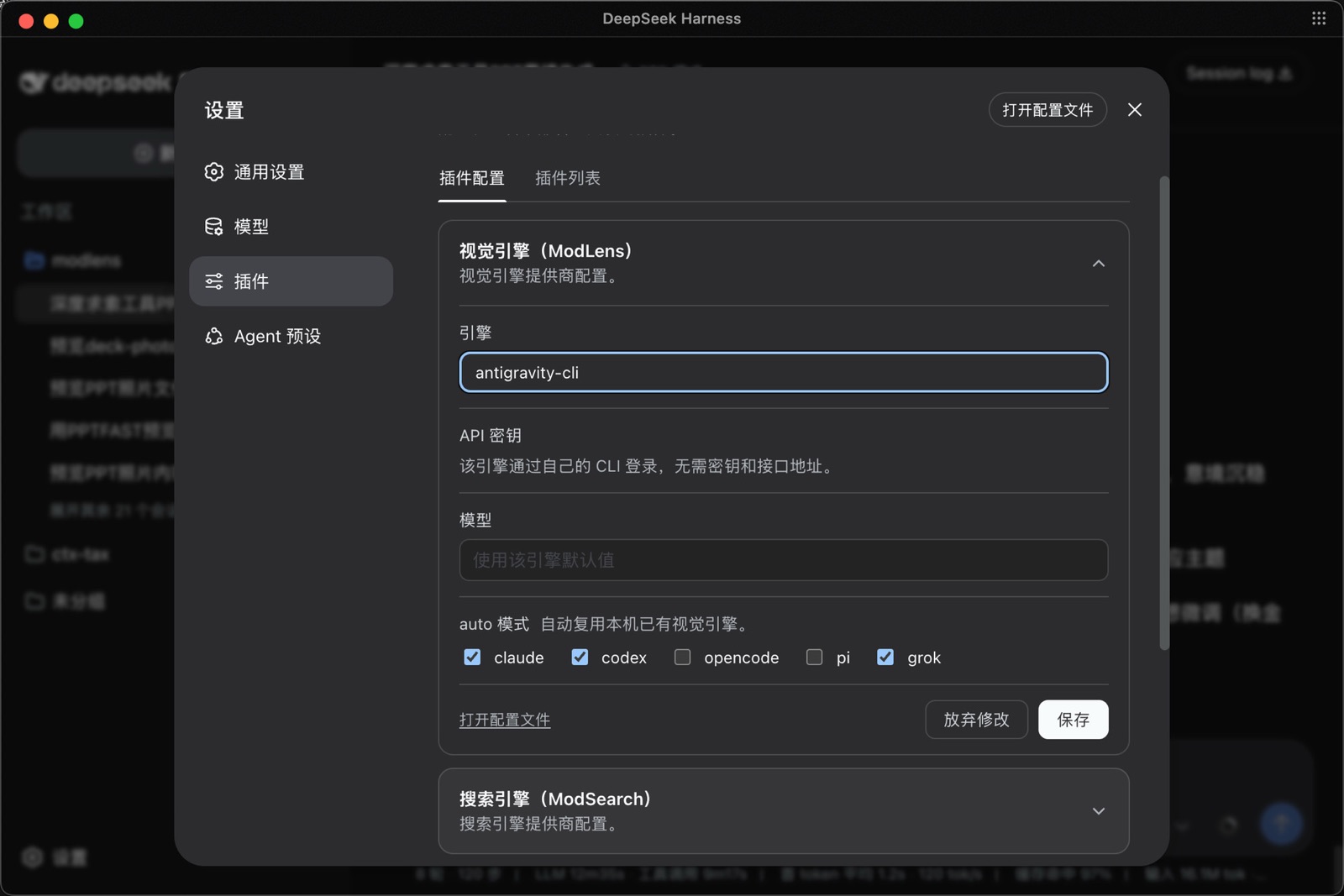
ModLens is a vision plugin for DeepSeek Harness that gives text-only models sight by reading images pasted directly into chat, with zero-config setup and multiple vision engines.
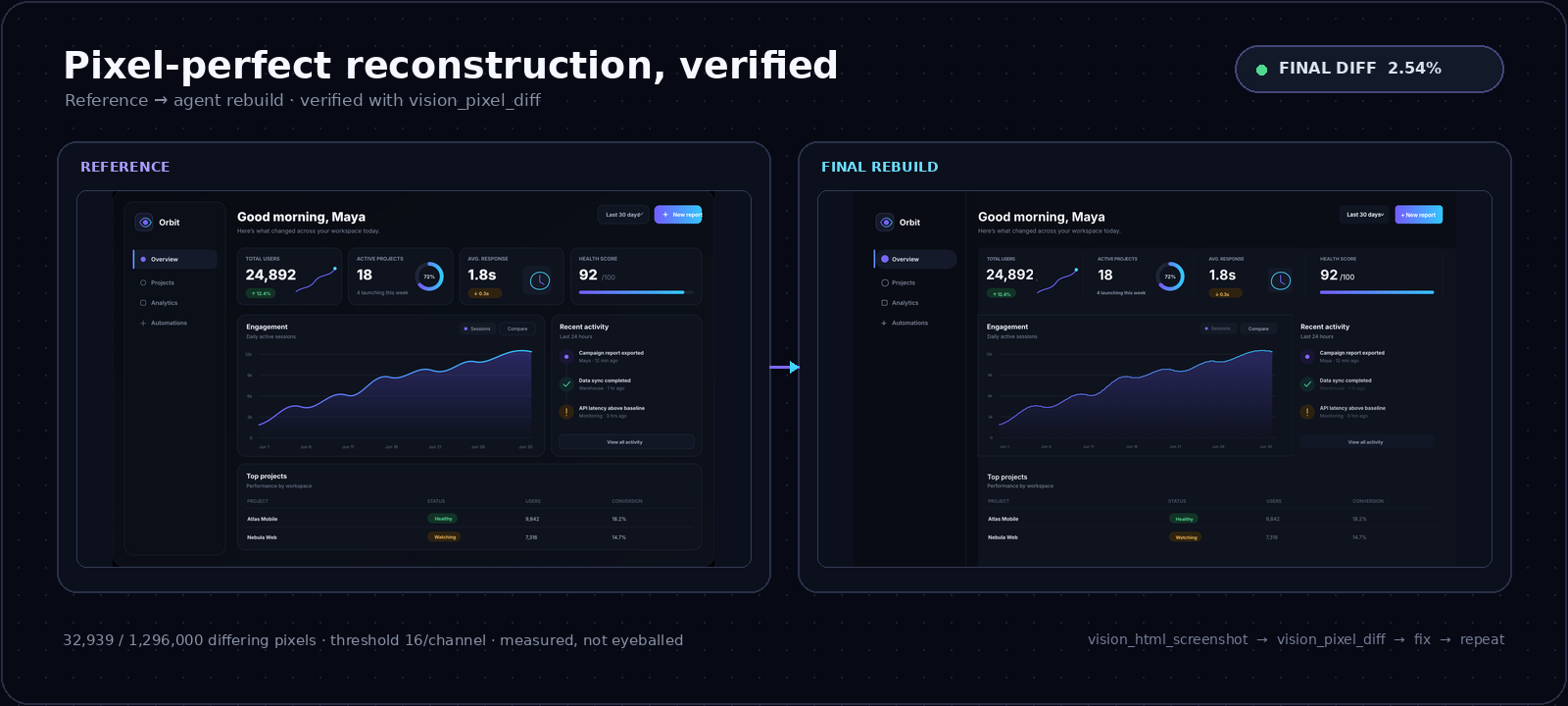
On-demand vision for text-only DeepSeek Harness agents: built-in free keyless vision chain and 14 vision tools, routing image turns as tool calls to vision models with pixel fidelity, no Python needed, one-command install.
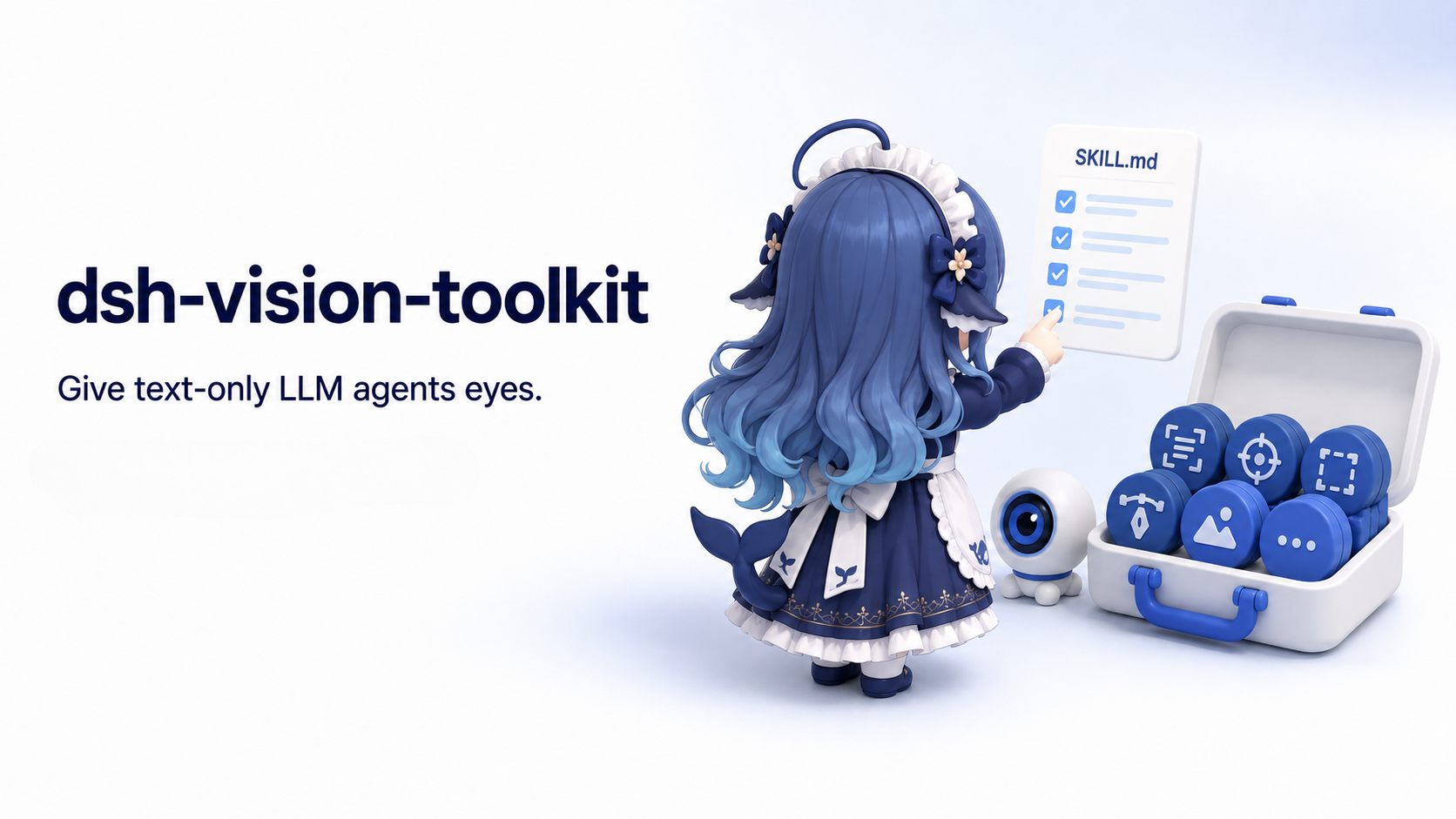
Give text-only models in DeepSeek Harness eyes, enabling image Q&A, long-screenshot OCR, UI restoration, and GUI visual tasks.