dsh-voice-prompt-compressor
Run the following command in DeepSeek Harness:
dsh plugin install yuzh1090/dsh-voice-prompt-compressor
Paste the following prompt into your AI chat to install this plugin:
Run dsh plugin install yuzh1090/dsh-voice-prompt-compressor in your DeepSeek Harness terminal to install the plugin; the full source is available at https://github.com/yuzh1090/dsh-voice-prompt-compressor .
About this plugin
Voice dictation and spoken notes tend to be cluttered with filler words ("um," "like," "you know"), accidental repetitions, and politeness padding ("please," "could you," "thanks"). Feeding that raw transcript straight into an LLM wastes tokens and dilutes the actual technical requirements and business constraints buried in the noise. dsh-voice-prompt-compressor tackles exactly this: a fully local, deterministic pipeline (normalize → strip-fillers → strip-politeness → dedupe) compresses verbose transcriptions into lean, structured prompts with zero network calls and zero LLM tokens consumed.
The plugin ships two entry points. The compress_voice_text tool lets the agent perform on-demand compression and returns the cleaned text along with savings stats (estimatedTokensSaved, compression ratio, per-category removal counts). The bundled voice-prompt-compressor skill auto-triggers the moment you paste a rambling dictation into the chat, compresses it, and organizes the result into a four-section prompt (Context / Goal / Constraints / Deliverables). Bilingual wordlists cover both Chinese and English with automatic language detection via CJK ratio. Compression strength is configurable across light, balanced, and aggressive modes, and politeness retention can be toggled independently.
It is ideal for technical writers, product managers, and developers who rely heavily on voice input to capture requirements, meeting notes, or task descriptions. The guiding principle is simple: remove redundancy, never alter meaning — technical details, edge cases, and business rules are preserved verbatim.
Use Cases
- Compressing voice-dictated requirements before feeding them to an LLM for code or doc generation
- Turning lengthy meeting transcripts into structured task descriptions
- Capturing ideas via voice and quickly distilling them into a clear four-section prompt
Best For
- Product managers and technical writers who rely on voice input to capture requirements
- Developers who prefer local processing to minimize LLM token costs
- Engineers who need to quickly structure rambling spoken notes into clear documentation
Related Plugins
A unified suite combining hot runtime injection, task-aware thinking-mode routing, and a graded session protocol with red-team gates to sustain model diligence across long-horizon inference.
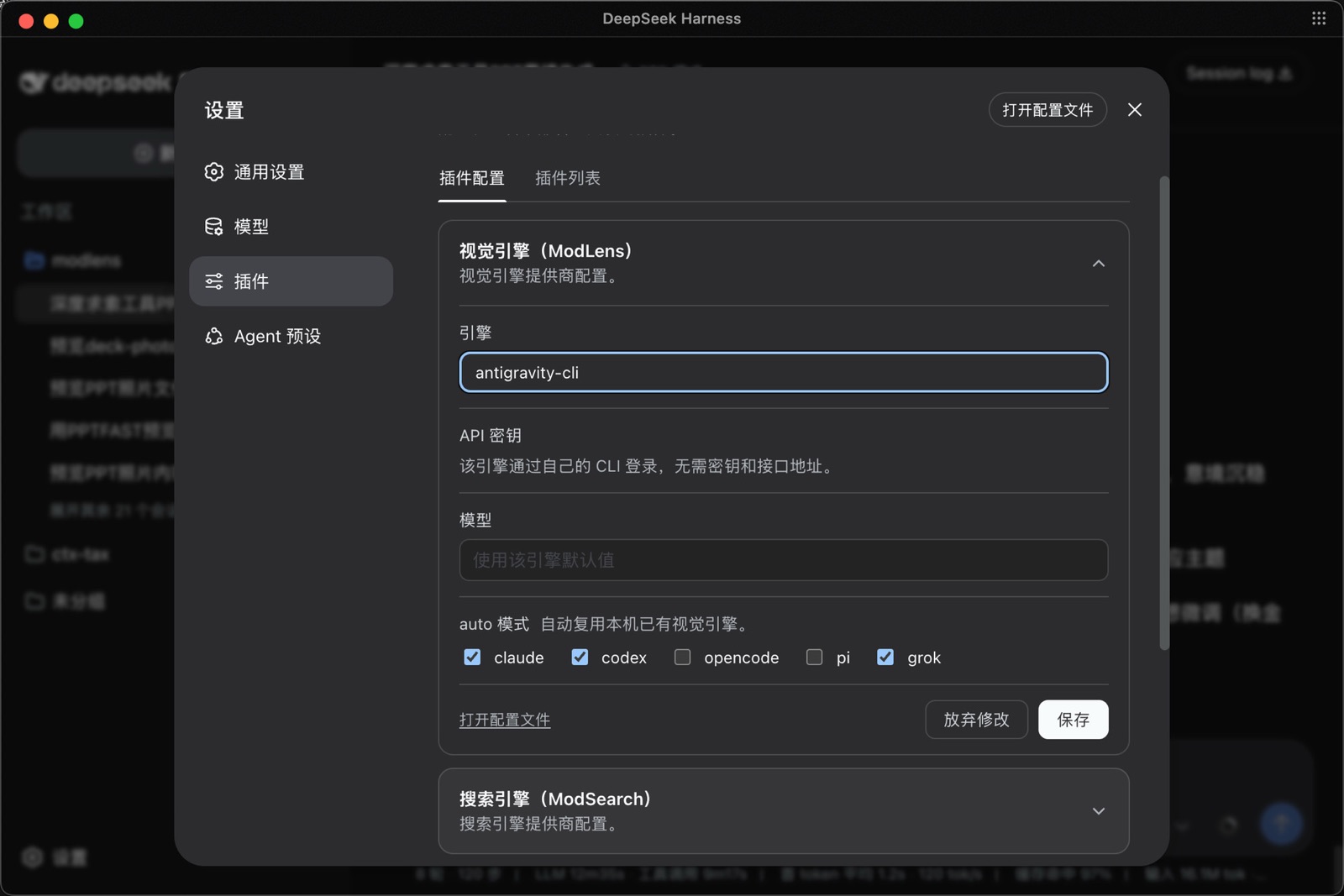
ModLens is a vision plugin for DeepSeek Harness that gives text-only models sight by reading images pasted directly into chat, with zero-config setup and multiple vision engines.
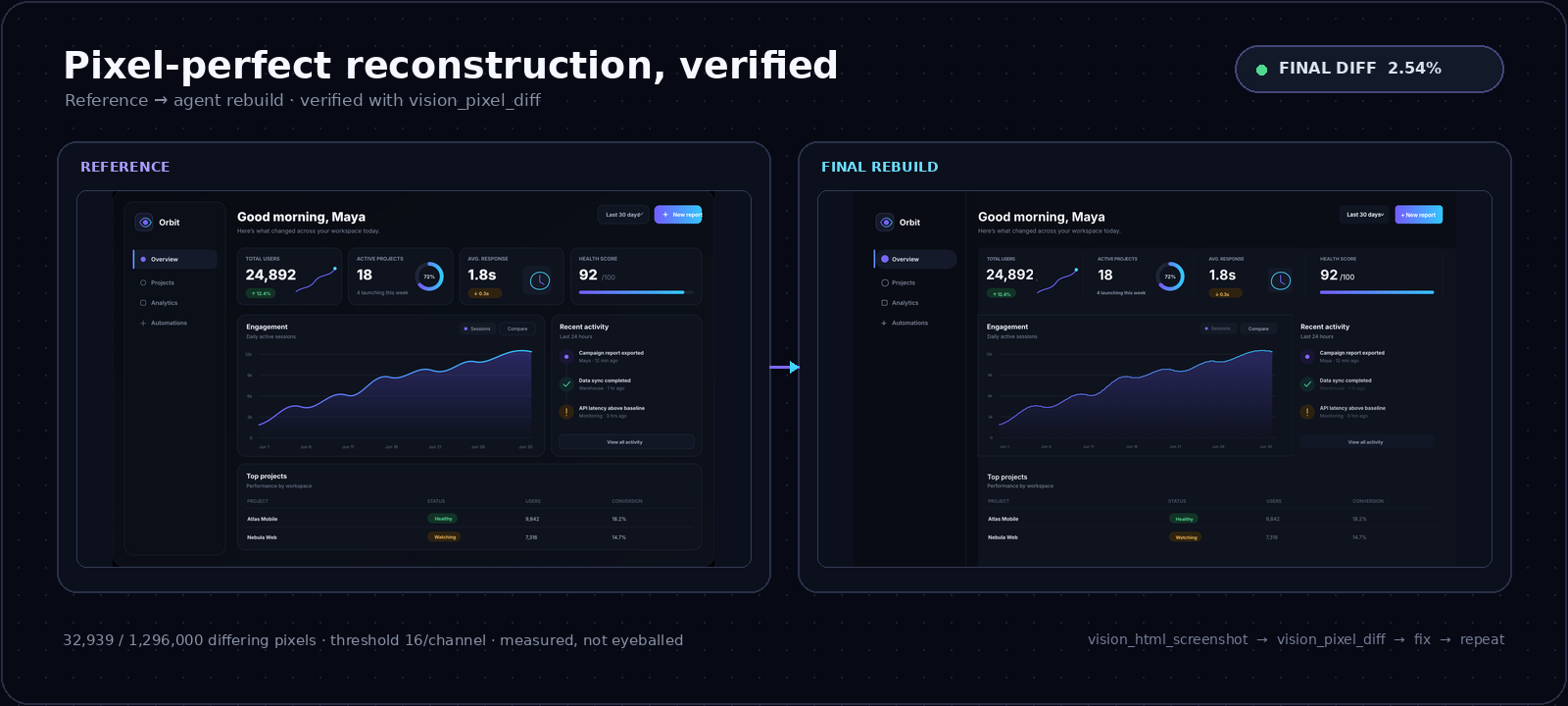
On-demand vision for text-only DeepSeek Harness agents: built-in free keyless vision chain and 14 vision tools, routing image turns as tool calls to vision models with pixel fidelity, no Python needed, one-command install.

Give text-only models in DeepSeek Harness eyes, enabling image Q&A, long-screenshot OCR, UI restoration, and GUI visual tasks.