dsh-text-reverse
Run the following command in DeepSeek Harness:
dsh plugin install uckkk/dsh-text-reverse
Paste the following prompt into your AI chat to install this plugin:
Run dsh plugin install uckkk/dsh-text-reverse in your terminal to install this plugin; the full source lives at https://github.com/uckkk/dsh-text-reverse . After installation, add it to your profile bundles as instructed.
About this plugin
dsh-text-reverse is a minimal local text-reversal tool for the DeepSeek Harness plugin ecosystem. It addresses a narrow but practical need: when a model conversation requires flipping a string from end to start, you get a deterministic, registered tool call instead of relying on an external API, a network round-trip, or a prompt trick that asks the model to emit characters one by one.
Under the hood it is pure Node.js with zero HTTP calls and no third-party runtime dependencies; every byte is processed inside your local process. Once installed, the plugin registers a tool the model can invoke mid-conversation: in it a Unicode string, out comes the character-order reversal. Because nothing leaves the machine, latency is bound to local CPU speed and typically completes within a single function-call cycle, making it suitable for tight pipeline stages.
It fits three use cases well: developers who are privacy-sensitive and do not want text leaving the host during a session; integration engineers who want a simple, verifiable deterministic tool to smoke-test the tool-calling pipeline; and anyone working in sandboxed, air-gapped, or fully offline environments where external services are simply unavailable. Licensed under MIT, the entire source is short enough to review in a few lines before you run it.
Use Cases
- Reversing a string mid-conversation without any network call.
- Attaching a deterministic tool in air-gapped or offline setups.
- Smoke-testing the model tool-calling pipeline with a minimal tool.
Best For
- Privacy-sensitive developers who keep all text on-host.
- Engineers in sandboxed, air-gapped, or internal-network environments.
- Integration testers who need a tiny verifiable tool for pipeline checks.
Related Plugins
A unified suite combining hot runtime injection, task-aware thinking-mode routing, and a graded session protocol with red-team gates to sustain model diligence across long-horizon inference.
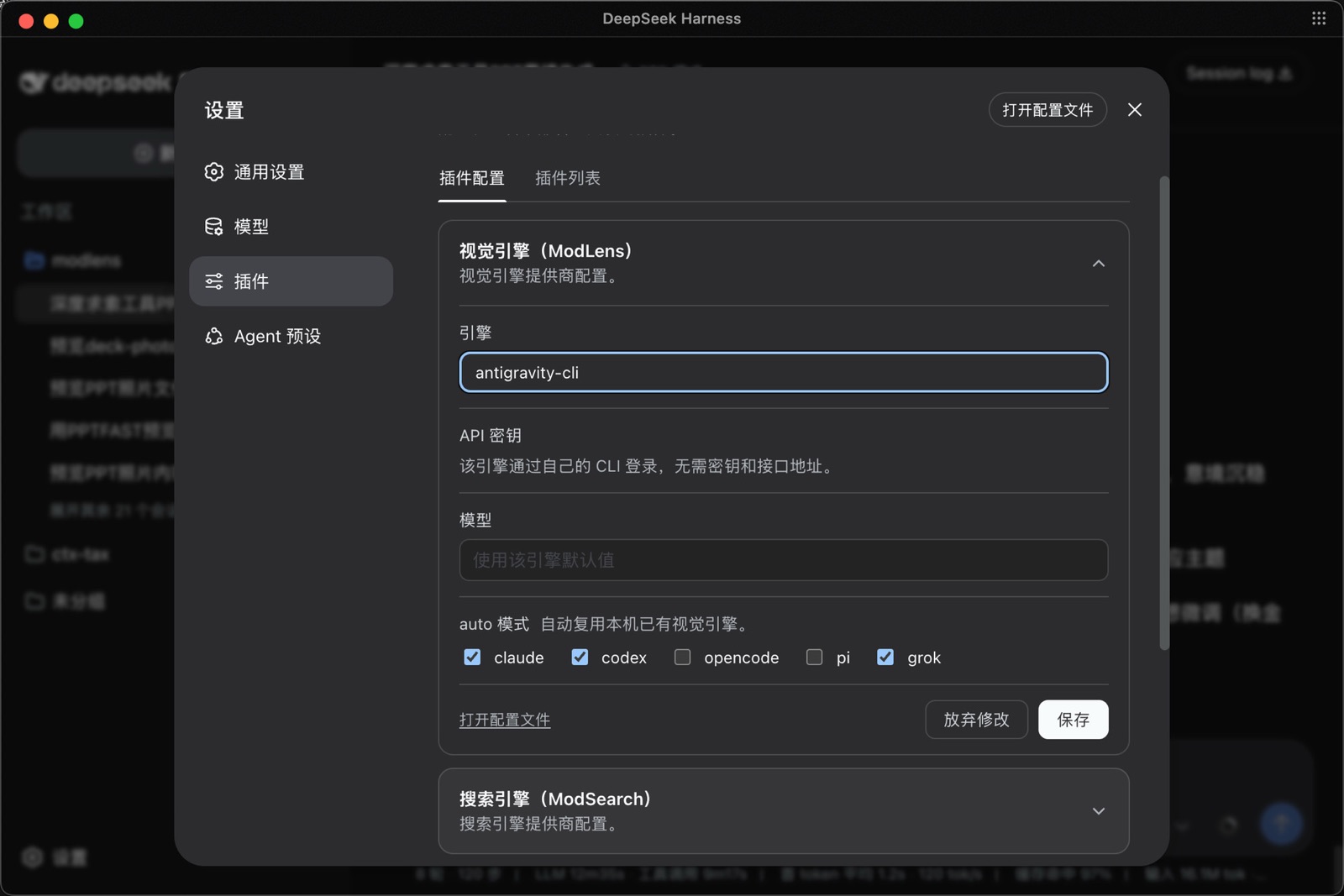
ModLens is a vision plugin for DeepSeek Harness that gives text-only models sight by reading images pasted directly into chat, with zero-config setup and multiple vision engines.
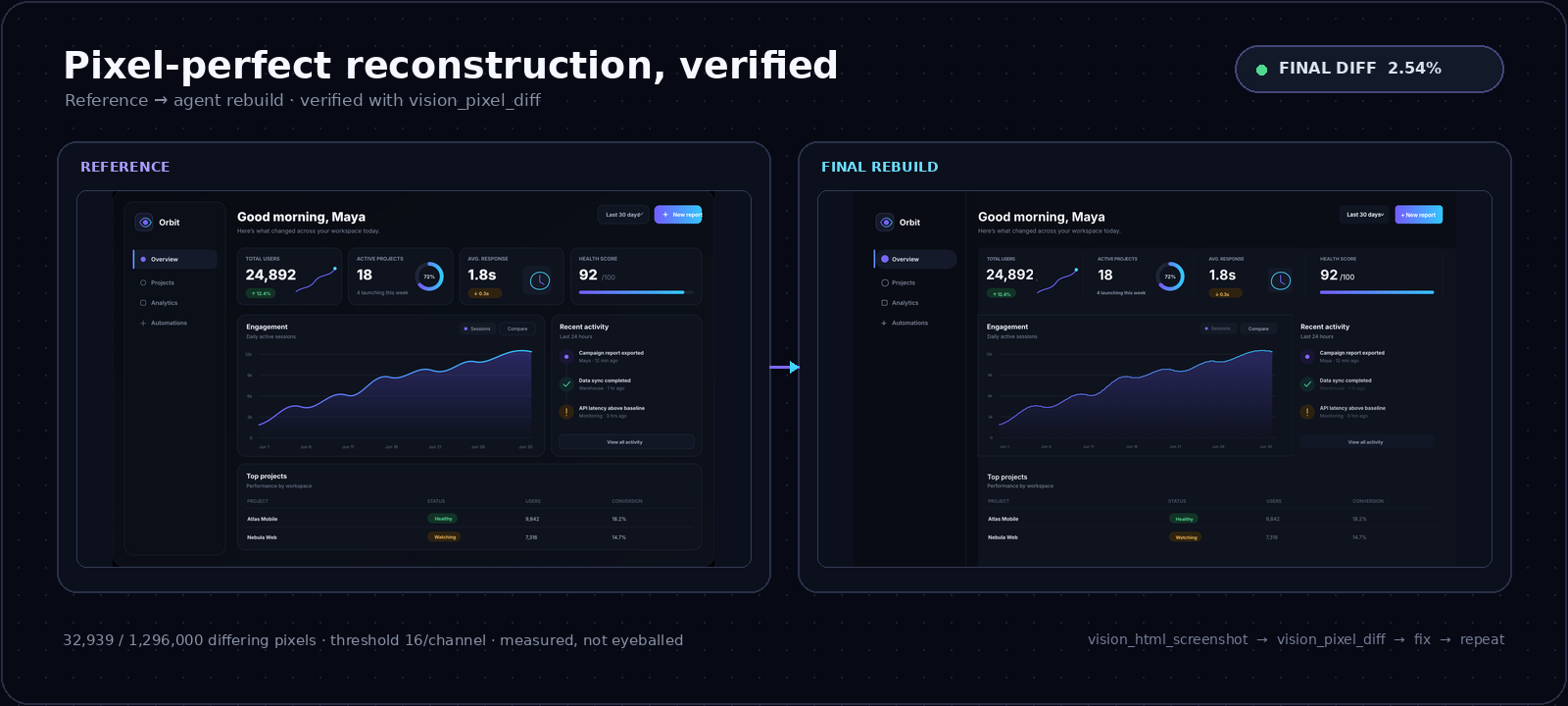
On-demand vision for text-only DeepSeek Harness agents: built-in free keyless vision chain and 14 vision tools, routing image turns as tool calls to vision models with pixel fidelity, no Python needed, one-command install.

Give text-only models in DeepSeek Harness eyes, enabling image Q&A, long-screenshot OCR, UI restoration, and GUI visual tasks.