dsh-stddev
Run the following command in DeepSeek Harness:
dsh plugin install uckkk/dsh-stddev
Paste the following prompt into your AI chat to install this plugin:
Run dsh plugin install uckkk/dsh-stddev in your terminal to install the plugin; the source code is available at https://github.com/uckkk/dsh-stddev .
About this plugin
In model-inference and data-processing conversation flows, standard deviation is one of the most commonly needed measures of dispersion, yet you rarely want to pull in a full statistics library or fire off a network request just to compute a single number. dsh-stddev is a lightweight tool built for exactly that: it registers standard-deviation calculation as an in-session tool that the model can invoke on demand during reasoning, with zero extra configuration.
The entire plugin is implemented in pure Node.js and runs entirely locally with zero network dependencies. That means it stays stable in offline environments, intranet deployments, or latency-sensitive pipelines, and will never break because an external service is unreachable. Usage is equally straightforward: once installed, you simply call the tool the plugin registers within your conversation, with no API keys or additional dependencies required.
It is well suited for developers and teams who need instant statistical metrics inside a model-inference workflow and want to keep their dependency footprint minimal, avoid heavyweight scientific-computing libraries, or operate under network-isolation constraints. Released under the MIT license, it is free to use, fork, and extend for personal or commercial projects.
Use Cases
- Compute data dispersion on the fly during model-inference sessions
- Run statistical metric calculations in offline or intranet environments without network access
- Avoid pulling in heavyweight statistics libraries in lightweight workflows
Best For
- Developers who need on-demand standard deviation metrics inside inference pipelines
- Data engineers working in network-isolated or offline environments
- Teams that want minimal dependencies and quick statistical tool integration
Related Plugins
A unified suite combining hot runtime injection, task-aware thinking-mode routing, and a graded session protocol with red-team gates to sustain model diligence across long-horizon inference.
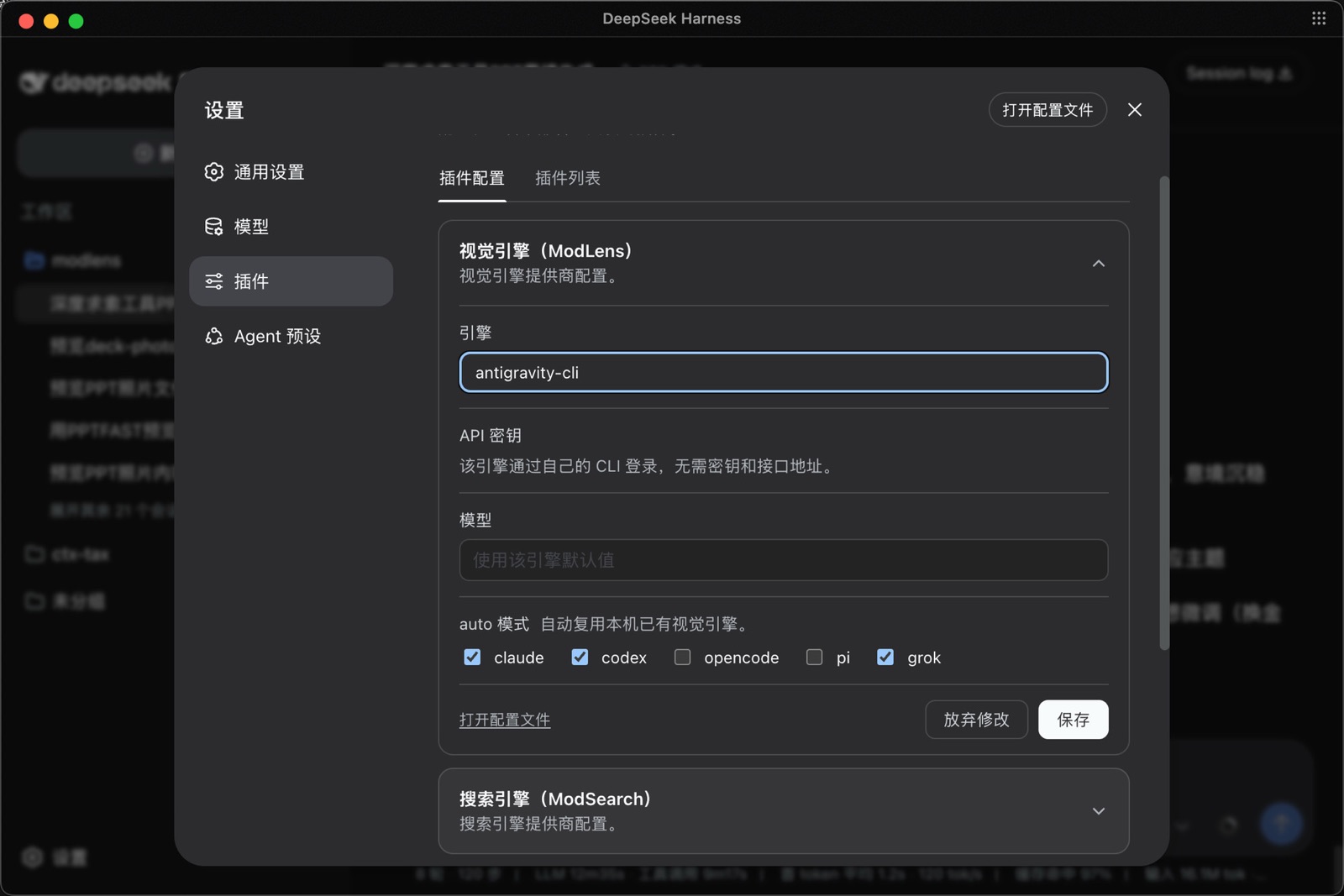
ModLens is a vision plugin for DeepSeek Harness that gives text-only models sight by reading images pasted directly into chat, with zero-config setup and multiple vision engines.
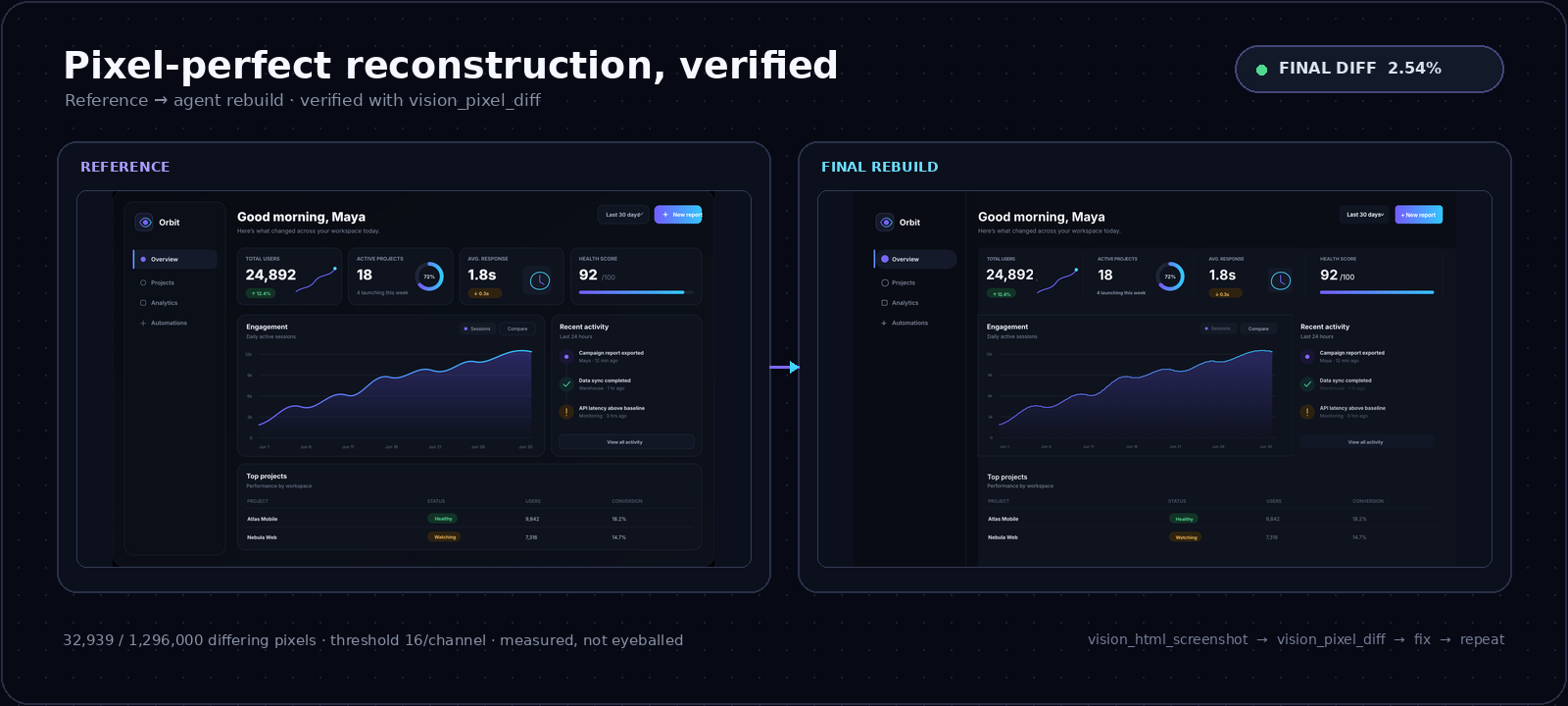
On-demand vision for text-only DeepSeek Harness agents: built-in free keyless vision chain and 14 vision tools, routing image turns as tool calls to vision models with pixel fidelity, no Python needed, one-command install.
Give text-only models in DeepSeek Harness eyes, enabling image Q&A, long-screenshot OCR, UI restoration, and GUI visual tasks.