dsh-prime-factors
Run the following command in DeepSeek Harness:
dsh plugin install uckkk/dsh-prime-factors
Paste the following prompt into your AI chat to install this plugin:
Run dsh plugin install uckkk/dsh-prime-factors in DeepSeek Harness to install this prime factorization plugin; the full source is available at https://github.com/uckkk/dsh-prime-factors
About this plugin
Prime factorization is a fundamental problem in number theory, yet real-world tasks such as validating the composition of large integers, debugging cryptographic parameters, or simply exploring mathematics call for a fast, reliable, and network-free local tool. dsh-prime-factors was built for exactly this purpose: it wraps the operation as a tool that can be invoked directly within an LLM conversation, eliminating the need to manually write scripts or hit an external API.
The plugin is implemented in pure Node.js with zero third-party network dependencies and works out of the box after installation. Its core capability is decomposing any positive integer into a product of prime factors, with all computation performed locally so your data never leaves the machine, a natural fit for privacy-sensitive or fully air-gapped environments.
It is well suited for developers and researchers who need quick number-theory calculations inside a dialogue, as well as for those who frequently encounter large-integer factorization while studying cryptography or debugging algorithms. If you want your model to not only talk about math but actually compute it, this lightweight plugin is a pragmatic choice.
Use Cases
- Quickly factorize any positive integer within an LLM conversation
- Verify cryptographic parameters or debug algorithms by factoring large numbers locally
- Explore number theory with instant factor answers in chat
Best For
- Developers and researchers who need routine number-theory calculations
- Cryptography or algorithm learners who regularly factor large integers
- Users who require data to stay on-machine and prefer pure local computation
Related Plugins
A unified suite combining hot runtime injection, task-aware thinking-mode routing, and a graded session protocol with red-team gates to sustain model diligence across long-horizon inference.
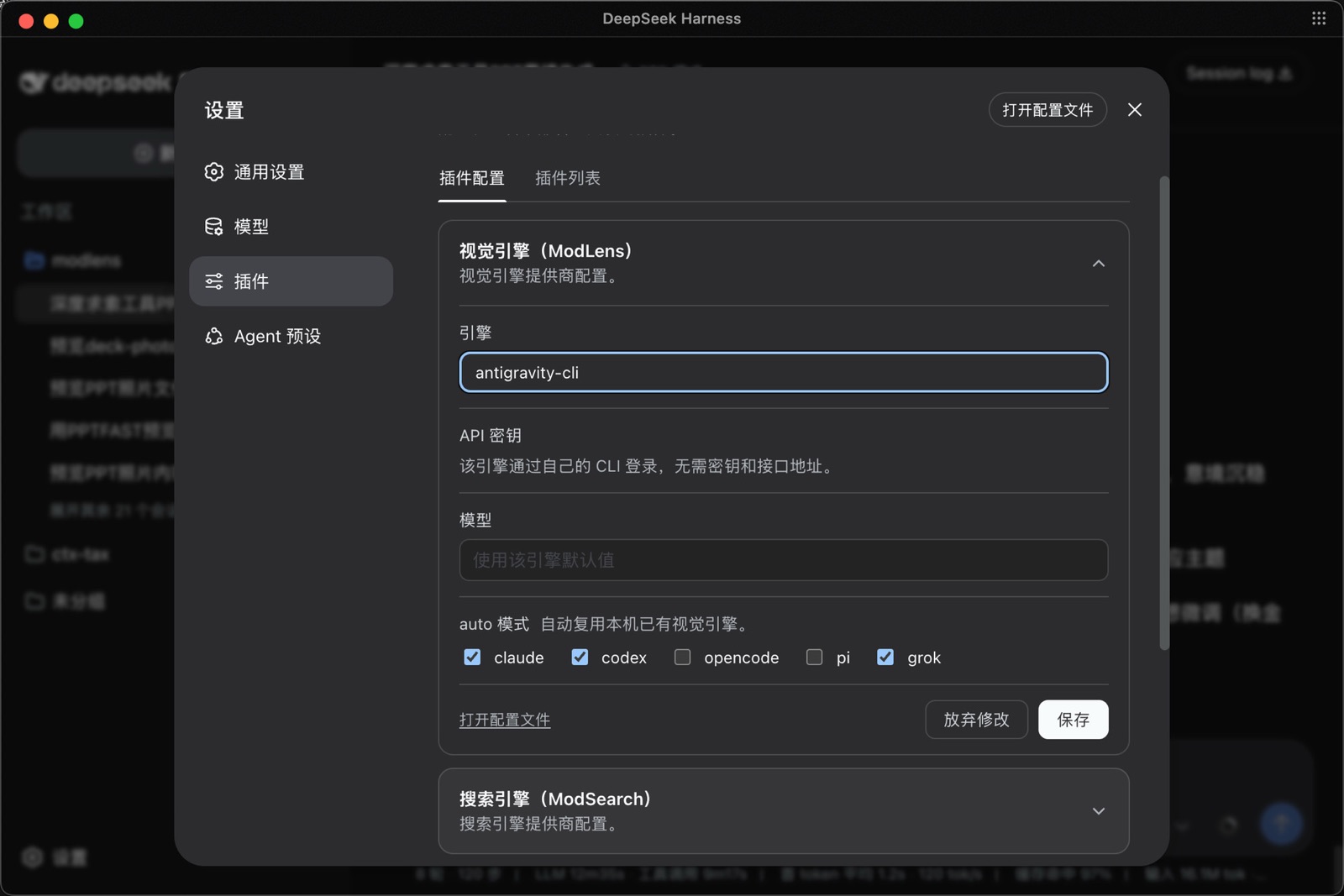
ModLens is a vision plugin for DeepSeek Harness that gives text-only models sight by reading images pasted directly into chat, with zero-config setup and multiple vision engines.
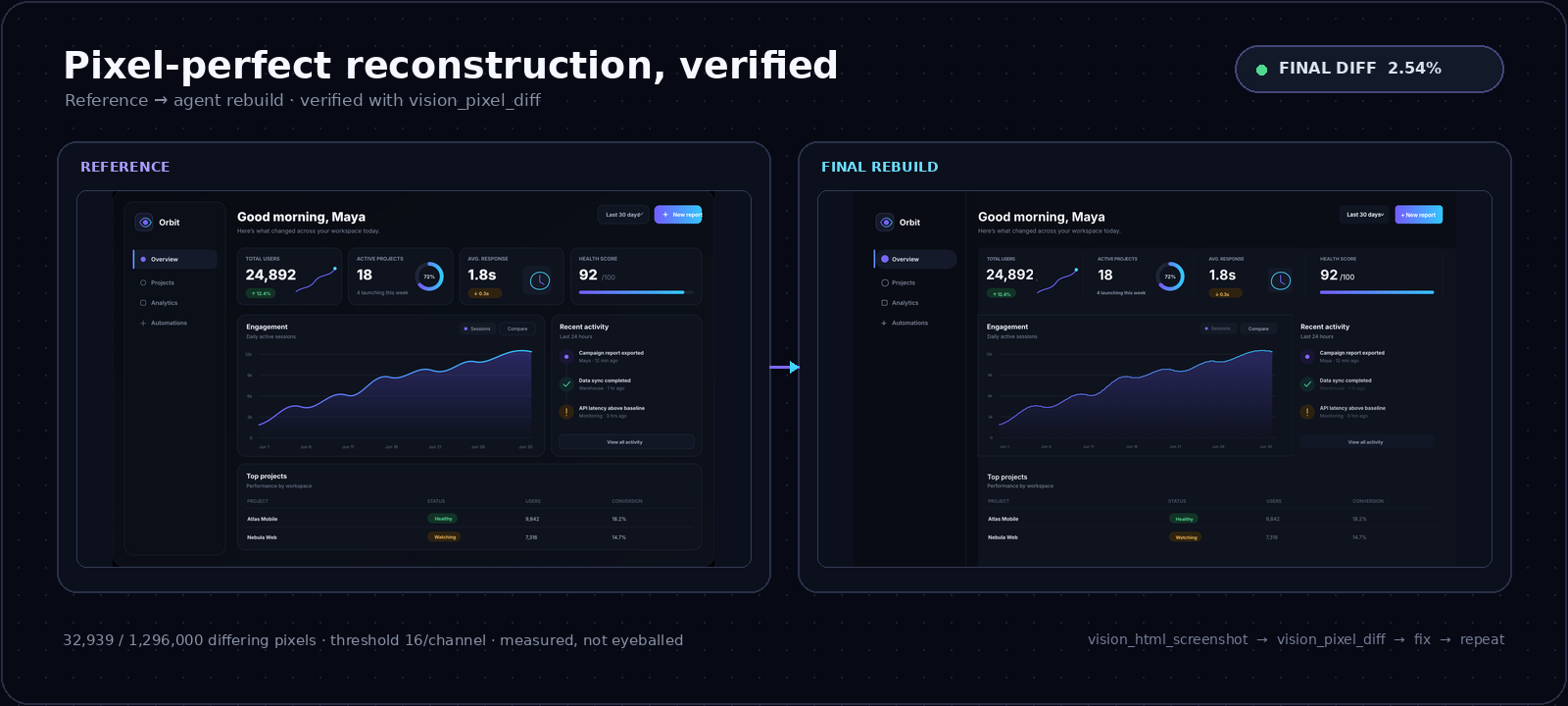
On-demand vision for text-only DeepSeek Harness agents: built-in free keyless vision chain and 14 vision tools, routing image turns as tool calls to vision models with pixel fidelity, no Python needed, one-command install.

Give text-only models in DeepSeek Harness eyes, enabling image Q&A, long-screenshot OCR, UI restoration, and GUI visual tasks.