dsh-llm-rate-limit
Run the following command in DeepSeek Harness:
dsh plugin install Asong6824/dsh-llm-rate-limit
Paste the following prompt into your AI chat to install this plugin:
Run dsh plugin install Asong6824/dsh-llm-rate-limit in your DeepSeek Harness terminal to install the rate-limiting plugin from https://github.com/Asong6824/dsh-llm-rate-limit.
About this plugin
Running multiple parallel agents, subagents, or background retry loops can flood a provider with LLM requests almost instantly, triggering HTTP 429 errors, throttling, or brief connection drops. dsh-llm-rate-limit inserts a pacing layer before any request reaches the provider, turning wall-hitting into orderly queuing.
Per-provider, it offers configurable RPM token buckets with burst capacity, an optional estimated-tokens-per-minute budget that reconciles against actual usage, concurrency slots with bounded FIFO queues (timeout and cancellation supported), and an adaptive cooldown driven by error codes, HTTP statuses, and Retry-After headers. Auxiliary background traffic is explicitly shed so it never blocks primary work; every dsh-llm-retry attempt is admitted independently, and the plugin itself never performs retries.
If you are driving DeepSeek, Volcengine Ark, or other DSH providers through multiple concurrent agents and want rate-limit control solved locally rather than relying on remote retries, this plugin is the gatekeeper that keeps things in line.
Use Cases
- Multiple parallel agents or subagents fire LLM requests simultaneously, repeatedly hitting HTTP 429 limits
- Serving multiple providers such as DeepSeek and Volcengine Ark with independent, configurable rate policies
- Background retries or auxiliary traffic must not block primary foreground requests
Best For
- Developers orchestrating multiple concurrent LLM agents through DSH
- Platform or ops teams that need per-provider local rate policies across several LLM vendors
- Engineering teams preferring local request pacing over reliance on remote retry logic
Related Plugins
A unified suite combining hot runtime injection, task-aware thinking-mode routing, and a graded session protocol with red-team gates to sustain model diligence across long-horizon inference.
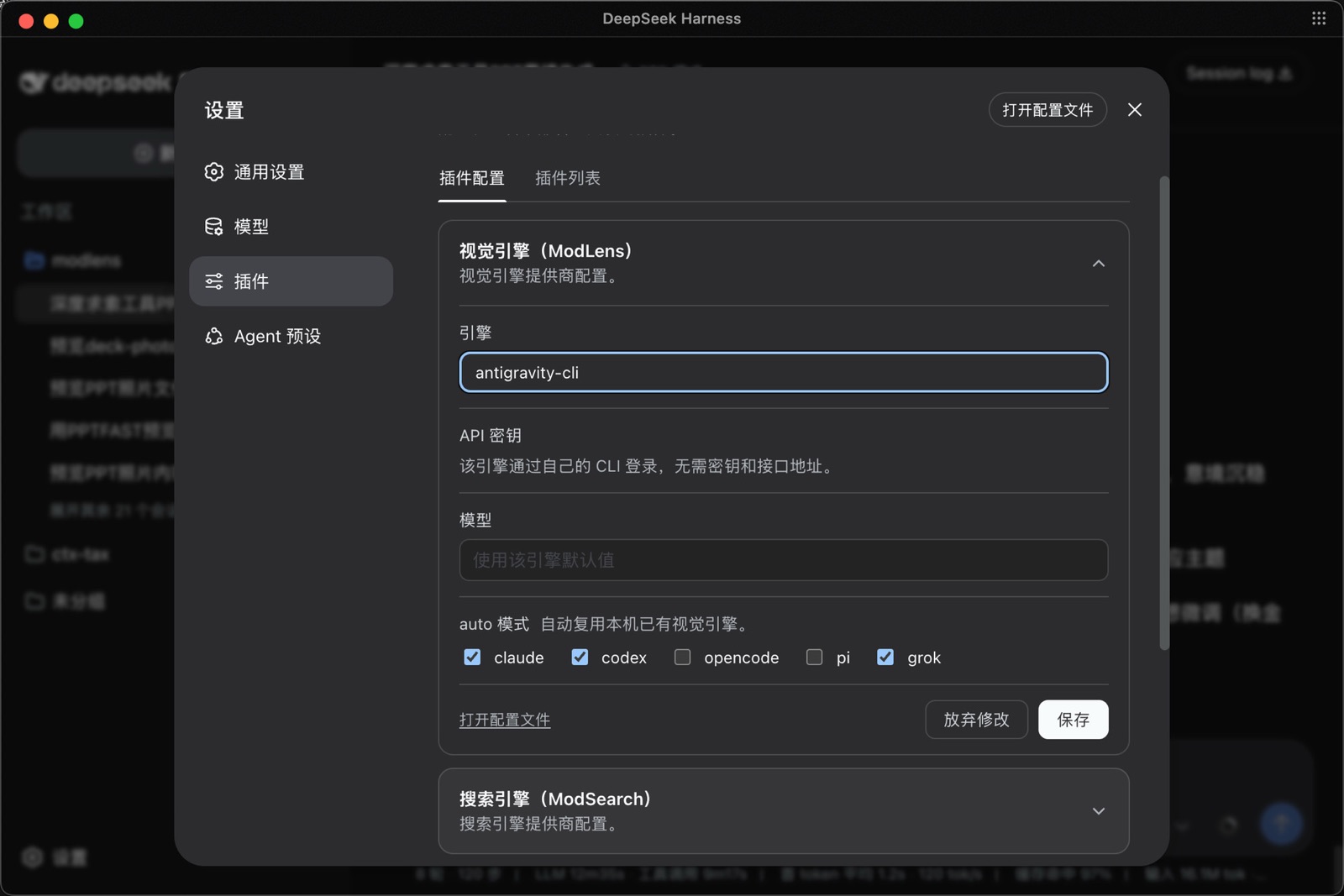
ModLens is a vision plugin for DeepSeek Harness that gives text-only models sight by reading images pasted directly into chat, with zero-config setup and multiple vision engines.
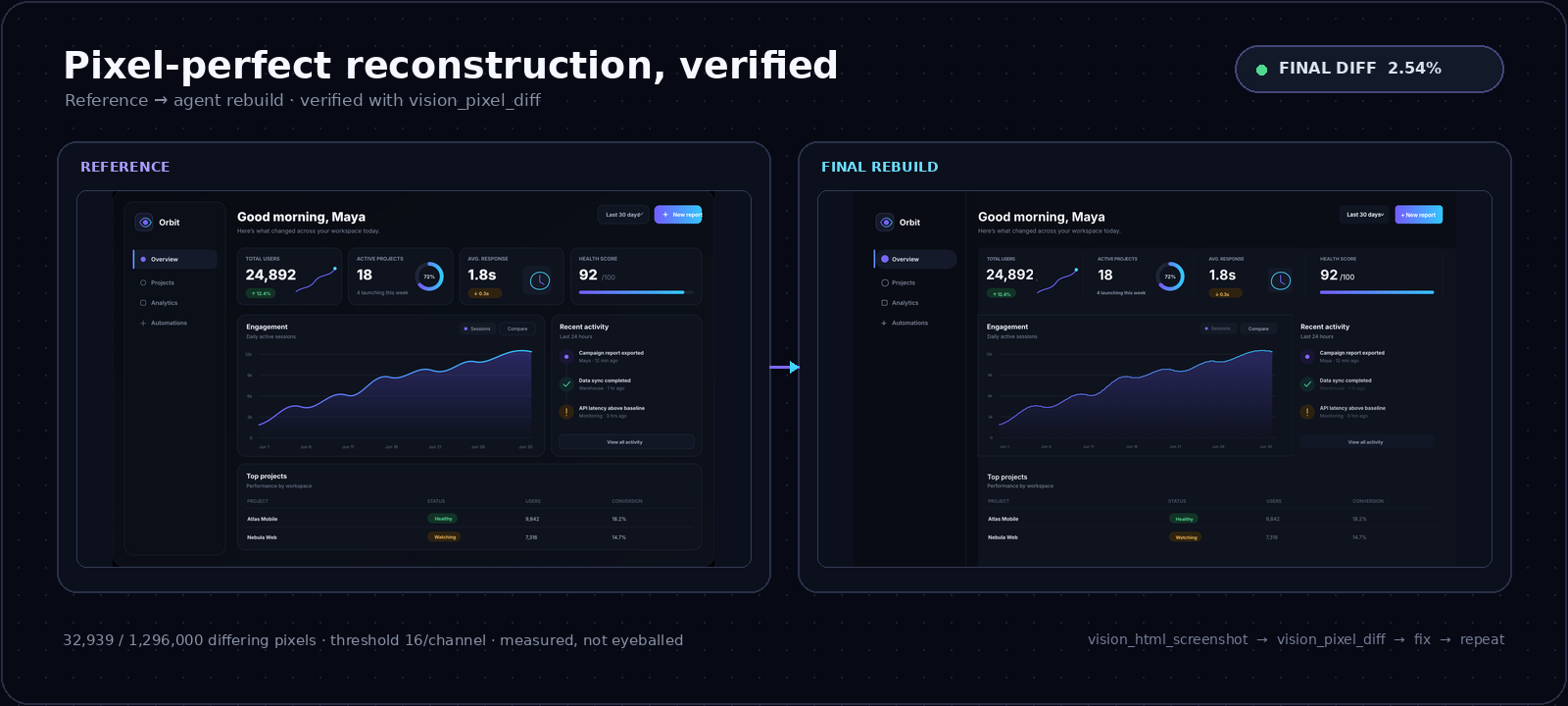
On-demand vision for text-only DeepSeek Harness agents: built-in free keyless vision chain and 14 vision tools, routing image turns as tool calls to vision models with pixel fidelity, no Python needed, one-command install.

Give text-only models in DeepSeek Harness eyes, enabling image Q&A, long-screenshot OCR, UI restoration, and GUI visual tasks.