dsh-charging-habit
Run the following command in DeepSeek Harness:
dsh plugin install uckkk/dsh-charging-habit
Paste the following prompt into your AI chat to install this plugin:
Run dsh plugin install uckkk/dsh-charging-habit in the DeepSeek Harness terminal to install this plugin; the full source repository is at https://github.com/uckkk/dsh-charging-habit.
About this plugin
When it comes to managing battery charging rhythm, what most people need is not a vague tip but a concrete recommendation calculated from specific parameters like capacity, usage frequency, and target range. dsh-charging-habit is built for exactly that: it registers a charging_habit tool that takes your parameters, applies precise calculations, and returns one clear, actionable suggestion.
The entire plugin is implemented in pure Node with zero network calls, so it works instantly after installation in privacy-sensitive or dependency-averse environments. If you want to slot charging habits into an automated workflow, or simply keep yourself accountable with a number-backed schedule, this is a small but dependable tool.
Use Cases
- Calculate optimal charging windows from capacity and usage frequency
- Embed actionable charging recommendations into automated workflows
- Formulate charging plans for devices in offline environments
Best For
- Individual users who care about battery longevity
- Developers who need offline computation and value privacy
- Power users who integrate charging habits into automation pipelines
Related Plugins

Traceable, searchable cross-session memory for AI agents that turns conversation knowledge into a typed knowledge graph and recalls relevant subgraphs instead of replaying full history, natively integrated with DeepSeek Harness.
Gives DSH AI cross-session long-term memory, to-do and skill management, plus multi-session orchestration, external AI delegation, and an infinite canvas that grows with you.
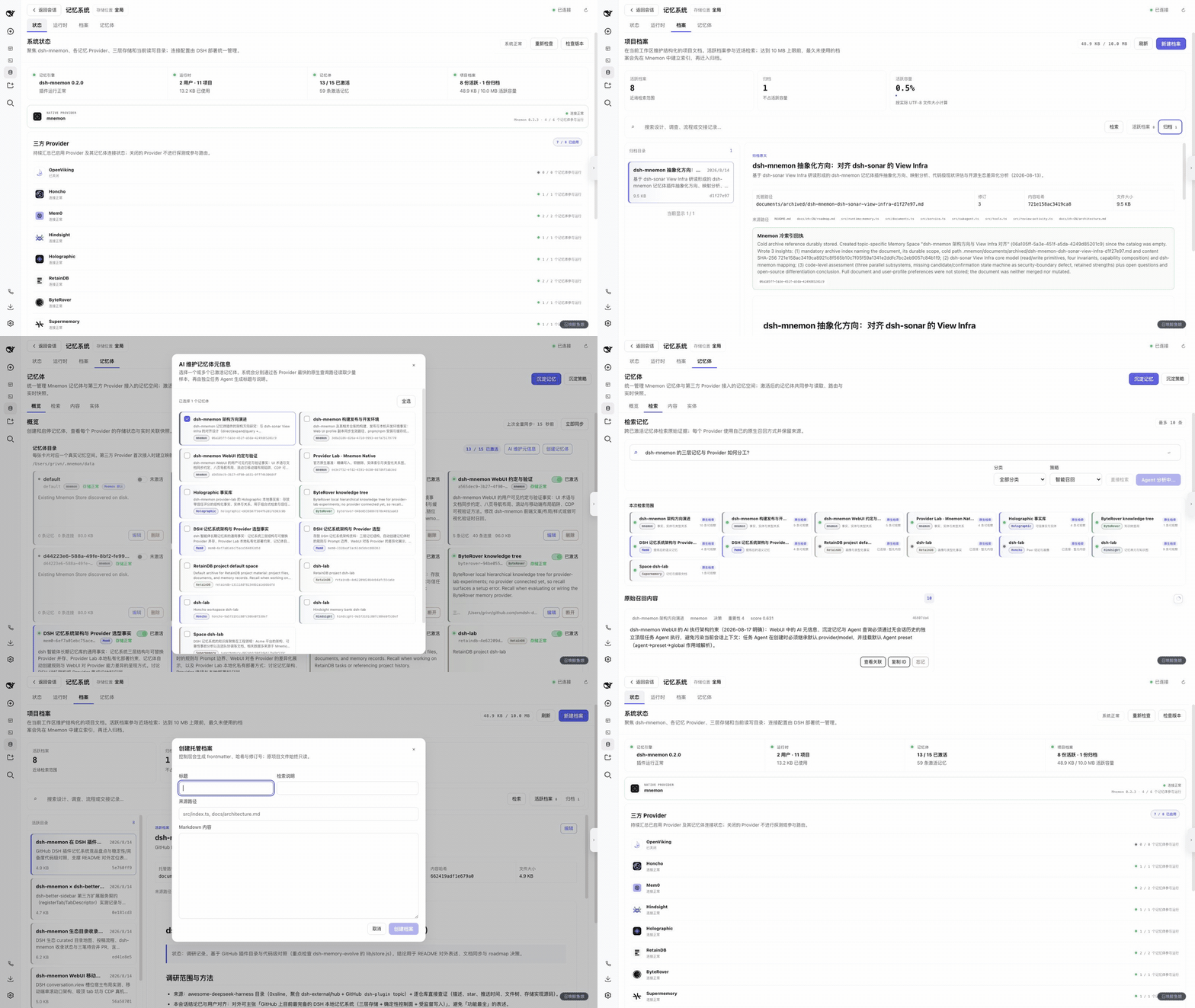
dsh-mnemon is a three-tier, pluggable, Agent-driven memory system for DeepSeek Harness, combining Runtime memory, Project Documents, and replaceable Memory Spaces with nine long-term providers.
An opinionated, zero-infrastructure file-based memory protocol: human-readable markdown files plus a bounded always-loaded index, curation discipline, and no database or embeddings.