dsh-session-dustbin
Run the following command in DeepSeek Harness:
dsh plugin install Github-CJX/dsh-session-dustbin
Paste the following prompt into your AI chat to install this plugin:
Open the terminal or command panel in DeepSeek Harness and run dsh plugin install Github-CJX/dsh-session-dustbin to install this plugin; see the source at https://github.com/Github-CJX/dsh-session-dustbin.
About this plugin
Over time, DSH accumulates archived sessions that are a pain to manage: reading old conversations means digging through disk files, deleting requires a platform restart, and restoring lacks a unified entry point. dsh-session-dustbin moves the session dustbin into the DSH settings panel, turning archive browsing, safe deletion, and one-click restore into two-click operations that take effect immediately without any restart.
The core workflow covers three high-frequency actions. Archived sessions appear as cards; expanding one decodes the full multi-frame zstd log so you can read the entire conversation. Deletion follows a three-step chain - memory broadcast, directory cleanup, workspace marker removal - so the sidebar disappears instantly and data is irreversibly purged. Restore pulls an archived session back to the active list with a single click. An experimental sidebar shortcut injects a delete option directly into the session context menu, guarded by a DSH-style confirmation dialog.
If you work with DSH daily, generate large volumes of sessions, and need efficient archive management and disk cleanup, this plugin eliminates the manual file-digging and repeated restarts, consolidating the full session lifecycle into one settings card.
Screenshots
Use Cases
- Reviewing the full conversation of an archived session without digging through disk files
- Permanently deleting unneeded sessions to free disk space without a restart
- Restoring an accidentally archived session back to active with one click
Best For
- Developers who rely on DSH long-term with large session volumes
- Heavy users managing session lifecycle and disk footprint
- Platform users who prefer instant operations over repeated restarts
Related Plugins
Traceable, searchable cross-session memory for AI agents that turns conversation knowledge into a typed knowledge graph and recalls relevant subgraphs instead of replaying full history, natively integrated with DeepSeek Harness.
Gives DSH AI cross-session long-term memory, to-do and skill management, plus multi-session orchestration, external AI delegation, and an infinite canvas that grows with you.
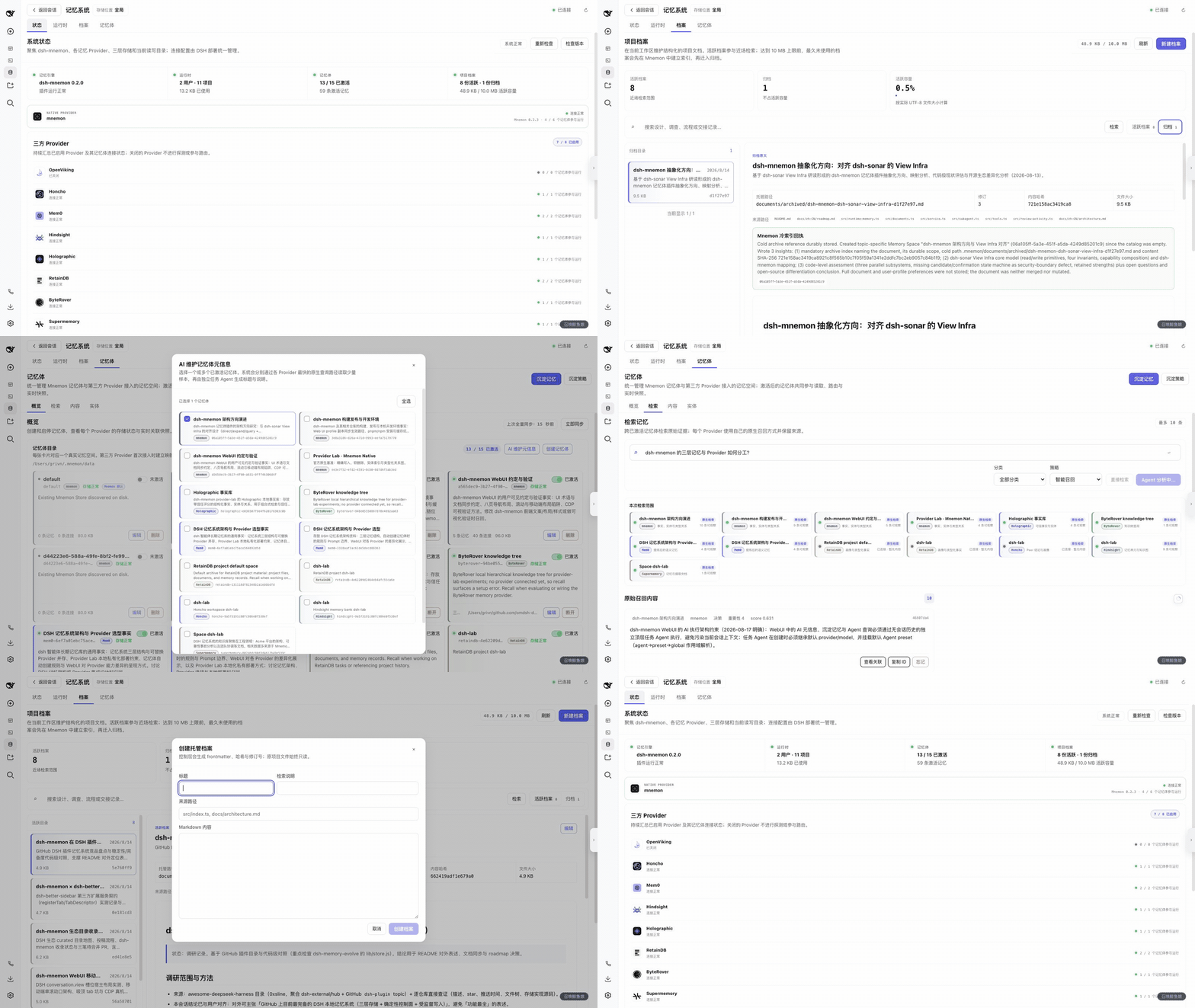
dsh-mnemon is a three-tier, pluggable, Agent-driven memory system for DeepSeek Harness, combining Runtime memory, Project Documents, and replaceable Memory Spaces with nine long-term providers.
An opinionated, zero-infrastructure file-based memory protocol: human-readable markdown files plus a bounded always-loaded index, curation discipline, and no database or embeddings.