dsh-papua-guinea
Run the following command in DeepSeek Harness:
dsh plugin install uckkk/dsh-papua-guinea
Paste the following prompt into your AI chat to install this plugin:
Run dsh plugin install uckkk/dsh-papua-guinea in the DeepSeek Harness terminal to install it; the full source is at https://github.com/uckkk/dsh-papua-guinea
About this plugin
If you need a lightweight, fully offline information-gathering workflow, dsh-papua-guinea offers a minimal solution: no external network services, no extra frameworks—pure Node is all it takes.
The core mechanic is a step-by-step conversation: the plugin asks for each field in sequence, and once you confirm a value it writes it into a structured JSON document. The pace is controllable, nothing gets missed, and the end result is a clean, machine-readable data file ready for downstream use.
It suits developers who prefer zero dependencies and want to do offline field-level archiving, particularly when recording structured data about Papua New Guinea topics without setting up a heavyweight toolchain.
Use Cases
- Collect Papua New Guinea fields step by step offline and produce JSON
- Archive structured info in a lightweight, zero-network Node workflow
- Replace a single large form with a guided step-by-step conversation
Best For
- Developers who prefer zero-dependency, pure-Node solutions
- Information collectors needing offline field-level recording
- Project members structuring data around Papua New Guinea topics
Related Plugins
Traceable, searchable cross-session memory for AI agents that turns conversation knowledge into a typed knowledge graph and recalls relevant subgraphs instead of replaying full history, natively integrated with DeepSeek Harness.
Gives DSH AI cross-session long-term memory, to-do and skill management, plus multi-session orchestration, external AI delegation, and an infinite canvas that grows with you.
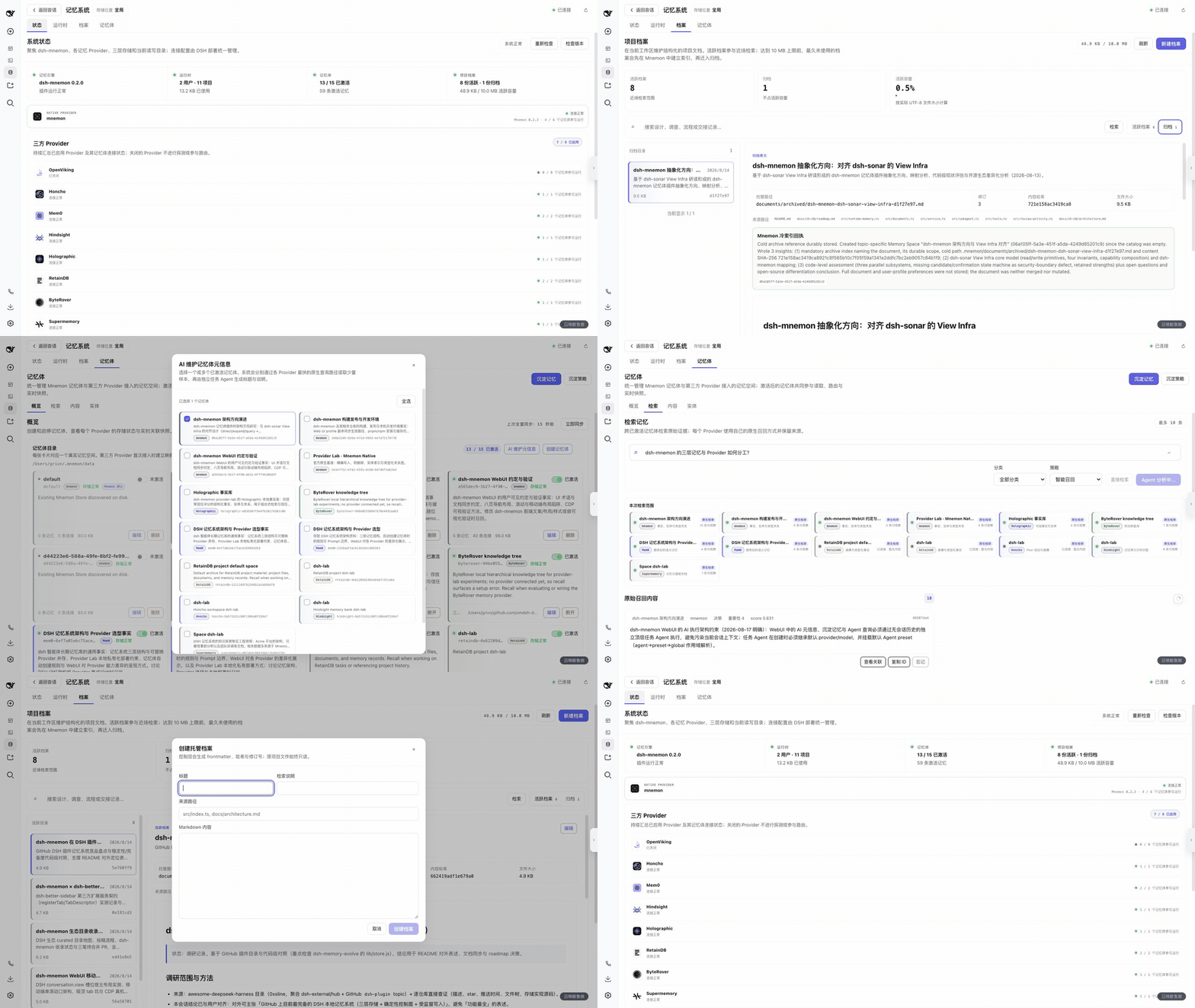
dsh-mnemon is a three-tier, pluggable, Agent-driven memory system for DeepSeek Harness, combining Runtime memory, Project Documents, and replaceable Memory Spaces with nine long-term providers.
An opinionated, zero-infrastructure file-based memory protocol: human-readable markdown files plus a bounded always-loaded index, curation discipline, and no database or embeddings.