dsh-subagent-model-visibility
Run the following command in DeepSeek Harness:
dsh plugin install AGSQ11/dsh-subagent-model-visibility
Paste the following prompt into your AI chat to install this plugin:
Run dsh plugin install AGSQ11/dsh-subagent-model-visibility in DeepSeek Harness to install the plugin from the GitHub repository https://github.com/AGSQ11/dsh-subagent-model-visibility.
About this plugin
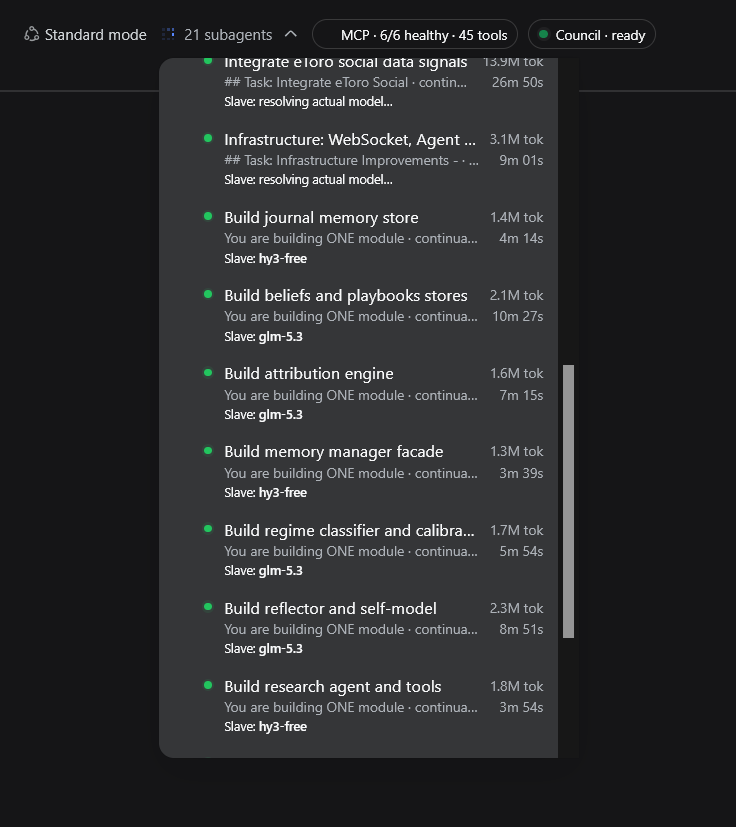
In DeepSeek Harness, configuring a model does not guarantee that every subagent request actually reaches that model. Phoenix or other routing layers may failover, retry, or redistribute mid-session, yet the UI still shows the configured value rather than the one that served the request. dsh-subagent-model-visibility fills that visibility gap.
The plugin wraps two hooks—tools/execute and llm/stream—and uses Node AsyncLocalStorage to safely bind each native tool call to its child session even under concurrent execution. It then records the real provider/model pair dispatched to the LLM runtime and renders it as a compact third line inside the existing tool-call row and subagent catalog. The badge updates live when the route changes, and hovering reveals route history plus request counts. Prompts, routing parameters, tool results, and the subagent lifecycle are never modified.
Designed for DSH users running multi-provider or multi-model stacks, or relying on failover and retry logic, who need to confirm which backend actually served a given request without invasive tracing. Privacy-wise, the browser API exposes only tool and child session IDs, transport type, route names, timestamps, request counts, and terminal status; prompts, model outputs, credentials, and headers never leave the host.
Screenshots
Use Cases
- Verify which provider is actually serving a subagent after a failover
- Troubleshoot whether requests are being redirected by a routing layer in a multi-provider setup
- Validate that DSH retry logic dispatches requests to the intended target model
Best For
- Ops and engineering teams running DSH with multi-provider or failover strategies
- Developers who need non-invasive confirmation of subagent model routing
- Architects deploying Phoenix or similar routing layers and verifying dispatch outcomes
Related Plugins
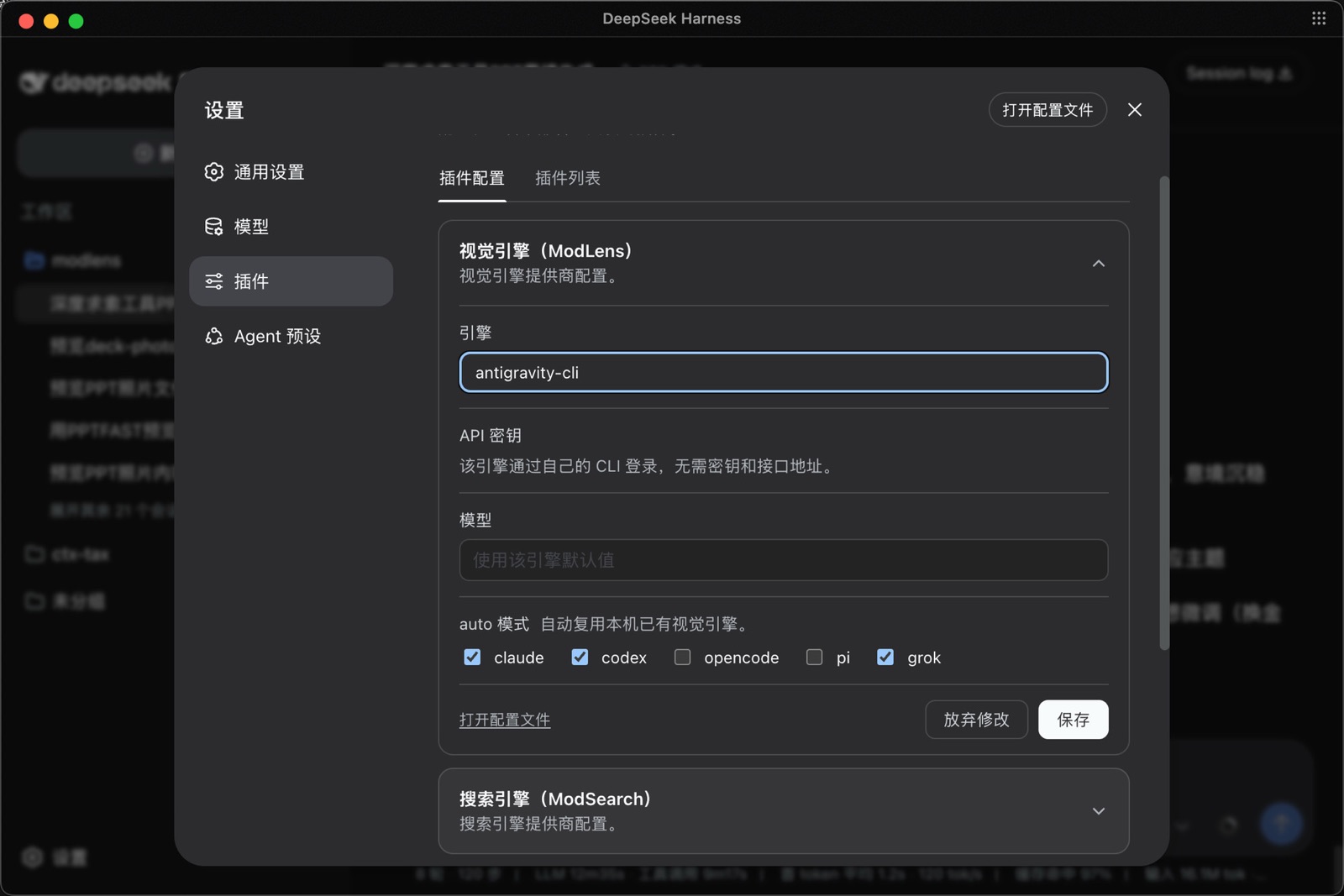
ModLens is a vision plugin for DeepSeek Harness that gives text-only models sight by reading images pasted directly into chat, with zero-config setup and multiple vision engines.
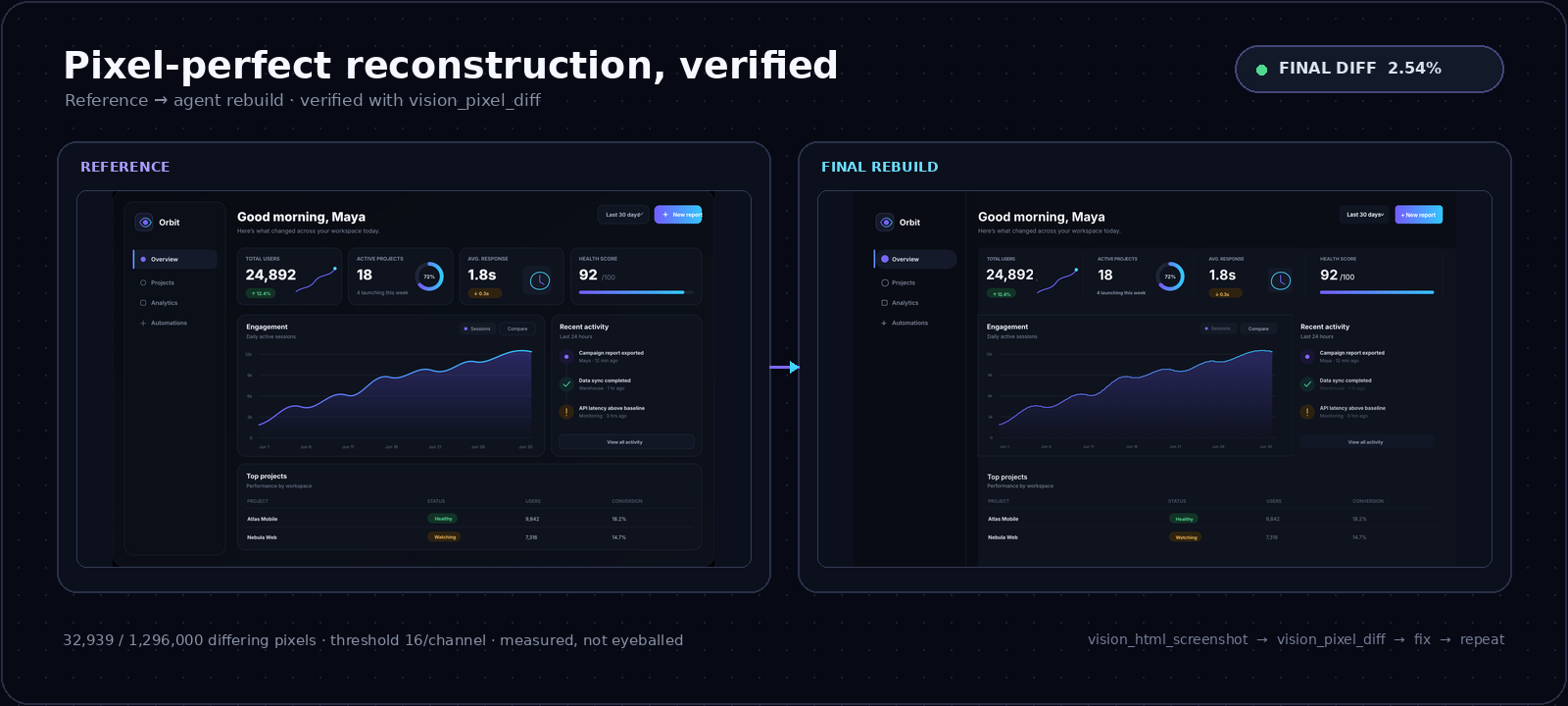
On-demand vision for text-only DeepSeek Harness agents: built-in free keyless vision chain and 14 vision tools, routing image turns as tool calls to vision models with pixel fidelity, no Python needed, one-command install.
Give text-only models in DeepSeek Harness eyes, enabling image Q&A, long-screenshot OCR, UI restoration, and GUI visual tasks.
An armor-breaking plugin for DeepSeek: rewrites instruction priority, expands refusal-blocked phrases, persists across sessions, and shows a green active indicator.