dsh-solo-agent
Run the following command in DeepSeek Harness:
dsh plugin install TheHeartFickle/dsh-solo-agent
Paste the following prompt into your AI chat to install this plugin:
Run dsh plugin install TheHeartFickle/dsh-solo-agent in DeepSeek Harness to install this plugin; the source code is hosted at https://github.com/TheHeartFickle/dsh-solo-agent
About this plugin
In multi-step coding tasks the main agent often plays both orchestrator and executor, running shells, reading and writing files, and searching code. The context window fills up fast, the model's attention bounces between orchestration and execution, and dispatch efficiency keeps dropping. dsh-solo-agent tackles this by injecting a Solo preset into DSH agent-presets: the main agent is strictly constrained to pure orchestration. Its visible tool list is reduced to ask_user_question, todo_write, skill, and four foreground subagent tools. All shell, filesystem, and web capabilities are mounted at the preset layer for subagents and hidden from the main agent via solo-bootstrap.mjs.
The dispatch loop revolves around four roles. subagent_explore performs read-only research and produces target tests, the test command, and a root cause. Up to five iterations follow: subagent_editor makes focused edits without self-testing, subagent_general runs tests and returns raw output, and Solo makes the next decision solely based on that raw output. For large or high-risk changes that pass tests, subagent_verify performs adversarial validation, returning PASS, FAIL, or PARTIAL. The role registry lives in lib/roles.js; adding a new role is just one extra record. The preset also enables full compaction (dsh-compaction-basic, dsh-compaction-tool-result-pruner, dsh-command-compact) and applies minimal anchoring to subagents with delegationDepth greater than zero, while the Solo main agent stays unanchored to maintain a global view.
This plugin suits developers who frequently run multi-step coding, debugging, or refactoring tasks and are sensitive to context-window growth. If your DSH agent workflows suffer from context bloat, cross-task context bleed, or uncontrolled dispatch rounds, dsh-solo-agent offers a structured fix: each role does only what it should, and the main agent only makes decisions.
Use Cases
- Prevent context bloat when the main agent handles multi-step coding
- Let subagents close the loop on edit-then-test iteration
- Trigger adversarial validation after high-risk changes pass tests
Best For
- Developers who frequently run multi-step coding or debugging tasks with DSH
- Teams sensitive to context window size and seeking better dispatch efficiency
- Engineers who prefer structured role separation over a single all-in-one agent
Related Plugins
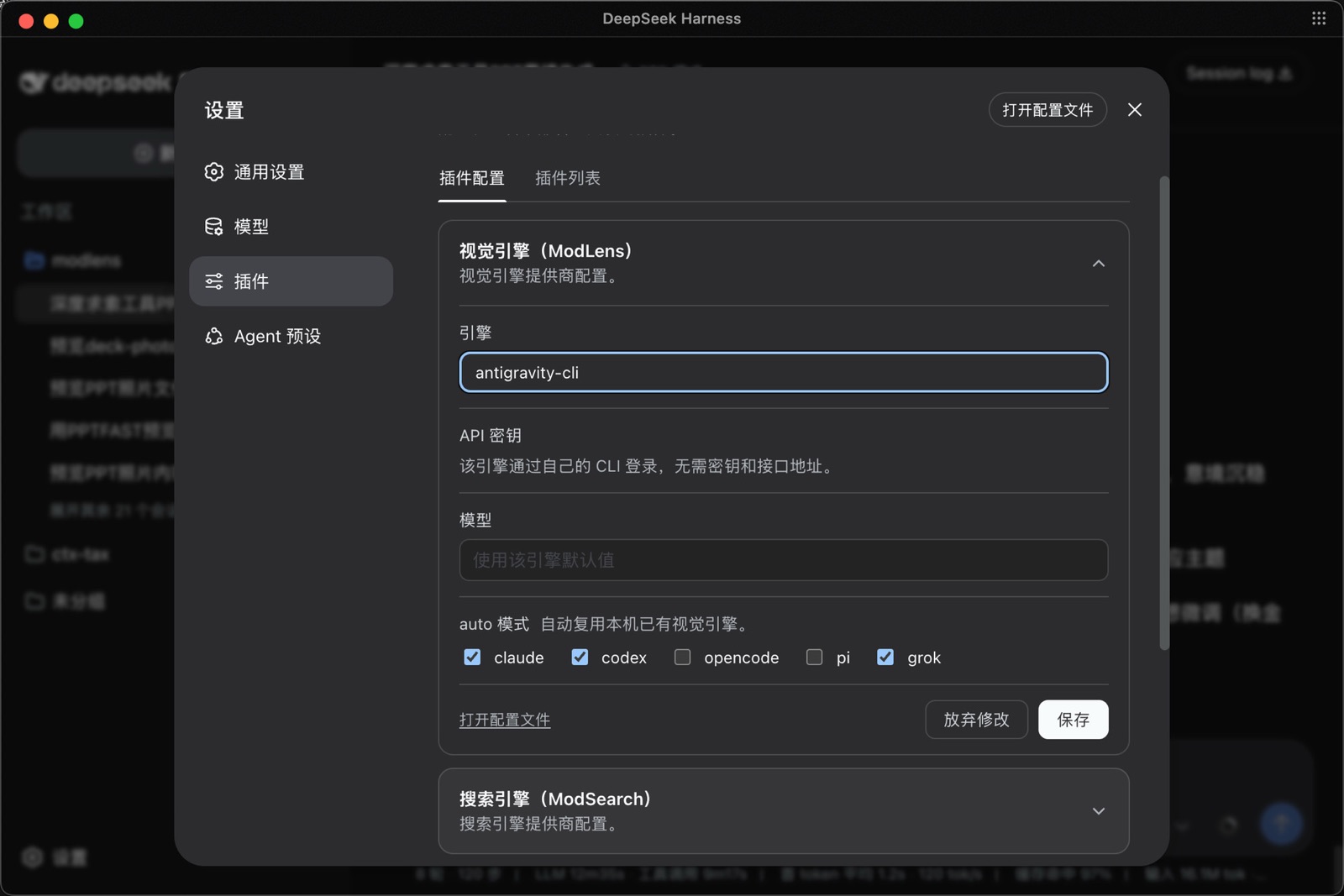
ModLens is a vision plugin for DeepSeek Harness that gives text-only models sight by reading images pasted directly into chat, with zero-config setup and multiple vision engines.
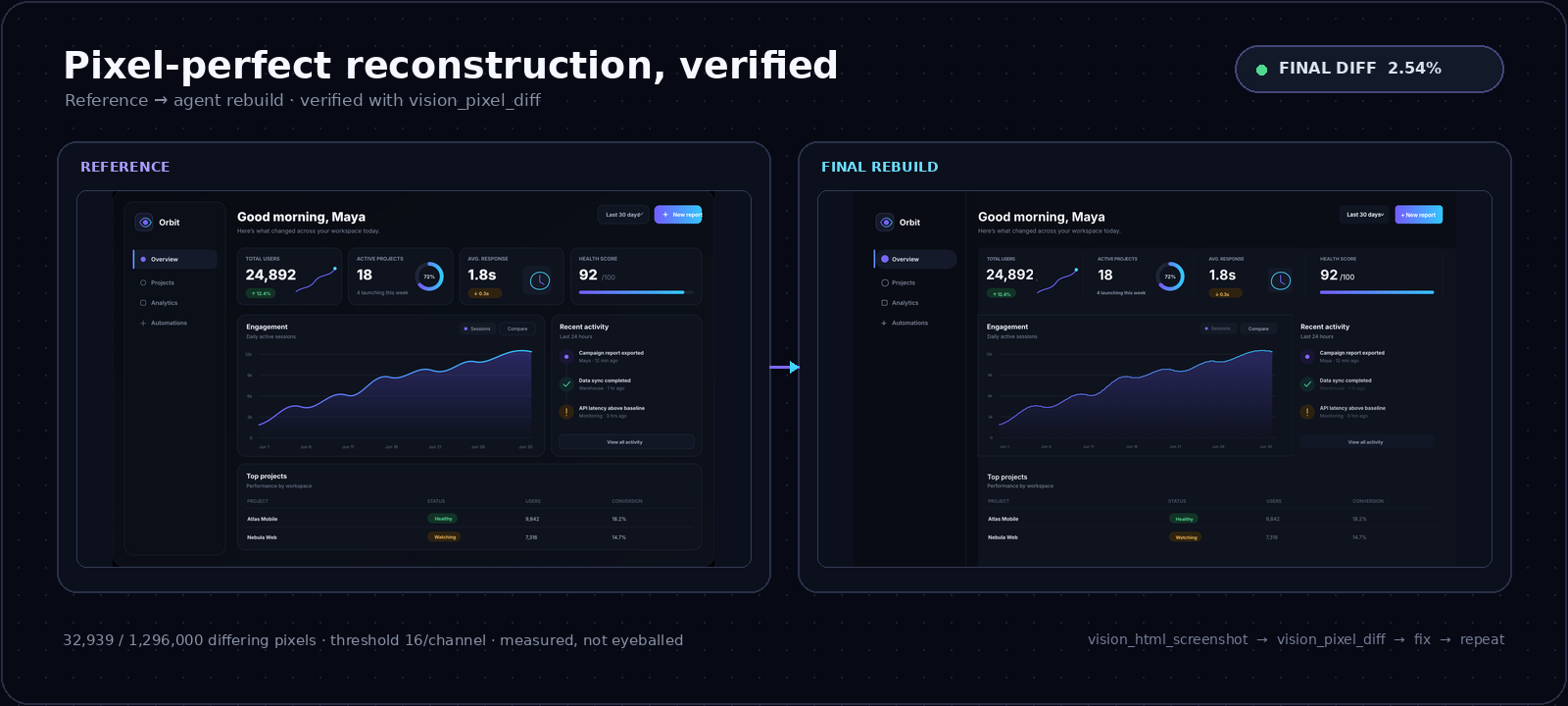
On-demand vision for text-only DeepSeek Harness agents: built-in free keyless vision chain and 14 vision tools, routing image turns as tool calls to vision models with pixel fidelity, no Python needed, one-command install.
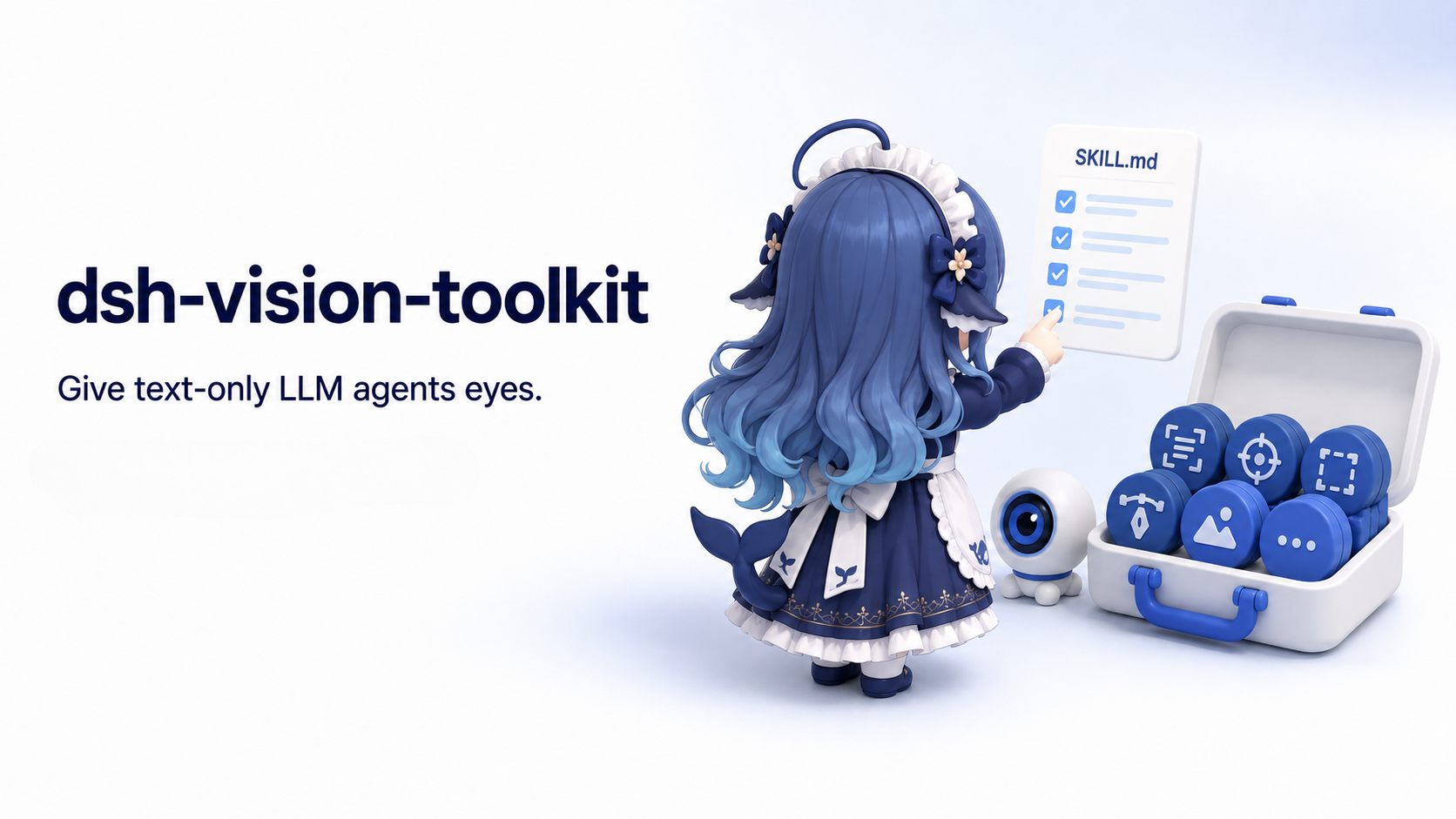
Give text-only models in DeepSeek Harness eyes, enabling image Q&A, long-screenshot OCR, UI restoration, and GUI visual tasks.
An armor-breaking plugin for DeepSeek: rewrites instruction priority, expands refusal-blocked phrases, persists across sessions, and shows a green active indicator.