dsh-trace-narrator
Run the following command in DeepSeek Harness:
dsh plugin install xiangyun0519/dsh-trace-narrator
Paste the following prompt into your AI chat to install this plugin:
Run dsh plugin install xiangyun0519/dsh-trace-narrator in DeepSeek Harness to install this plugin; the full source is at https://github.com/xiangyun0519/dsh-trace-narrator.
About this plugin
After a DSH session, the raw trajectory is long, noisy, and hard to summarize. Answering "what actually happened, where it failed, and which steps deserve to be handed off" usually means scrolling through logs by hand. dsh-trace-narrator collapses that into a single command and a readable, self-contained recap report.
It first applies strict redaction to the trajectory, validates the LLM output against a schema, and then emits a self-contained HTML, Markdown, or JSON document. Built-in perspectives include summary, postmortem, tutorial, debug, and executive views. No third-party scripts are loaded. When DSH agent or inbox capabilities are available, the plugin also asks the conversation model to restate key findings and suggest next actions in the following turn; in headless or trimmed environments it simply returns the local report without extra network calls. Viewer upload is fully opt-in and restricted to HTTPS; with it disabled, no data leaves the machine.
It is aimed at developers running DSH for production or research work who need to hand off a session to a colleague or turn it into teaching material, and at teams that want structured post-mortems in CI or headless pipelines without pulling in a cloud dependency. Reports land locally by default, and the security model is explicit: no collection, no multi-session merging, no public knowledge base required.
Use Cases
- Generate a redacted recap report with one command for team handoff after a session
- Compress long trajectories into teaching or debugging material for newcomers
- Produce a self-contained HTML report for offline review in headless or air-gapped environments
Best For
- Engineers using DSH for production or research development
- DevOps or SRE teams that need structured postmortems
- Developers running DSH in cloud-free or air-gapped environments
Related Plugins
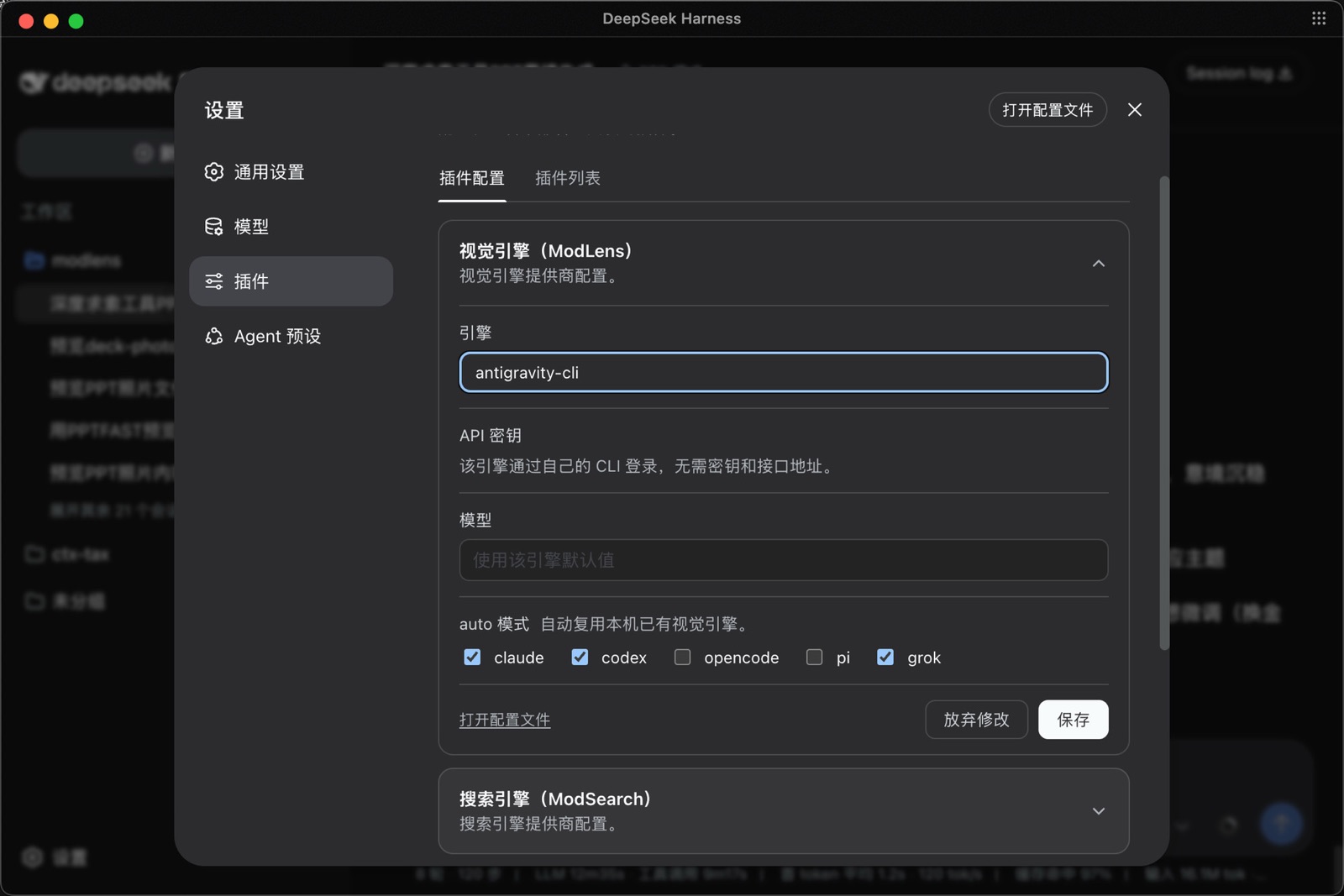
ModLens is a vision plugin for DeepSeek Harness that gives text-only models sight by reading images pasted directly into chat, with zero-config setup and multiple vision engines.
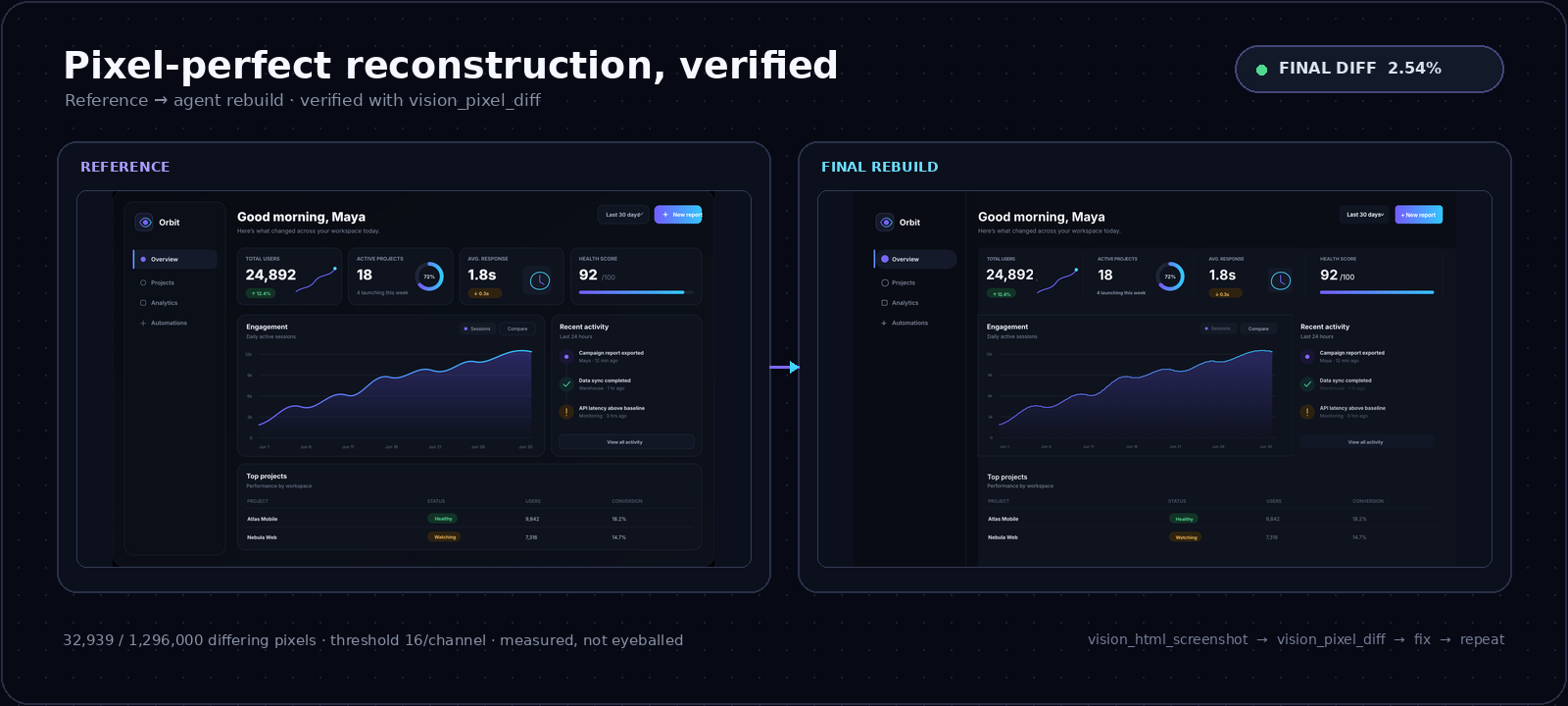
On-demand vision for text-only DeepSeek Harness agents: built-in free keyless vision chain and 14 vision tools, routing image turns as tool calls to vision models with pixel fidelity, no Python needed, one-command install.
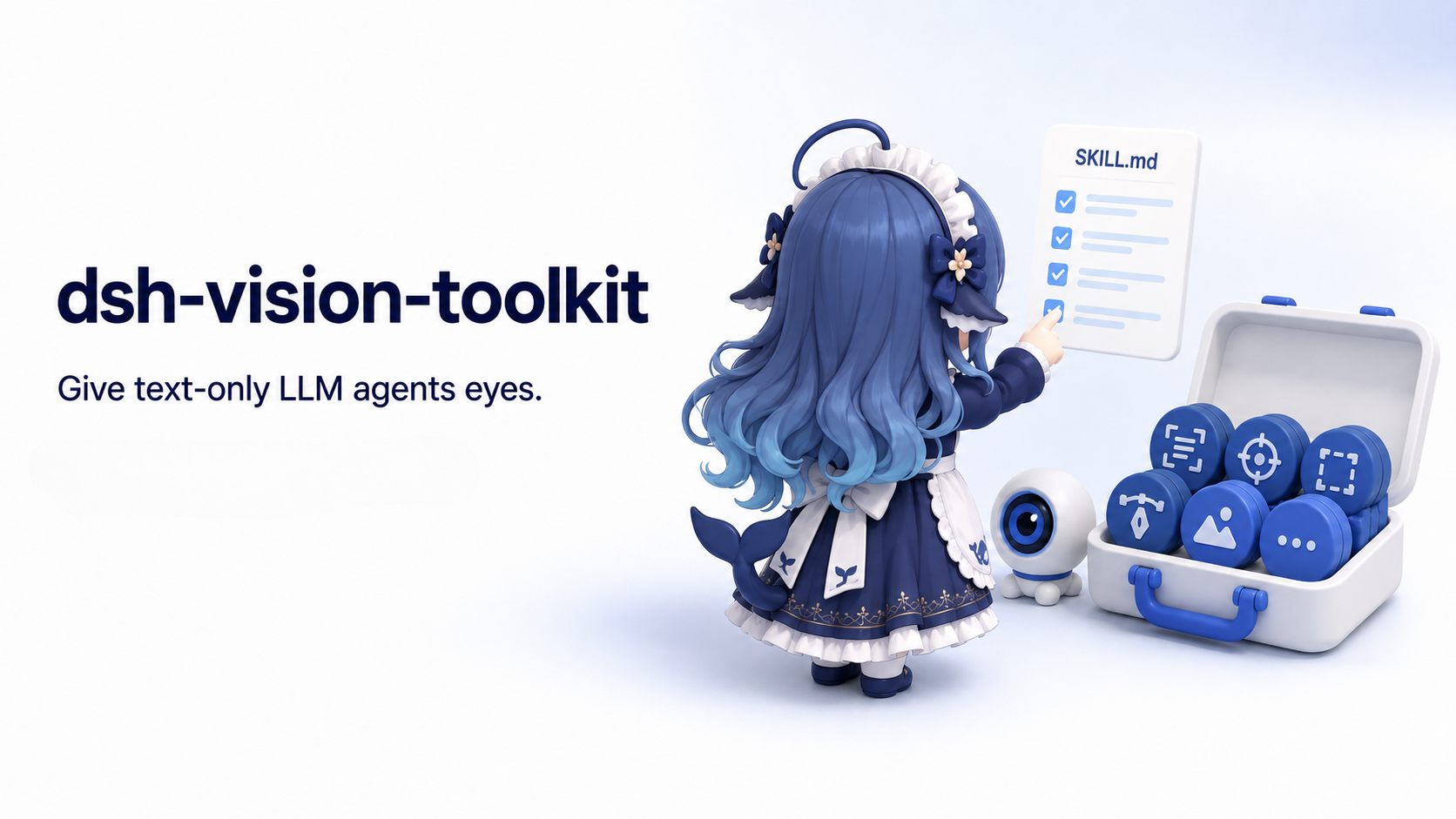
Give text-only models in DeepSeek Harness eyes, enabling image Q&A, long-screenshot OCR, UI restoration, and GUI visual tasks.
An armor-breaking plugin for DeepSeek: rewrites instruction priority, expands refusal-blocked phrases, persists across sessions, and shows a green active indicator.