dsh-long-term-memory
Run the following command in DeepSeek Harness:
dsh plugin install windrover/dsh-long-term-memory
Paste the following prompt into your AI chat to install this plugin:
Run dsh plugin install windrover/dsh-long-term-memory in your DeepSeek Harness terminal to install the plugin; the source is hosted at https://github.com/windrover/dsh-long-term-memory .
About this plugin
After a long conversation ends, user profiles, project decisions, and cross-session preferences tend to vanish. The next new session starts with the model knowing nothing, and you end up repeating the same context. dsh-long-term-memory gives DeepSeek Harness a zero-dependency, layered long-term memory layer: no vector database, no extra model calls, deterministic BM25 keyword retrieval with CJK awareness, and automatic memory injection before every request assembly.
The core design centres on a three-tier store: user profile, global cross-project facts, and workspace-specific memories, each persisted in its own JSONL file. Retrieval and injection follow user, global, workspace priority. Writes go through threat-pattern scanning and an optional human-approval gate; recall is explainable and reproducible; a calibrated injection wrapper on systemPrompt.context() honestly declares provenance and uncertainty so the model can judge relevance on its own; memory_correct provides a correction loop that marks stale records as superseded and removes them from future injection.
Who it is for: developers iterating on the same project long-term who need the model to keep architectural decisions and constraints in mind; teams that prefer deterministic, auditable recall over an embedding black box; and anyone who wants a lightweight memory layer without deploying SQLite or a vector service.
Use Cases
- Retain user profile, decisions, and constraints across sessions so context is never lost
- Isolate memories per scope when juggling multiple projects without cross-contamination
- Audit writes with threat scanning and the correction loop; stale records are marked superseded and excluded from injection
Best For
- Long-term project developers who need the model to retain architectural decisions and constraints
- Teams that value explainable, reproducible recall over an embedding black box
- Lightweight users who want zero-setup memory without deploying SQLite or a vector service
Related Plugins
Traceable, searchable cross-session memory for AI agents that turns conversation knowledge into a typed knowledge graph and recalls relevant subgraphs instead of replaying full history, natively integrated with DeepSeek Harness.
Gives DSH AI cross-session long-term memory, to-do and skill management, plus multi-session orchestration, external AI delegation, and an infinite canvas that grows with you.
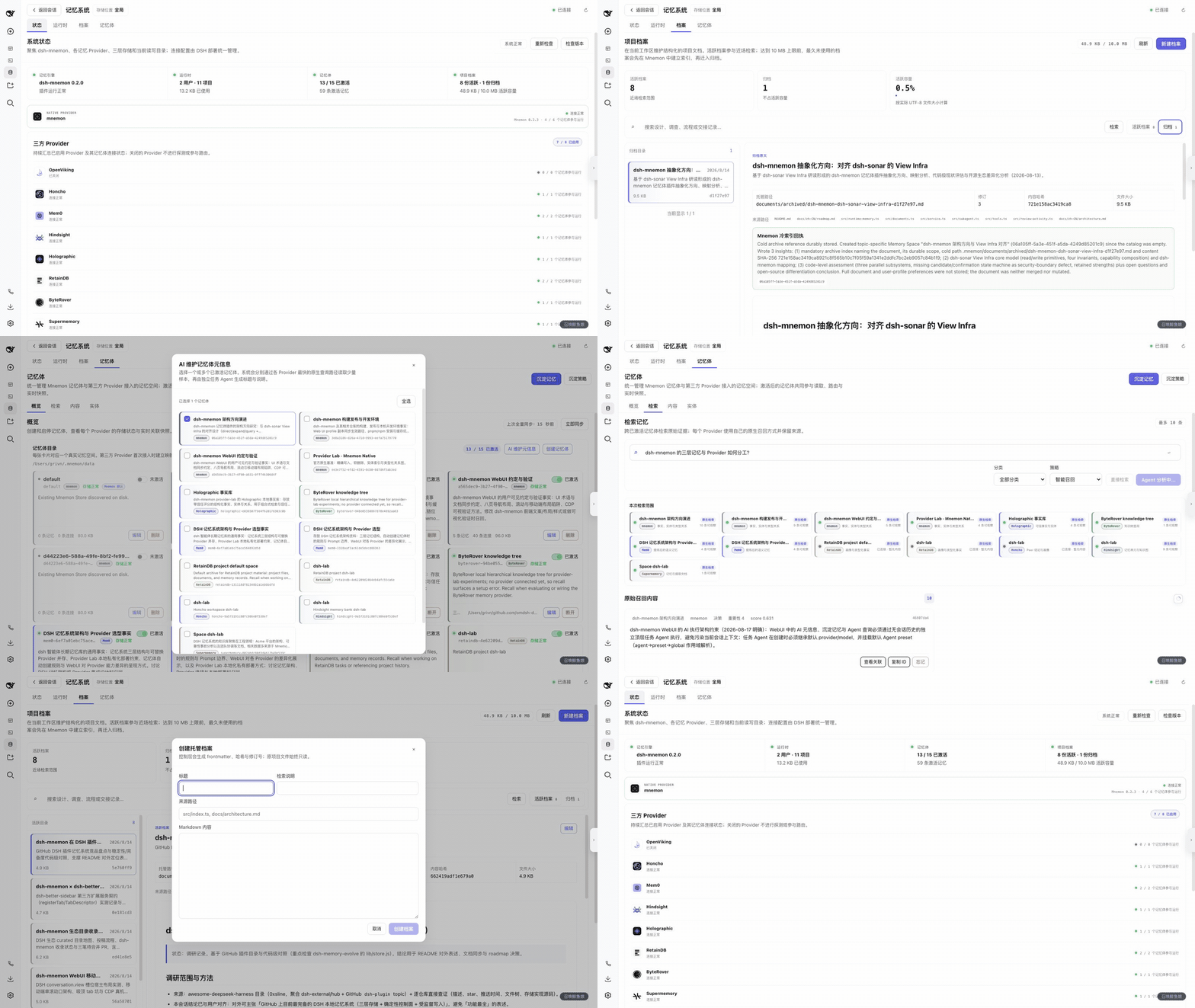
dsh-mnemon is a three-tier, pluggable, Agent-driven memory system for DeepSeek Harness, combining Runtime memory, Project Documents, and replaceable Memory Spaces with nine long-term providers.
An opinionated, zero-infrastructure file-based memory protocol: human-readable markdown files plus a bounded always-loaded index, curation discipline, and no database or embeddings.