dsh-soundscape
Run the following command in DeepSeek Harness:
dsh plugin install berserk0501/dsh-soundscape
Paste the following prompt into your AI chat to install this plugin:
Run dsh plugin install berserk0501/dsh-soundscape in DeepSeek Harness to install this local soundscape plugin. Source: https://github.com/berserk0501/dsh-soundscape.
About this plugin
When an agent runs for extended periods it is easy to lose track of what it is doing, especially with other windows in focus. dsh-soundscape adds an ambient audio layer to DSH: it monitors agent status transitions and the full tool lifecycle, then plays distinct cues for thinking, tool start, tool finish, and errors so you can follow progress by ear alone.
Mixing is handled with a gain-ducking scheme rather than hard interruptions. While a tool sound plays, the looping thinking tone drops to roughly 20 percent gain and restores automatically once the tool sound ends, producing a seamless blend instead of a jarring cut. Emotion-aware triggers add a musical dimension: consecutive successes fire an ascending chord, consecutive failures fire a descending dissonant figure, and prolonged deep-running sessions lay down a low-frequency drone. All thresholds and sounds are adjustable from the settings page. The tool-mapping panel exposes all fifty-one standard DSH tools with category grouping, search, and per-tool assignment of built-in PCM WAVs, local .wav or .mp3 files, or silence, with throttling to prevent rapid-fire repeats.
Built for engineers who run agents alongside other work and prefer auditory awareness over visual monitoring, as well as tinkerers who want granular per-tool sound design.
Use Cases
- Track agent thinking, tool calls, and errors by sound during long background runs
- Keep focus on multiple windows without constantly switching back to the terminal
- Sense success or failure streaks through ascending or descending chord progressions
Best For
- Developers who need real-time awareness of agent status changes
- Engineers who prefer audio feedback over visual monitoring
- Power users who enjoy granular per-tool sound customization
Related Plugins
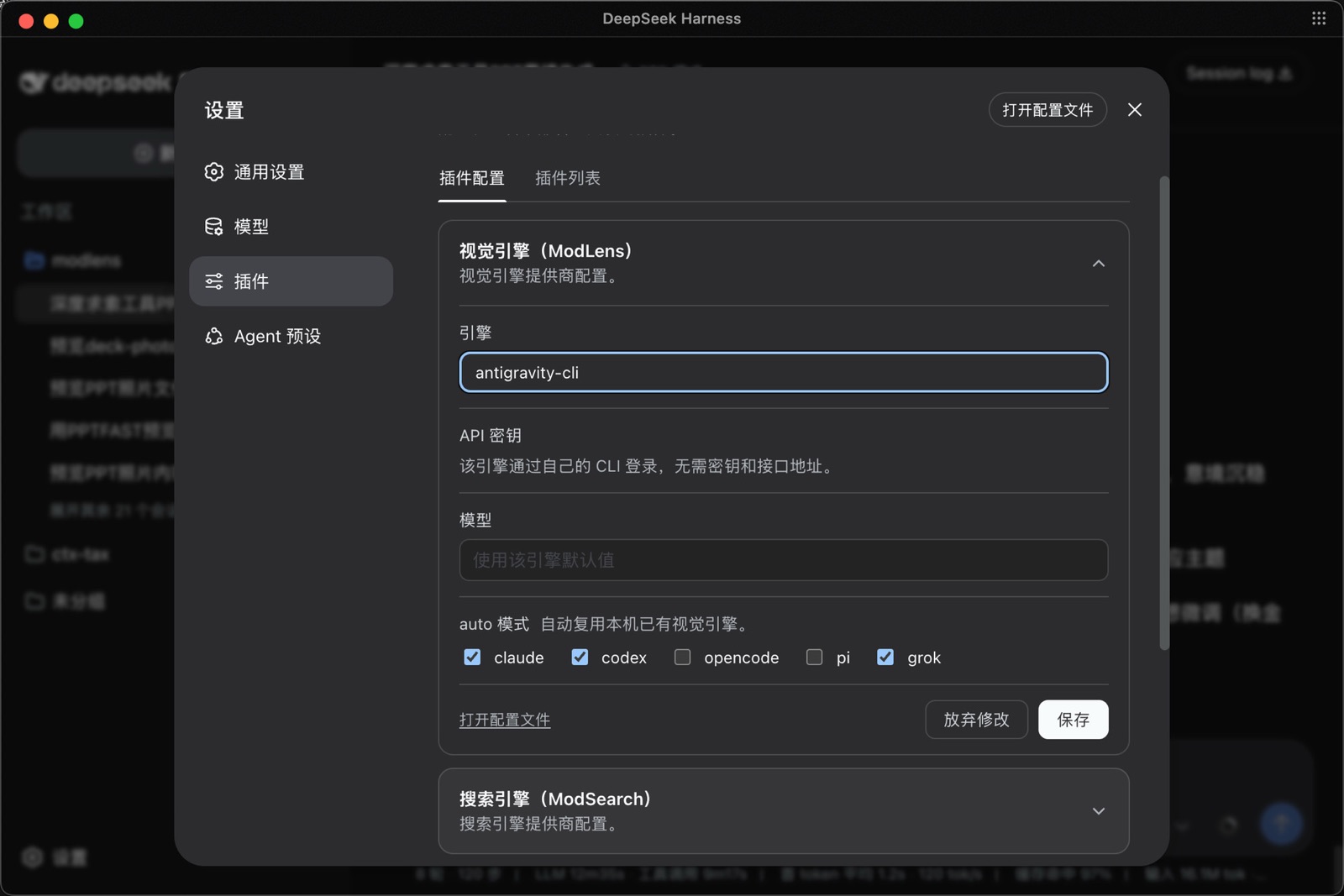
ModLens is a vision plugin for DeepSeek Harness that gives text-only models sight by reading images pasted directly into chat, with zero-config setup and multiple vision engines.
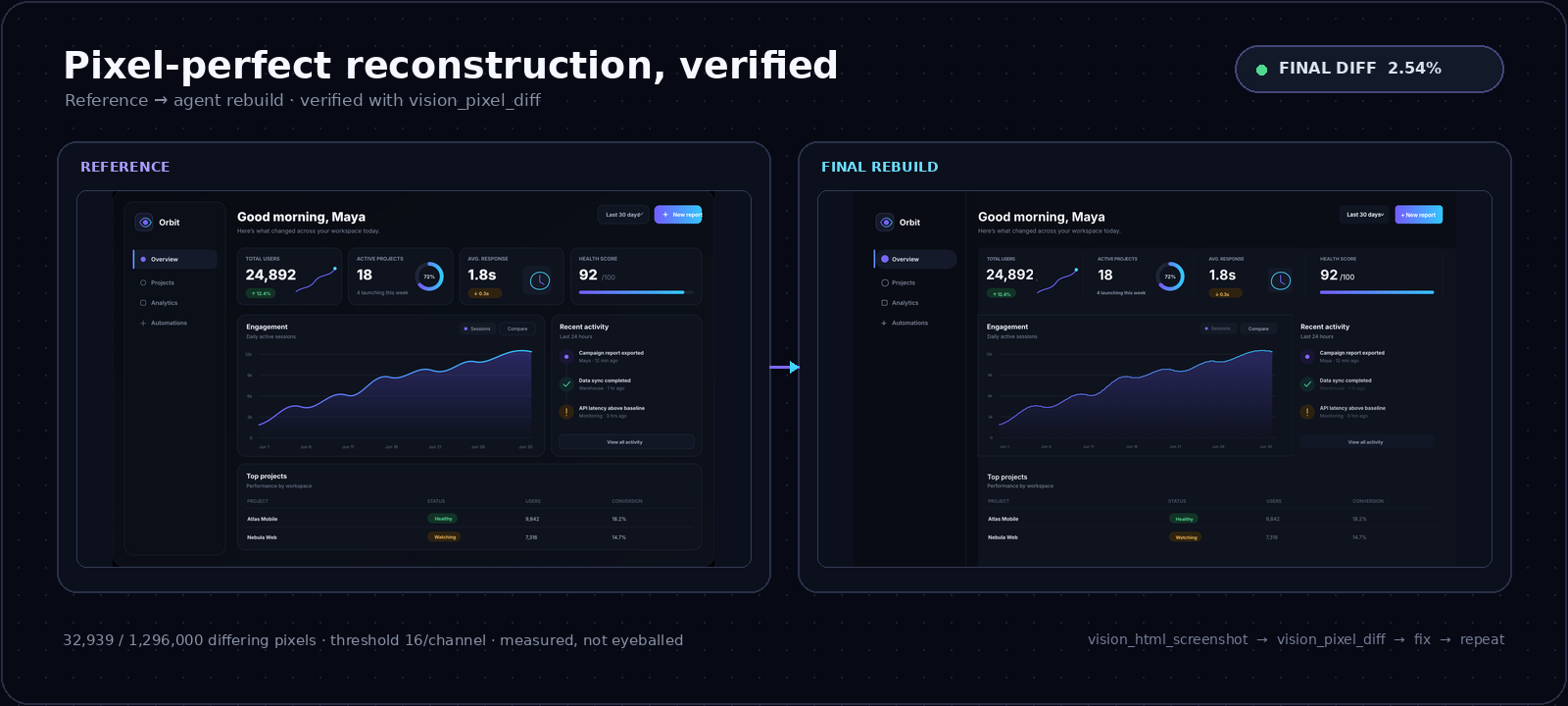
On-demand vision for text-only DeepSeek Harness agents: built-in free keyless vision chain and 14 vision tools, routing image turns as tool calls to vision models with pixel fidelity, no Python needed, one-command install.

Give text-only models in DeepSeek Harness eyes, enabling image Q&A, long-screenshot OCR, UI restoration, and GUI visual tasks.
An armor-breaking plugin for DeepSeek: rewrites instruction priority, expands refusal-blocked phrases, persists across sessions, and shows a green active indicator.