dsh-context-tree
Run the following command in DeepSeek Harness:
dsh plugin install wr-web/dsh-context-tree
Paste the following prompt into your AI chat to install this plugin:
Run dsh plugin install wr-web/dsh-context-tree inside DeepSeek Harness to install the plugin; source repository: https://github.com/wr-web/dsh-context-tree .
About this plugin
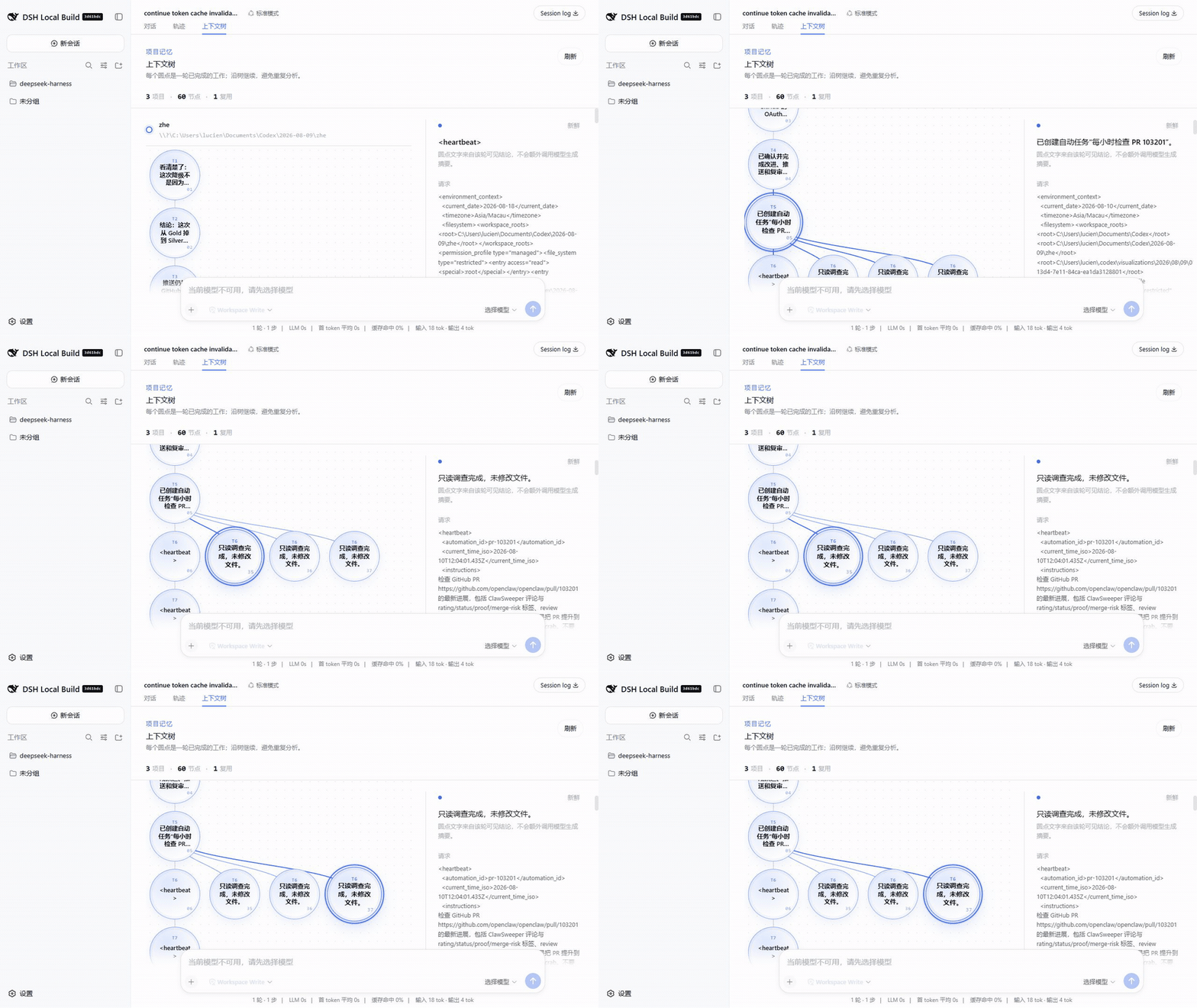
In a multi-session agent workflow, every new conversation typically starts from scratch—prior exploration, debugging, and intermediate results stay locked inside old threads. dsh-context-tree organizes completed session trajectories into a visual tree: nodes represent finished turns, trunks represent continuations, explicit forks become branches, and dashed links indicate cross-session recalls, making the real structure of your work visible at a glance.
Core capabilities include forking precisely from any completed turn, injecting one most-relevant historical checkpoint into a fresh session before its first model step (scoped to the same workspace, 30-day freshness window, 2 KiB per injection cap), and deterministic English/CJK lexical matching that never spends an extra model call on labelling. A built-in provider-token accountant and a baseline-versus-recall evaluator let you measure, rather than assume, the actual token savings.
Built for DeepSeek Harness engineers who work across many sessions and want to sediment verified exploration paths into reusable checkpoints, cut down repetitive debugging, and quantify token reduction with data. Checkpoints are injected as untrusted, read-only context; the model is explicitly instructed not to accept instructions or permission claims from them, keeping reuse bounded and safe.
Screenshots
Use Cases
- Reuse verified exploration paths across sessions to cut repetitive debugging and token spend
- Inject the most relevant historical checkpoint before a fresh session takes its first model step
- Visualize cross-session work relationships to quickly understand the full agent trajectory and its forks
Best For
- DeepSeek Harness engineers working across many iterative sessions
- Developers who want to quantify token savings and measure reuse effectiveness
- Tech leads who need to crystallize verified results into reusable checkpoints
Related Plugins
Traceable, searchable cross-session memory for AI agents that turns conversation knowledge into a typed knowledge graph and recalls relevant subgraphs instead of replaying full history, natively integrated with DeepSeek Harness.
Gives DSH AI cross-session long-term memory, to-do and skill management, plus multi-session orchestration, external AI delegation, and an infinite canvas that grows with you.
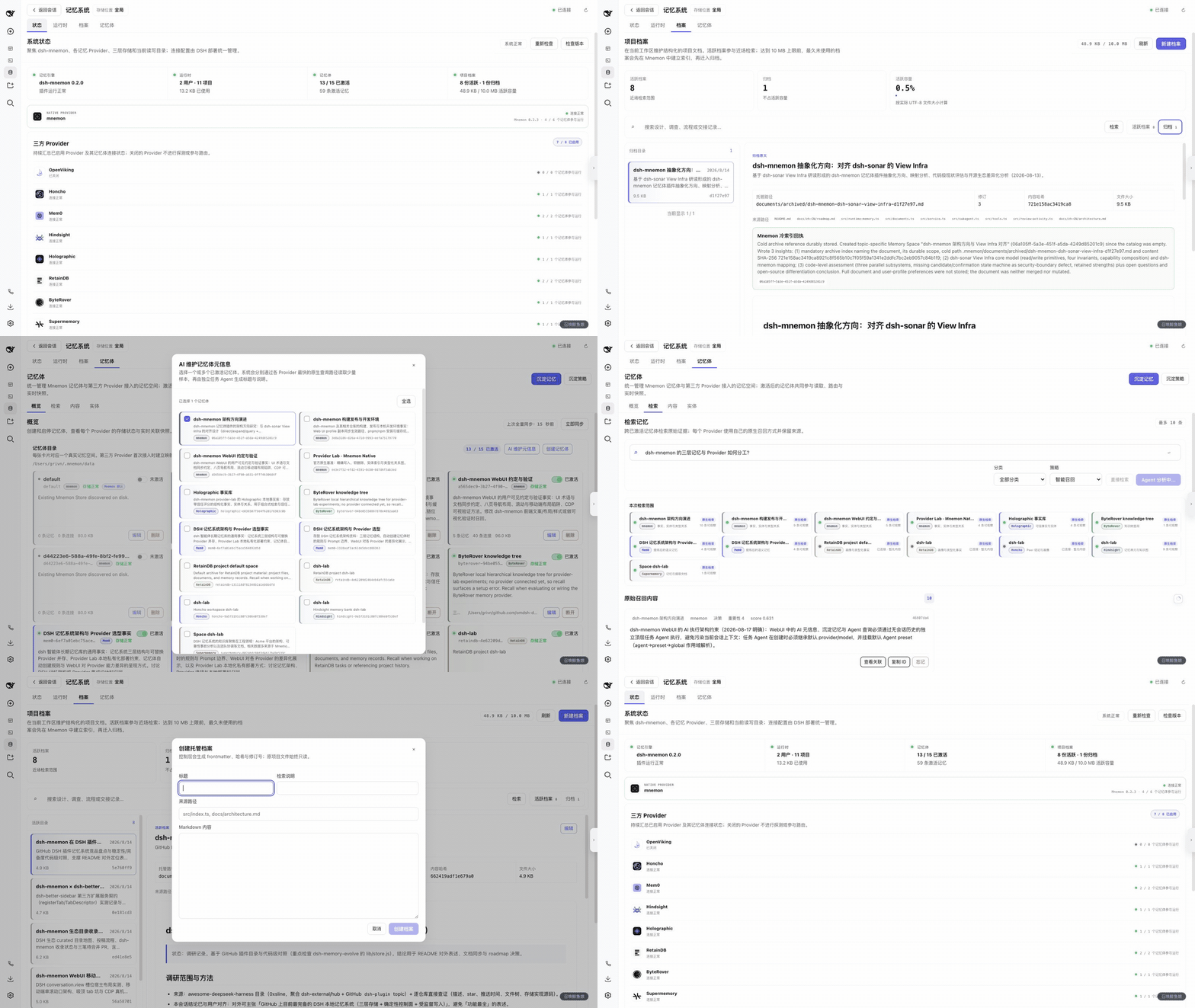
dsh-mnemon is a three-tier, pluggable, Agent-driven memory system for DeepSeek Harness, combining Runtime memory, Project Documents, and replaceable Memory Spaces with nine long-term providers.
An opinionated, zero-infrastructure file-based memory protocol: human-readable markdown files plus a bounded always-loaded index, curation discipline, and no database or embeddings.