dsh-task-models
Run the following command in DeepSeek Harness:
dsh plugin install TTTPOB/dsh-task-models
Paste the following prompt into your AI chat to install this plugin:
Run dsh plugin install TTTPOB/dsh-task-models in your terminal to install; the source repository is https://github.com/TTTPOB/dsh-task-models
About this plugin
By default, DeepSeek Harness subagent and subagent_fork inherit the current route of the caller for model selection and reasoning effort, leaving no way to override per invocation. dsh-task-models extends both tools with optional model and reasoning_effort parameters, letting every subagent call independently specify a provider/model route and an effort id without touching preset or host configuration.
The plugin introduces a clear priority chain: omitting both arguments inherits the caller route; specifying model only selects that route with its default effort; specifying effort only overlays it on the current route; passing default clears any explicit effort from fork history and re-resolves the model default. All parameters are validated via ctx.llm.resolveCallConfig() before a Job, continuable session, or one-shot child is created. A task_models discovery tool also lets callers list available models and their supported reasoning efforts at runtime.
This is ideal for Harness users who need to switch models or reasoning effort across different subtasks. The plugin fully preserves native behavior: background continuable versus one-shot scheduling, fork history, provider add/remove and HMR lifecycle, maxDepth, persona, toolFilter, and system-prompt semantics, so existing subagent and subagent_fork calls can be upgraded simply by adding a model or reasoning_effort field.
Use Cases
- Switching to a different model or reasoning effort per subagent invocation across multiple tasks
- Discovering available models and supported reasoning efforts at runtime via the task_models tool
- Fine-tuning subagent inference parameters while preserving native background continuable and foreground one-shot scheduling
Best For
- Developers orchestrating subagents across multiple models in DeepSeek Harness
- AI application builders who need granular control over subagent reasoning effort for quality or cost trade-offs
- Engineers mixing different providers between DSH Web and headless modes
Related Plugins
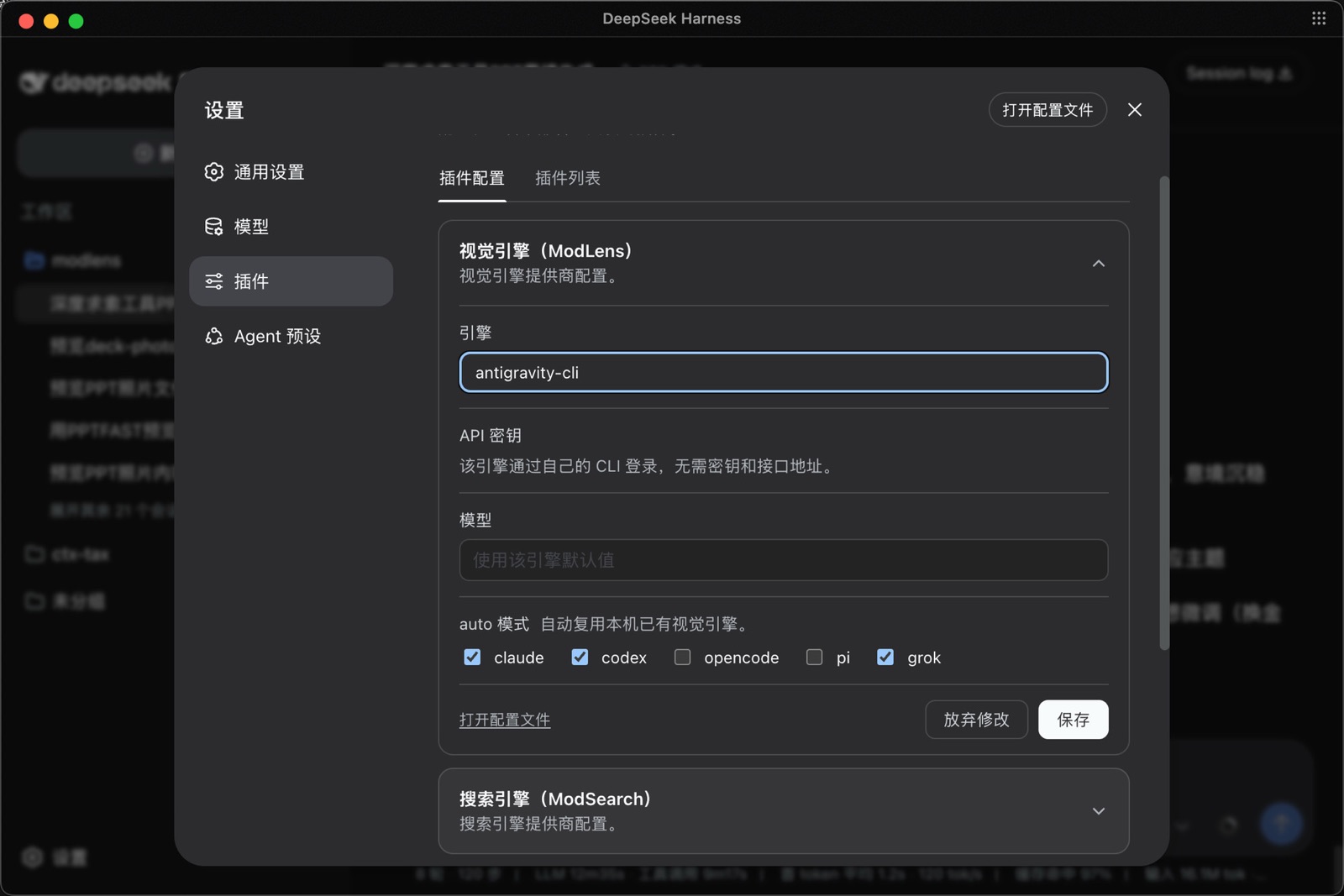
ModLens is a vision plugin for DeepSeek Harness that gives text-only models sight by reading images pasted directly into chat, with zero-config setup and multiple vision engines.
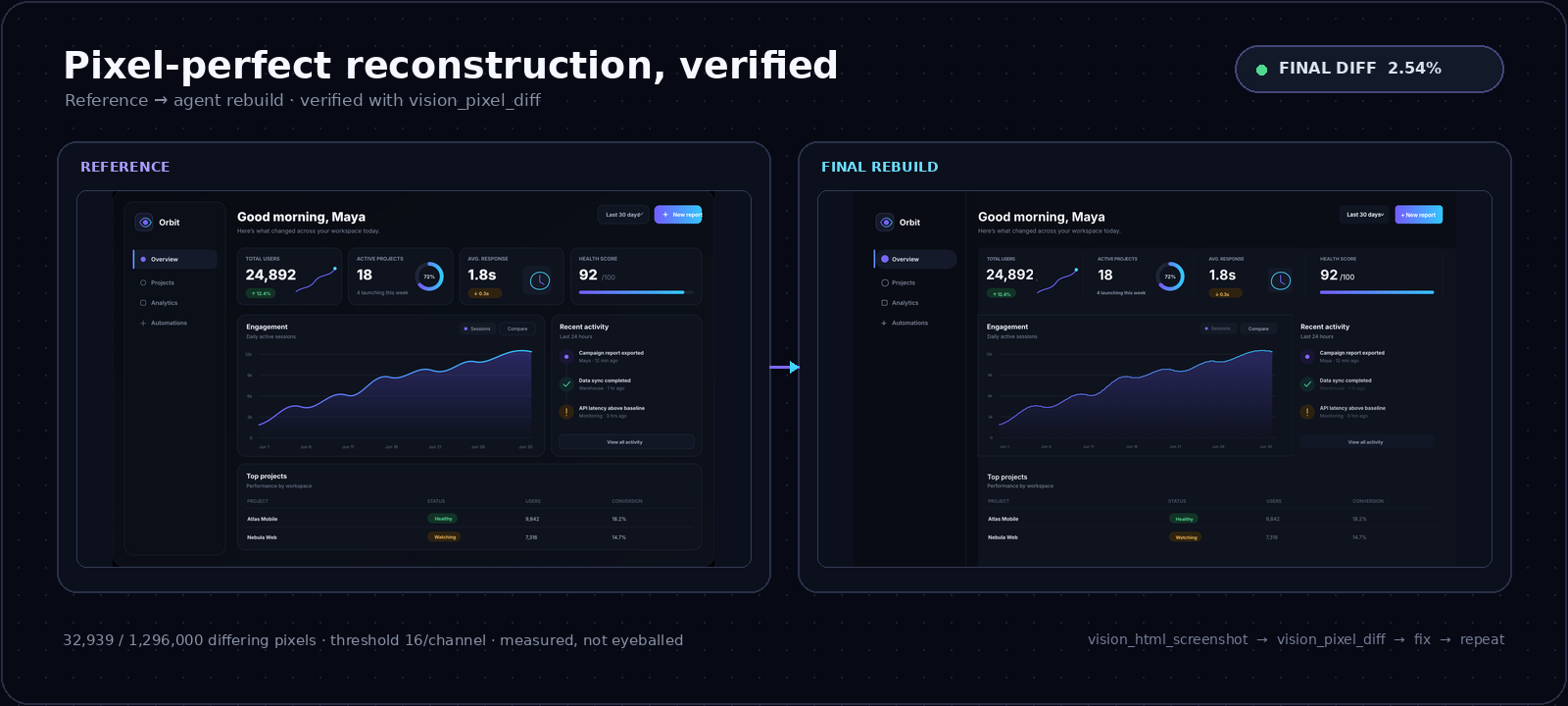
On-demand vision for text-only DeepSeek Harness agents: built-in free keyless vision chain and 14 vision tools, routing image turns as tool calls to vision models with pixel fidelity, no Python needed, one-command install.
Give text-only models in DeepSeek Harness eyes, enabling image Q&A, long-screenshot OCR, UI restoration, and GUI visual tasks.
An armor-breaking plugin for DeepSeek: rewrites instruction priority, expands refusal-blocked phrases, persists across sessions, and shows a green active indicator.