dsh-vision-bridge
Run the following command in DeepSeek Harness:
dsh plugin install lium970320/dsh-vision-bridge
Paste the following prompt into your AI chat to install this plugin:
Run `dsh plugin install lium970320/dsh-vision-bridge` in your terminal to install; the full source is available at https://github.com/lium970320/dsh-vision-bridge. After installation, restart dsh web and configure your vision API endpoint.
About this plugin
Many powerhouse models in DeepSeek Harness simply do not accept visual input. Send a screenshot or a chart and you are greeted with a cold "model does not support images" notice, and the conversation stalls. dsh-vision-bridge exists to close exactly that gap.
The approach is refreshingly straightforward: a quiet "vision bridge" is inserted at the model-request assembly layer. Instead of rejecting an image, it silently hands the picture to an external vision model (OpenAI, xAI Grok, or any OpenAI-compatible endpoint) and feeds the resulting text description to the text-only main model. The user sees an inline thumbnail in the message box, so the experience never looks degraded. When the model wants to look at an image on its own initiative, it can call the built-in view_image tool, which accepts local paths, URLs, and data URLs.
Who is it for? If your DSH workhorse model runs on a text-only lane but you still want to drop screenshots, paste charts, or let the model read diagrams mid-conversation without swapping out your entire model stack, this plugin is a lightweight, zero-notice add-on. Point it at a vision API base URL and key, restart, and it is done. The plugin writes no logs, keeps no caches, and stores no runtime data on disk.
Use Cases
- Main model rejects image input and chat sessions are blocked when a screenshot is sent
- A text-only model needs to interpret charts, screenshots, or document images
- The model proactively inspects a specified image during a conversation
Best For
- DSH users whose main model is text-only
- Developers who want image support without swapping out the entire model stack
- Teams or individuals who already have an OpenAI-compatible vision endpoint
Related Plugins
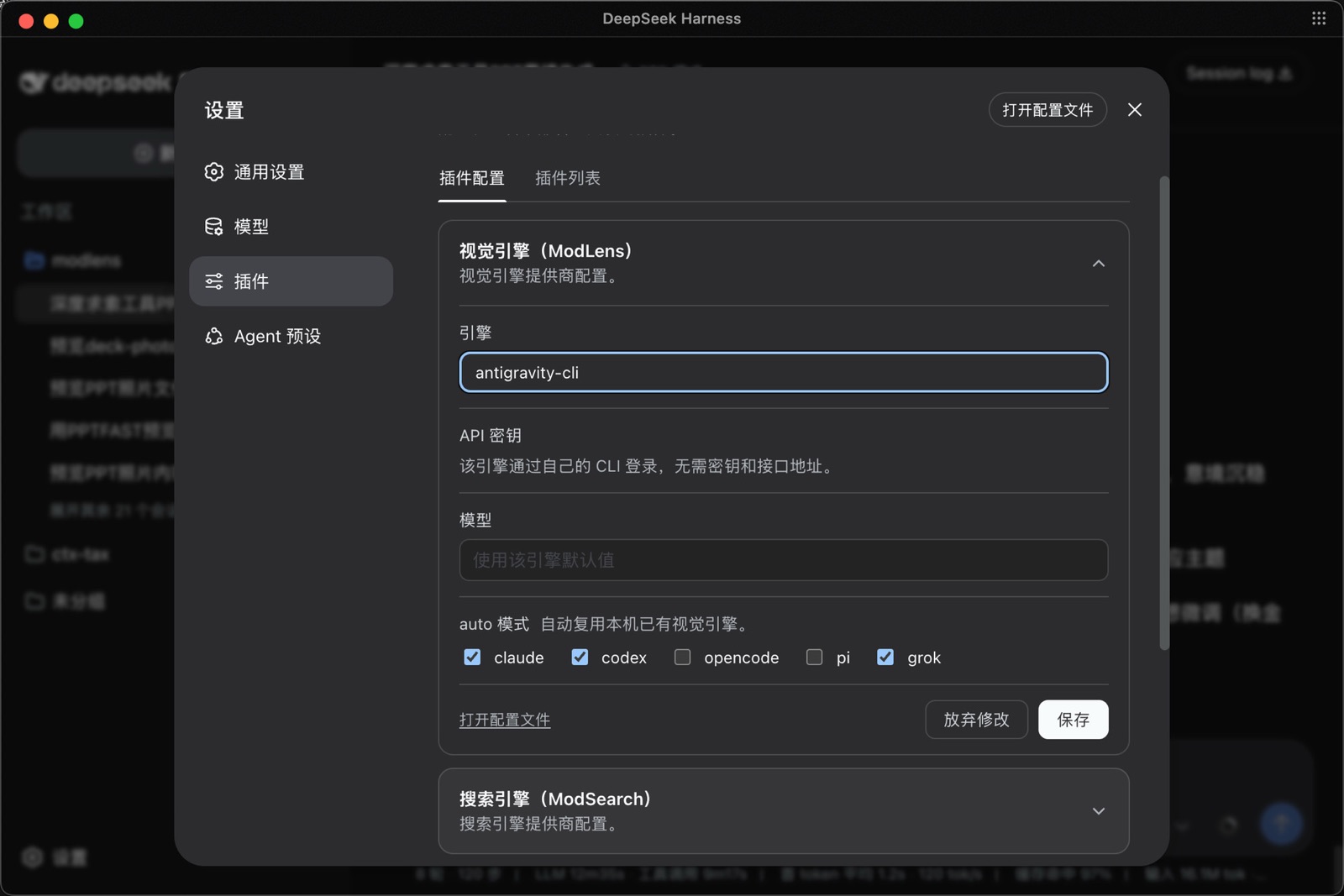
ModLens is a vision plugin for DeepSeek Harness that gives text-only models sight by reading images pasted directly into chat, with zero-config setup and multiple vision engines.
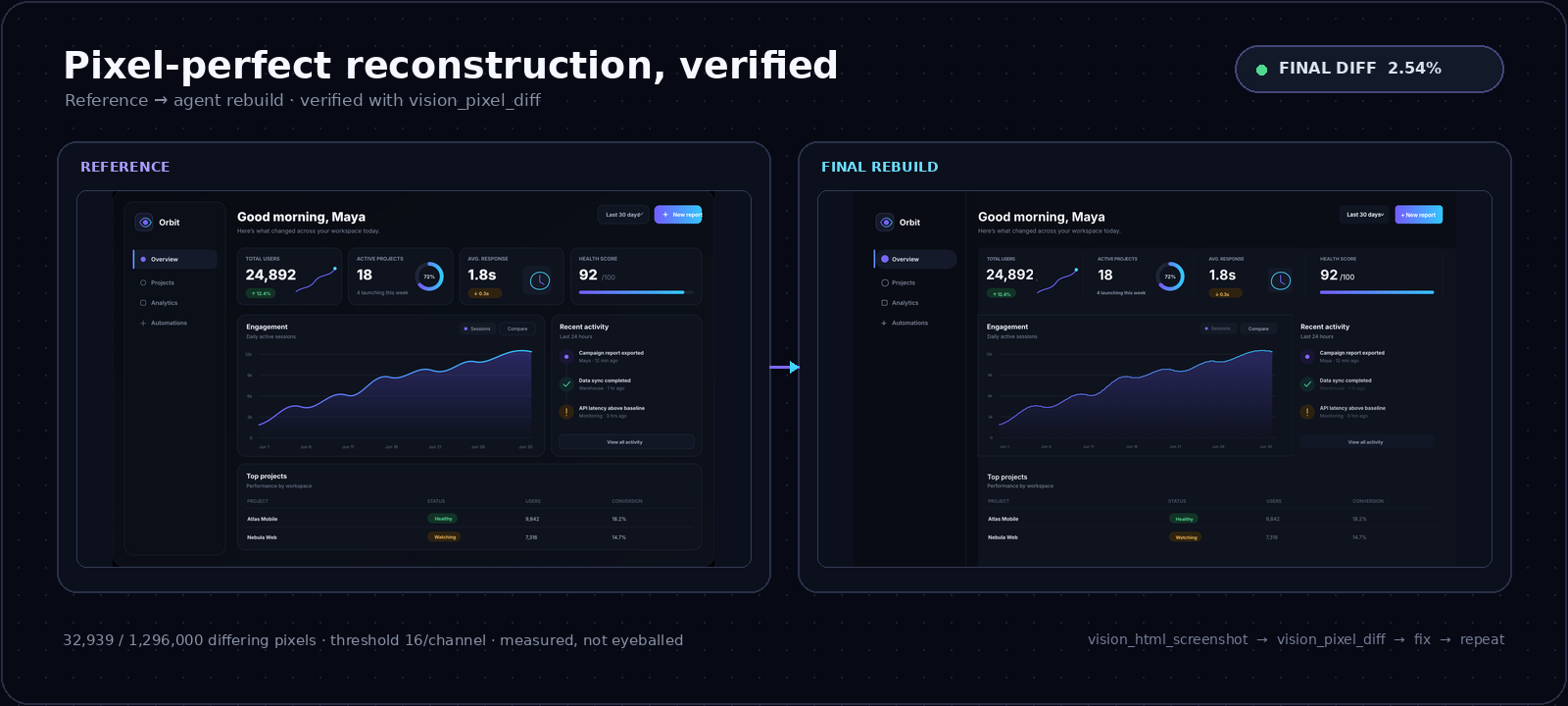
On-demand vision for text-only DeepSeek Harness agents: built-in free keyless vision chain and 14 vision tools, routing image turns as tool calls to vision models with pixel fidelity, no Python needed, one-command install.
Give text-only models in DeepSeek Harness eyes, enabling image Q&A, long-screenshot OCR, UI restoration, and GUI visual tasks.
An armor-breaking plugin for DeepSeek: rewrites instruction priority, expands refusal-blocked phrases, persists across sessions, and shows a green active indicator.