dsh-pi-memory
Run the following command in DeepSeek Harness:
dsh plugin install GongYuanCaiJi/dsh-pi-memory
Paste the following prompt into your AI chat to install this plugin:
Run dsh plugin install GongYuanCaiJi/dsh-pi-memory to install; source code at https://github.com/GongYuanCaiJi/dsh-pi-memory
About this plugin
Every fresh session, your coding agent starts from zero—architectural decisions, unfinished todos, lessons learned yesterday, all gone. dsh-pi-memory ports pi-memory, the most popular memory extension in the Pi ecosystem, to DeepSeek Harness (dsh), giving your agent durable, editable, commit-ready memory: long-term facts in MEMORY.md, a running daily log, and a scratchpad checklist, all as plain Markdown files you can cat, edit, and push to a repo.
The six core tools—write, recoverable delete, restore, read, scratchpad, and status—work out of the box with zero configuration. Plug in the optional qmd engine to unlock keyword (BM25), semantic (vector), and deep (hybrid + reranking) search across everything it has ever remembered. By default the plugin uses a KV-cache-stable snapshot strategy so prefix-caching runtimes like llama.cpp, vLLM, and MLX keep their caches warm instead of reprocessing the entire conversation history every turn.
If you run a coding agent on dsh every day and want cross-session memory of project context and open tasks—without a black-box database or a cloud memory service—dsh-pi-memory is an out-of-the-box, files-as-memory, git-friendly choice.
Use Cases
- Retain architectural decisions and project context across agent sessions
- Track unfinished tasks across multi-turn conversations with a scratchpad checklist
- Search all historical memory with keyword or semantic queries via qmd
Best For
- Developers who run coding agents on dsh daily
- Users who want auditable, editable, git-friendly agent memory
- Pi-ecosystem users migrating pi-memory workflows to dsh
Related Plugins
Traceable, searchable cross-session memory for AI agents that turns conversation knowledge into a typed knowledge graph and recalls relevant subgraphs instead of replaying full history, natively integrated with DeepSeek Harness.
Gives DSH AI cross-session long-term memory, to-do and skill management, plus multi-session orchestration, external AI delegation, and an infinite canvas that grows with you.
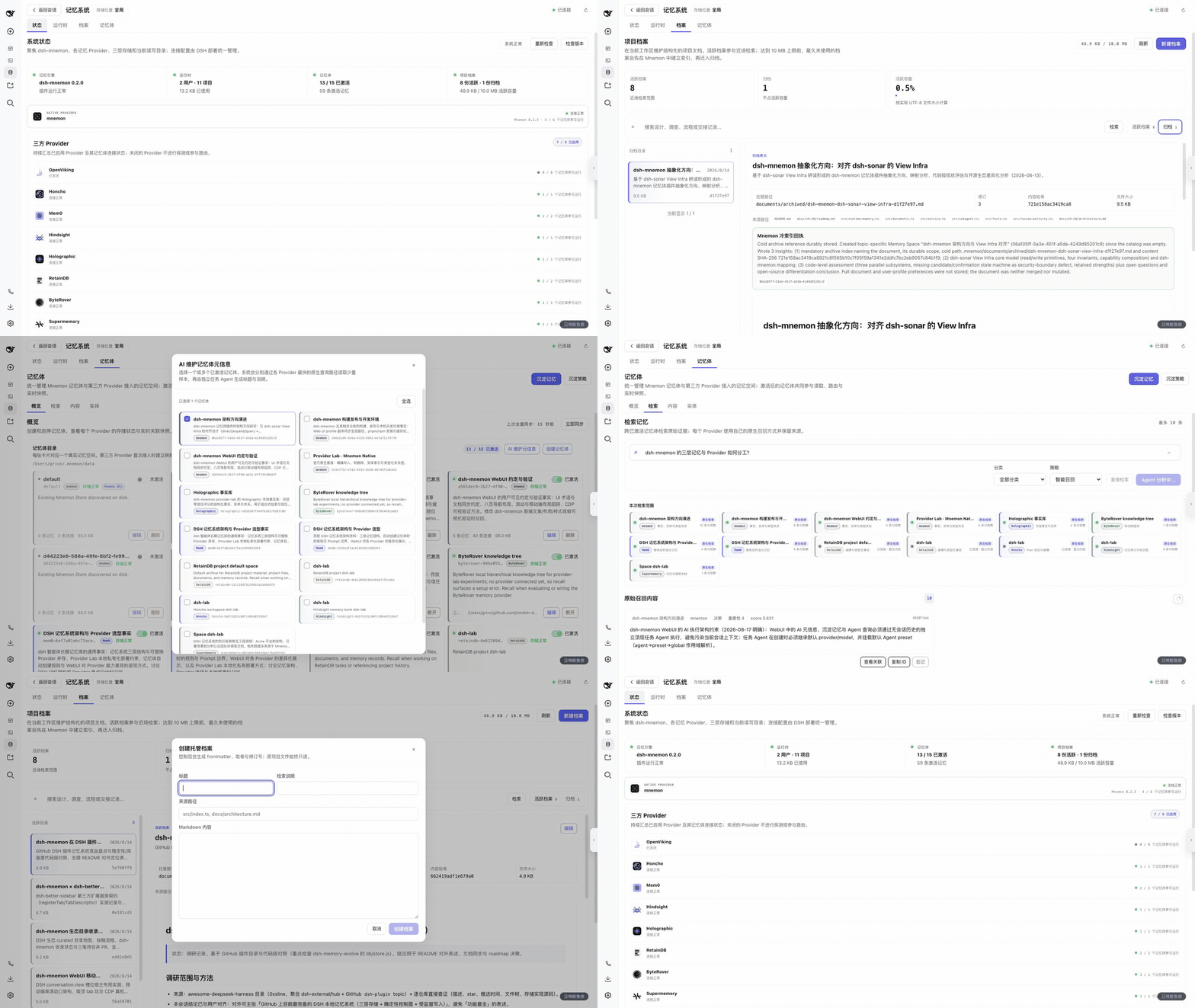
dsh-mnemon is a three-tier, pluggable, Agent-driven memory system for DeepSeek Harness, combining Runtime memory, Project Documents, and replaceable Memory Spaces with nine long-term providers.
An opinionated, zero-infrastructure file-based memory protocol: human-readable markdown files plus a bounded always-loaded index, curation discipline, and no database or embeddings.