DSH-DELETE
Run the following command in DeepSeek Harness:
dsh plugin install Hyna-hla/DSH-DELETE
Paste the following prompt into your AI chat to install this plugin:
Visit https://github.com/Hyna-hla/DSH-DELETE, then in the DeepSeek Harness Web GUI go to Settings and open the DSH plugin marketplace, search DSH-DELETE and click Install, then restart DSH.
About this plugin
DeepSeek Harness persists session logs in an append-only fashion and exposes no deletion API in its public services. The session list grows without bound, yet there is no safe built-in way to remove an entry, and manually deleting files can corrupt an actively writing Agent process or trigger partial writes. DSH-DELETE fills exactly that gap.
Its core mechanism is a two-phase deletion. Picking Delete conversation from the session-row menu or running /delete-conversation CONFIRM archives the row immediately across all session groups, but only a durable request is written at that point. On the next DSH startup the plugin validates the full Session lifecycle (persisted list, backend location, inspect results) and then atomically moves the log directory into a recoverable trash via a same-filesystem directory rename (default ~/.dsh/conversation-trash). No individual JSONL file is unlinked, so post-move crashes remain recoverable. To undo, simply stop DSH and move the directory back; deletion.json records the original path.
It is aimed at individuals and teams that need periodic session cleanup while insisting on full reversibility. The plugin supports Per-Session JSONL backends only and explicitly refuses SQLite. It is not permanent erasure; retention and final cleanup remain under the deployment administrator's policy.
Use Cases
- Session list keeps growing and periodic cleanup is needed
- Accidentally created sessions need safe removal without losing logs
- Retention policies require a reversible deletion mechanism
Best For
- Individual developers managing a growing number of work sessions
- Small teams with hard requirements on data reversibility
- Deployment admins enforcing compliance retention policies
Related Plugins
Traceable, searchable cross-session memory for AI agents that turns conversation knowledge into a typed knowledge graph and recalls relevant subgraphs instead of replaying full history, natively integrated with DeepSeek Harness.
Gives DSH AI cross-session long-term memory, to-do and skill management, plus multi-session orchestration, external AI delegation, and an infinite canvas that grows with you.
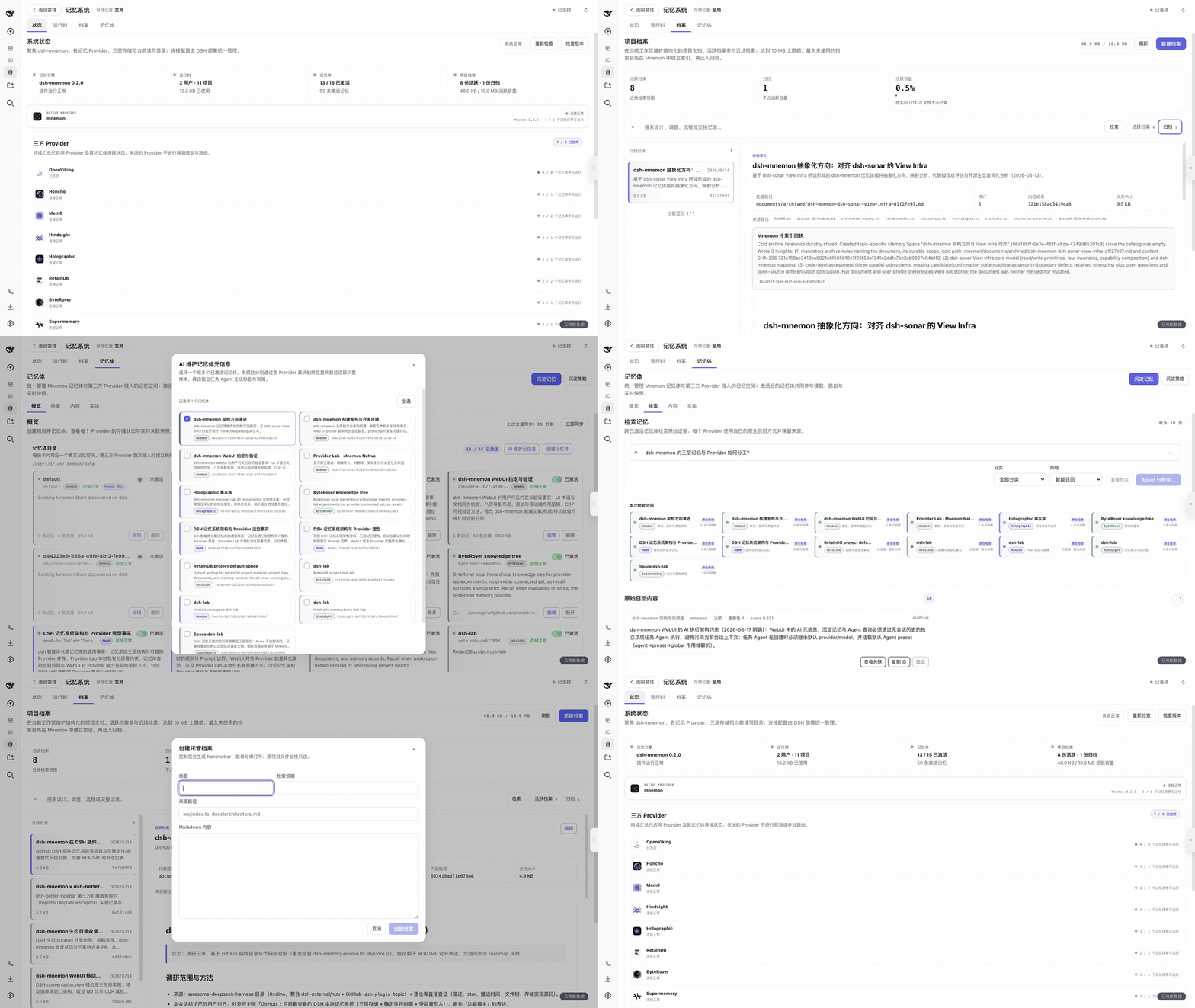
dsh-mnemon is a three-tier, pluggable, Agent-driven memory system for DeepSeek Harness, combining Runtime memory, Project Documents, and replaceable Memory Spaces with nine long-term providers.
An opinionated, zero-infrastructure file-based memory protocol: human-readable markdown files plus a bounded always-loaded index, curation discipline, and no database or embeddings.