dsh-memory
Run the following command in DeepSeek Harness:
dsh plugin install joyiok/dsh-memory
Paste the following prompt into your AI chat to install this plugin:
Run dsh plugin install joyiok/dsh-memory in your terminal to install the plugin; source code is available at https://github.com/joyiok/dsh-memory . Restart dsh web after installation to activate it.
About this plugin
Every new DeepSeek Harness session starts from a blank slate. dsh-memory maintains a single shared JSON store under $DSH_HOME that all sessions-whether web, headless, or a different working directory-read and write to, giving your agent genuine persistent context across sessions.
The core surface is four agent tools: memory_add writes a tagged memory entry, memory_search queries by content or tags, memory_list browses by category, and memory_remove deletes by id. On a fresh session the agent proactively searches existing memories and stores new facts on its own, so you stop repeating the same instructions every time. A sidebar Memory panel on the web UI lets you add, search, and delete entries by hand without writing any tool call.
Under the hood, writes use a temp-file-then-rename atomic pattern that stays safe across concurrent processes, and reads check mtime to pick up external updates. If the JSON file is corrupt, the plugin renames it with a .corrupt- suffix and rebuilds rather than crashing.
Built for developers who run multiple DSH sessions and want their agent to actually remember project conventions and preferences. No extra configuration needed-just keep secrets and credentials out of your memory entries.
Use Cases
- Sharing project conventions and coding preferences across multiple DSH sessions
- Agent automatically recalls tech stack and style from prior sessions
- Manually adding, searching, and deleting memory entries via the web sidebar
Best For
- Developers running multiple concurrent DSH sessions
- Teams wanting their agent to retain long-term project context
- Users who prefer managing agent memory through the web UI
Related Plugins
Traceable, searchable cross-session memory for AI agents that turns conversation knowledge into a typed knowledge graph and recalls relevant subgraphs instead of replaying full history, natively integrated with DeepSeek Harness.
Gives DSH AI cross-session long-term memory, to-do and skill management, plus multi-session orchestration, external AI delegation, and an infinite canvas that grows with you.
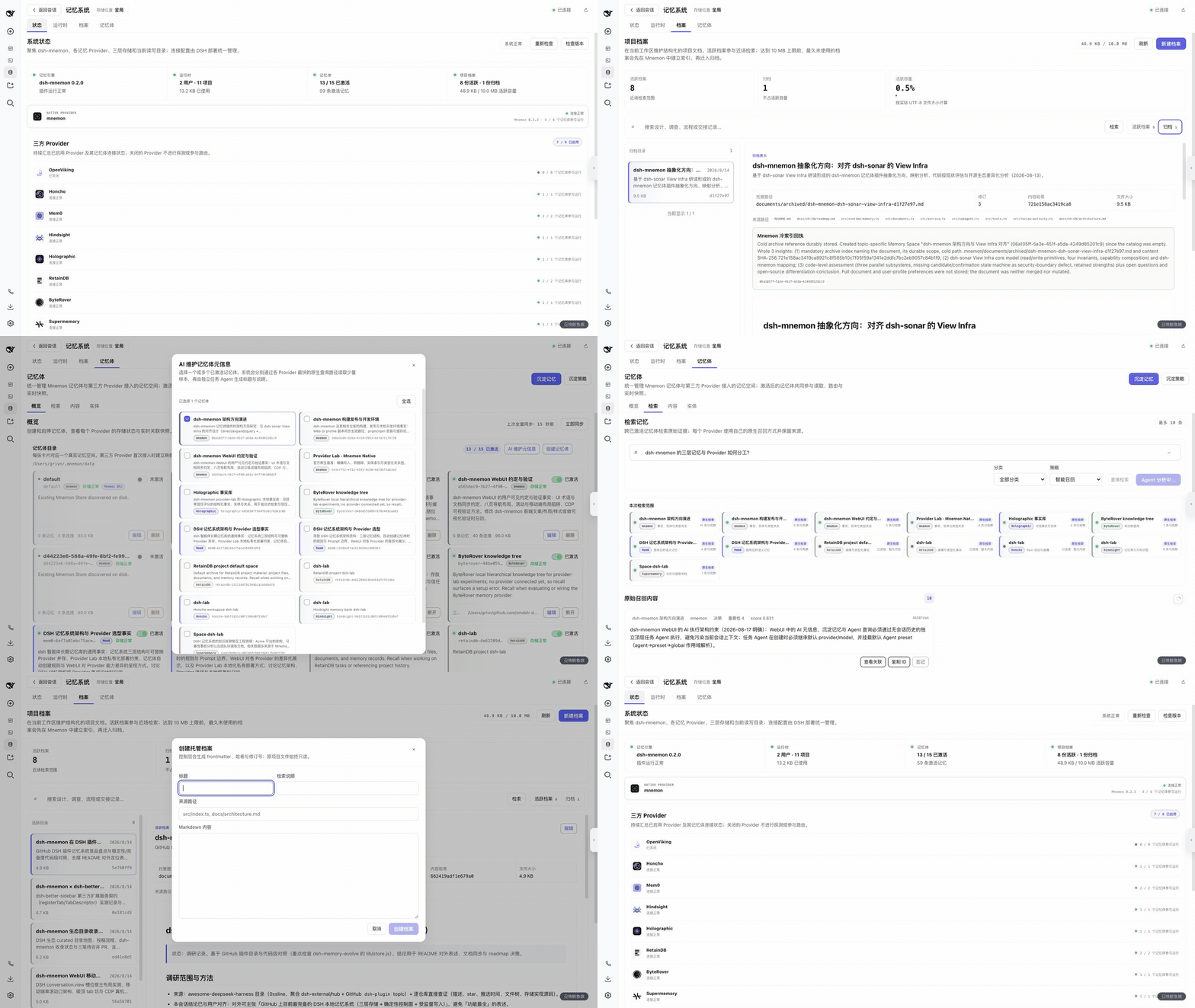
dsh-mnemon is a three-tier, pluggable, Agent-driven memory system for DeepSeek Harness, combining Runtime memory, Project Documents, and replaceable Memory Spaces with nine long-term providers.
An opinionated, zero-infrastructure file-based memory protocol: human-readable markdown files plus a bounded always-loaded index, curation discipline, and no database or embeddings.