dsh-compaction-meta
Run the following command in DeepSeek Harness:
dsh plugin install DViridescent/dsh-compaction-meta
Paste the following prompt into your AI chat to install this plugin:
Install this plugin in DeepSeek Harness by running dsh plugin install DViridescent/dsh-compaction-meta; the source code is hosted at https://github.com/DViridescent/dsh-compaction-meta.
About this plugin
Most harness frameworks today manage context through passive threshold compaction: once token counts cross a preset line, the system mechanically trims history with no input from the model. dsh-compaction-meta tackles this by returning the compaction decision to the model itself, letting its meta-cognitive judgment determine which spans to keep and which to fold, rather than triggering on a single number.
The plugin plans to deliver three core capabilities: context_list exposes the current context folded by turn and tool call, with numbering and token estimates so the model can locate specific memory intervals; context_compact lets the model replace a chosen interval with self-authored summary text, routed through the official compaction transaction to preserve checkpoint markers, tool-call pairing balance, and log rebuildability; and it disables threshold-based passive compaction entirely, supplemented by a companion skill that teaches the model when and how to use these actions.
Ideal for developers who care about model meta-cognition and long-term learning, especially those running long conversations, multi-tool-chain invocations, or scenarios requiring fine-grained control over context lifecycle in DSH. The project is currently in skeleton form and not yet implemented, making it most relevant to early adopters who wish to track or contribute to its progression.
Use Cases
- Let the model decide when and what to compress in long conversations
- Fine-grained context lifecycle control in multi-tool-chain scenarios
- Replace passive threshold trimming with model-driven context editing
Best For
- Developers focused on model meta-cognition and long-term learning
- Users running long conversations in DSH requiring fine-grained context control
- Forward-looking developers who want to engage with early-stage iterations
Related Plugins
Traceable, searchable cross-session memory for AI agents that turns conversation knowledge into a typed knowledge graph and recalls relevant subgraphs instead of replaying full history, natively integrated with DeepSeek Harness.
Gives DSH AI cross-session long-term memory, to-do and skill management, plus multi-session orchestration, external AI delegation, and an infinite canvas that grows with you.
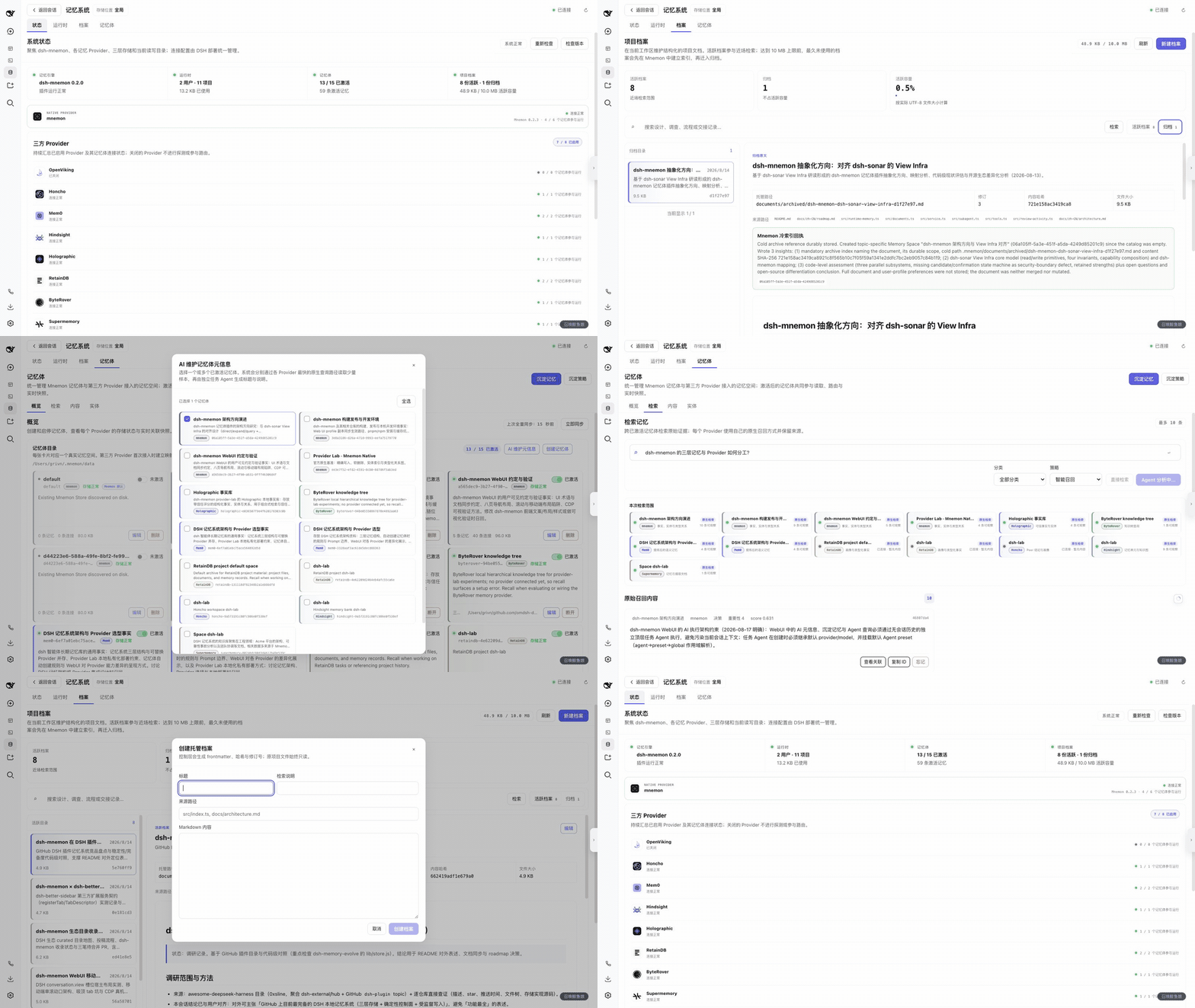
dsh-mnemon is a three-tier, pluggable, Agent-driven memory system for DeepSeek Harness, combining Runtime memory, Project Documents, and replaceable Memory Spaces with nine long-term providers.
An opinionated, zero-infrastructure file-based memory protocol: human-readable markdown files plus a bounded always-loaded index, curation discipline, and no database or embeddings.