dsh-rollback
Run the following command in DeepSeek Harness:
dsh plugin install Taler97/dsh-rollback
Paste the following prompt into your AI chat to install this plugin:
Install it in DeepSeek Harness by running dsh plugin install Taler97/dsh-rollback; the source is available at https://github.com/Taler97/dsh-rollback
About this plugin
When an AI agent overwrites a file via write, edit, or a bash/run_code call, the original content is often lost for good. dsh-rollback solves exactly this gap: without touching the agent loop, it hooks into Harness' documented tools/* extension points to silently checkpoint every file mutation so it can be undone later.
Two capture paths feed the same store. On a successful write/edit result the plugin pulls the pre-image and stores it as a git blob via hash-object -w, leaving the index, refs, and working tree untouched. For opaque bash/run_code calls it forward-snapshots the entire session working directory before execution, then diffs the tree afterwards to archive every changed or created file. Restoration is exposed as a model-facing rollback_files tool and a human /rollback command, both backed by the same durable append-only manifest, so records survive restarts and restores are idempotent.
It is aimed at developers who use DeepSeek Harness for file editing, code generation, or script execution. No workflow change is required: the plugin auto-mounts, adds zero tokens during normal operation, and a single tool call or command reverts the file to its pre-mutation byte-exact state.
Use Cases
- A model agent overwrites a file with a broken edit and the original content must be restored instantly
- A bash or run_code call unexpectedly modifies several files and the user wants to undo all of them at once
- After a session restart, previously captured checkpoints remain available for idempotent restoration
Best For
- Developers using DeepSeek Harness for file editing, code generation, or script execution
- Engineering teams that need a safety net around AI agent file mutations
- Architects who want non-invasive rollback guarantees without altering the agent loop
Related Plugins
Traceable, searchable cross-session memory for AI agents that turns conversation knowledge into a typed knowledge graph and recalls relevant subgraphs instead of replaying full history, natively integrated with DeepSeek Harness.
Gives DSH AI cross-session long-term memory, to-do and skill management, plus multi-session orchestration, external AI delegation, and an infinite canvas that grows with you.
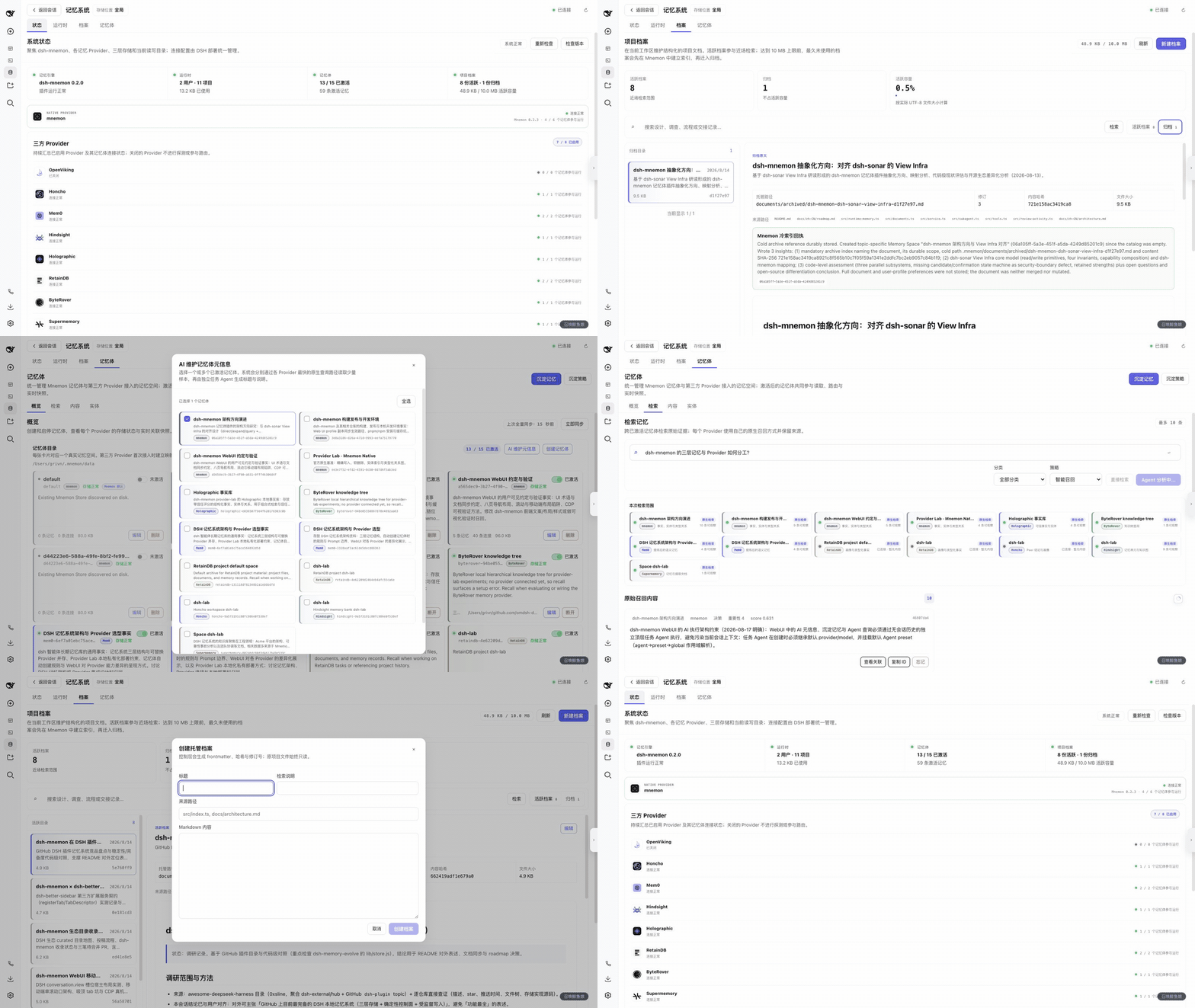
dsh-mnemon is a three-tier, pluggable, Agent-driven memory system for DeepSeek Harness, combining Runtime memory, Project Documents, and replaceable Memory Spaces with nine long-term providers.
An opinionated, zero-infrastructure file-based memory protocol: human-readable markdown files plus a bounded always-loaded index, curation discipline, and no database or embeddings.