dsh-tool-read-tiff
Run the following command in DeepSeek Harness:
dsh plugin install fulander0301/dsh-tool-read-tiff
Paste the following prompt into your AI chat to install this plugin:
Install the plugin in DeepSeek Harness by running dsh plugin install fulander0301/dsh-tool-read-tiff; the source is available at https://github.com/fulander0301/dsh-tool-read-tiff
About this plugin
TIFF is the go-to wrapper for enterprise scans, faxes, and scientific rasters, yet it is essentially invisible to text-only LLMs: browsers cannot open it and general-purpose vision pipelines do not yield text out of the box. dsh-tool-read-tiff closes that gap, letting models such as DeepSeek V4 read TIFF files directly inside a conversation without the user manually screenshotting or converting.
Each call takes a local path or http(s) URL plus a zero-based page index. The plugin decodes the target page to a viewable PNG via sharp (libvips + libtiff) and returns full TIFF header metadata: dimensions, page count, compression scheme (LZW, Deflate, PackBits, CCITT Group 3/4, JPEG, none), photometric interpretation, per-channel bit depths, byte order, and whether the file is classic or BigTIFF. Multi-page documents can be iterated page by page. When an OpenAI-compatible vision endpoint is configured, the decoded PNG is forwarded to that endpoint and the model's textual description is returned in-conversation, while the raw TIFF and PNG bytes never enter the session log. Even without a vision endpoint the tool still decodes, converts, and reports metadata, handing back a convertedPath that downstream tools can pick up.
Ideal for engineers and knowledge workers who regularly handle scanned documents, multi-page faxes, legacy reports, or scientific imagery inside a conversation flow—especially teams built around text-only models that do not want to stand up a separate image pipeline.
Use Cases
- Extract text and tables from scanned documents and faxes within a conversation
- Iterate through multi-page TIFFs to retrieve per-page dimensions, compression, bit depth, and other metadata
- Send decoded TIFF pages to a vision model for structured descriptions that downstream tools can consume
Best For
- Engineers using text-only LLMs who want to avoid building a separate image pipeline
- Knowledge workers who handle scanned documents, multi-page faxes, or scientific rasters daily
- Developers whose workflow is conversation-based and needs zero-config TIFF access
Related Plugins
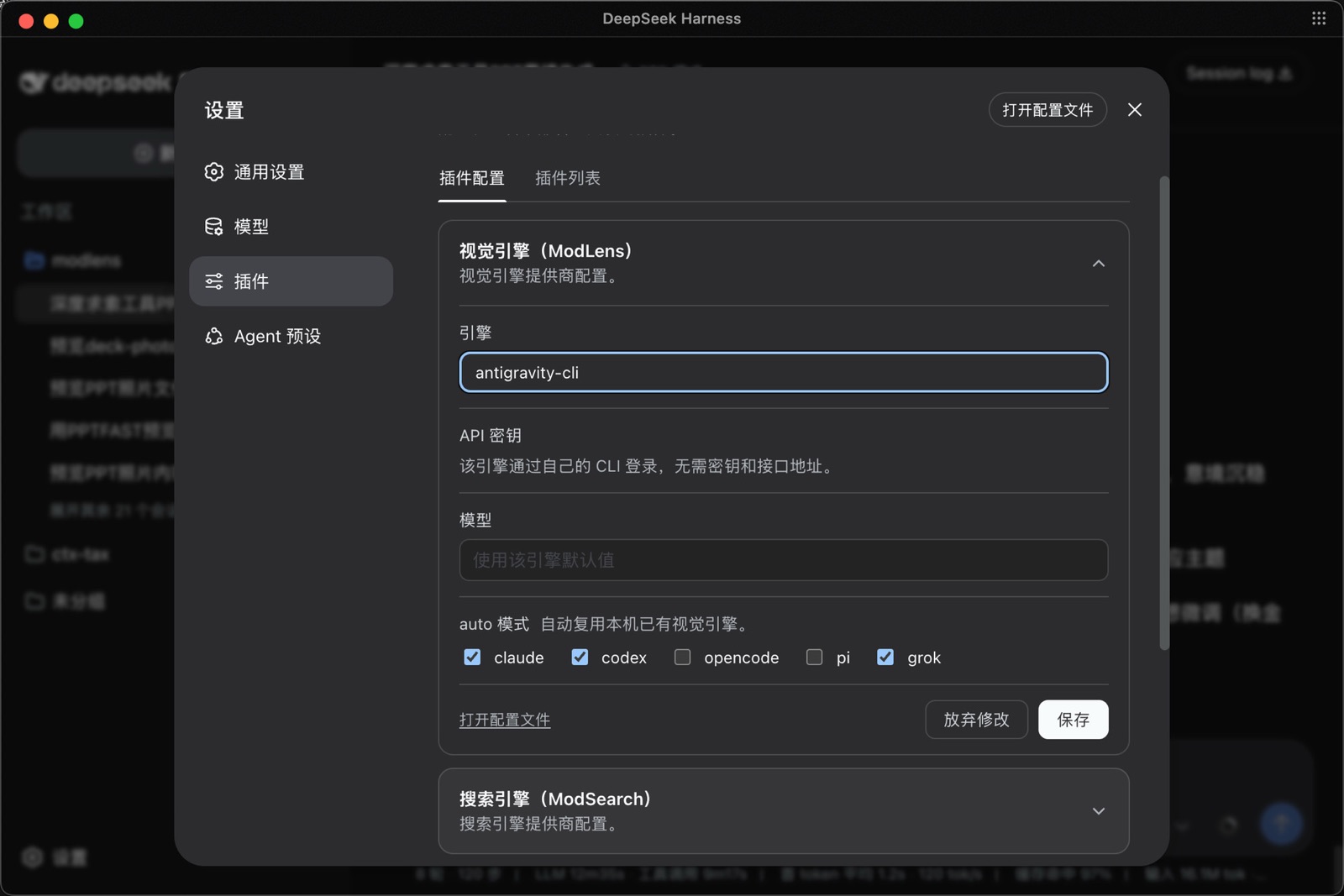
ModLens is a vision plugin for DeepSeek Harness that gives text-only models sight by reading images pasted directly into chat, with zero-config setup and multiple vision engines.
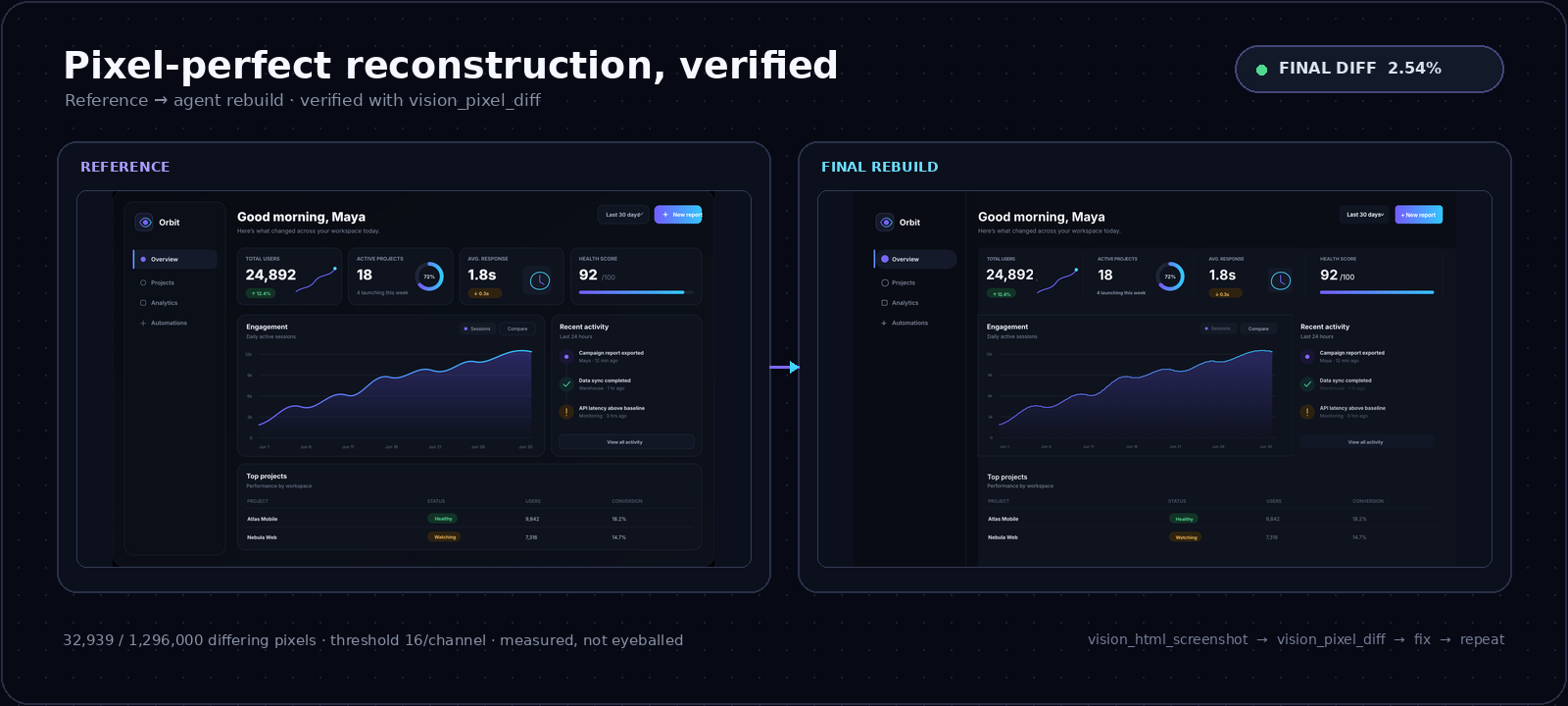
On-demand vision for text-only DeepSeek Harness agents: built-in free keyless vision chain and 14 vision tools, routing image turns as tool calls to vision models with pixel fidelity, no Python needed, one-command install.

Give text-only models in DeepSeek Harness eyes, enabling image Q&A, long-screenshot OCR, UI restoration, and GUI visual tasks.
An armor-breaking plugin for DeepSeek: rewrites instruction priority, expands refusal-blocked phrases, persists across sessions, and shows a green active indicator.