DSH-Session-Sync
Run the following command in DeepSeek Harness:
dsh plugin install hajimimaodie8/DSH-Session-Sync
Paste the following prompt into your AI chat to install this plugin:
Run dsh plugin install hajimimaodie8/DSH-Session-Sync in DeepSeek Harness to install; source code at https://github.com/hajimimaodie8/DSH-Session-Sync
About this plugin
The DSH web version and desktop version each maintain their own data directory, so conversations, workspaces, settings and plugins never see each other. Third-party packaged desktop builds make the isolation even more painful, forcing you to reconfigure everything every time you switch ends.
DSH-Session-Sync turns that into a single /sync command. By default it performs a bidirectional union merge across sessions, workspace lists, projection caches, settings and credentials, and plugin enablement plus body diff sync, so nothing on either side is lost. You can also push one-way (web-to-desk or desk-to-web), inspect both paths and data stats with /sync status, or point at any custom target with --to. The plugin is built on Cordis command registration with pure Node built-in modules and zero external dependencies.
If you use both the DSH web and desktop versions, hop between them throughout the day, or rely on a third-party packaged desktop build, this plugin keeps your sessions and configuration in lockstep so you never have to reassemble your workspace from scratch.
Use Cases
- Keeping sessions, workspaces and plugins in sync when switching between web and desktop
- Breaking through full data isolation in third-party packaged desktop builds
- Migrating workspaces, settings and plugins from the web instance to desktop with one command
Best For
- Users who use both DSH web and desktop versions and hop between them daily
- Developers relying on third-party packaged desktop builds who need shared data with the web instance
- Teams that want consistent plugin configurations and session history across multiple endpoints
Related Plugins
Traceable, searchable cross-session memory for AI agents that turns conversation knowledge into a typed knowledge graph and recalls relevant subgraphs instead of replaying full history, natively integrated with DeepSeek Harness.
Gives DSH AI cross-session long-term memory, to-do and skill management, plus multi-session orchestration, external AI delegation, and an infinite canvas that grows with you.
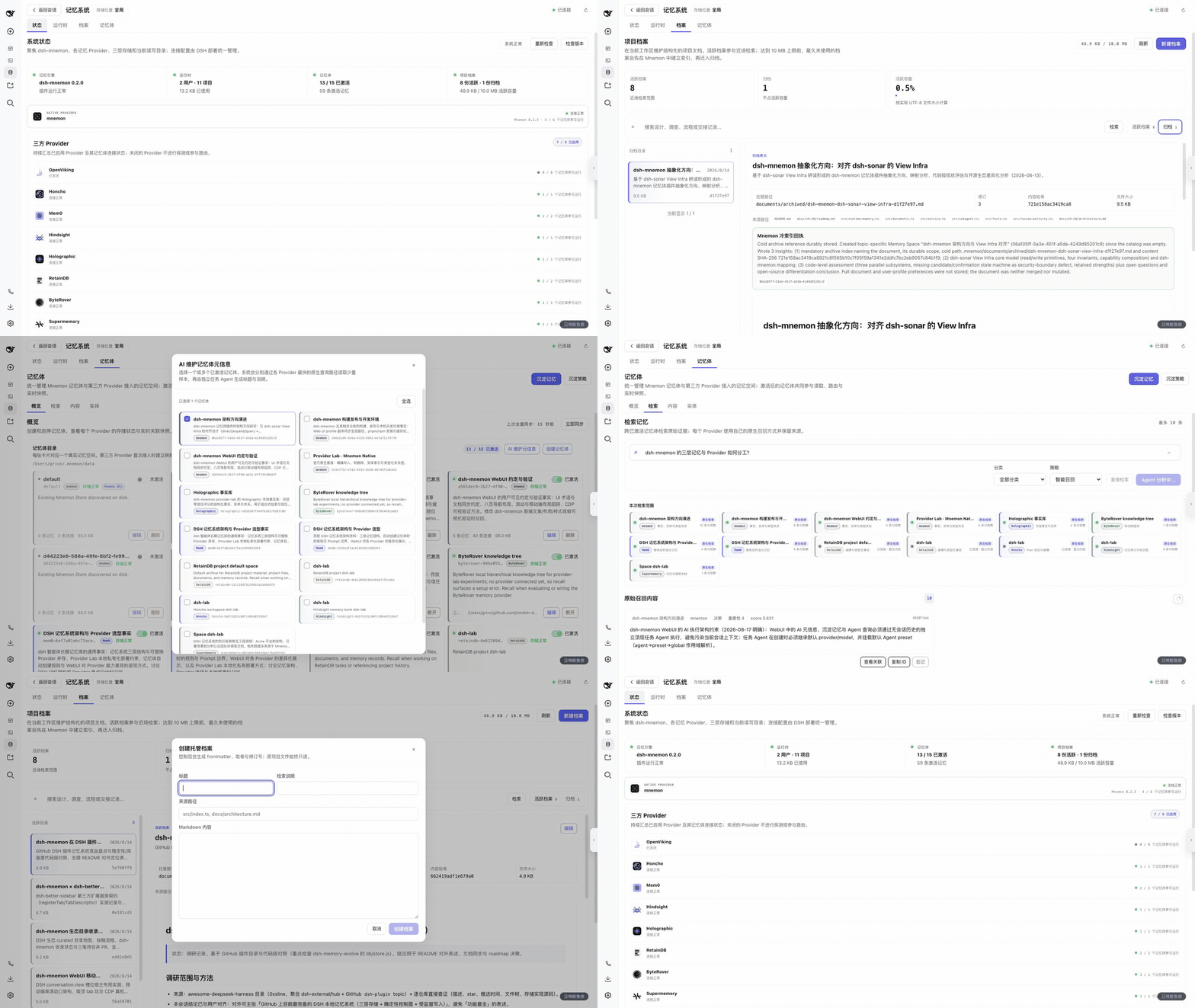
dsh-mnemon is a three-tier, pluggable, Agent-driven memory system for DeepSeek Harness, combining Runtime memory, Project Documents, and replaceable Memory Spaces with nine long-term providers.
An opinionated, zero-infrastructure file-based memory protocol: human-readable markdown files plus a bounded always-loaded index, curation discipline, and no database or embeddings.