dsh-thinking-language-zh
Run the following command in DeepSeek Harness:
dsh plugin install ayanJava111/dsh-thinking-language-zh
Paste the following prompt into your AI chat to install this plugin:
Run dsh plugin install ayanJava111/dsh-thinking-language-zh in DeepSeek Harness to install; the source repository is https://github.com/ayanJava111/dsh-thinking-language-zh
About this plugin
In multi-agent DeepSeek Harness deployments, a model's reasoning language often drifts between Chinese and English, leaving inconsistent thinking fragments in logs and user-facing replies. dsh-thinking-language-zh pins the agent's thinking and reply language with a single, stable system-prompt section so every agent in the deployment reasons and responds in the chosen language by default.
The plugin does exactly one thing: it injects a thinking:language instruction between the persona and the tool-guidance band. It contributes no tools, no shell access, and no model changes. Configuration is minimal—an editable text field plus an optional complete flag—and hot-reloading a config edit swaps the section instantly. The default Chinese instruction costs roughly 60 tokens per request and keeps prompt-prefix (KV) caching intact, making it safe to leave mounted in production.
It is a good fit for teams running Web UI, headless, or ACP DeepSeek Harness deployments who need a uniform reply language and want to eliminate reasoning drift. Because the text field is a template, the same plugin also serves as a starting point for English or any other language by overriding the row in a cordis.patch.yml layer.
Screenshots
Use Cases
- Unify reply and thinking language across multi-agent deployments
- Eliminate mixed-language reasoning fragments
- Pin agent output language in production
Best For
- Developers running multi-agent DeepSeek Harness orchestration
- Ops teams needing consistent agent reply language
- Platform admins using Web UI, headless, or ACP modes
Related Plugins
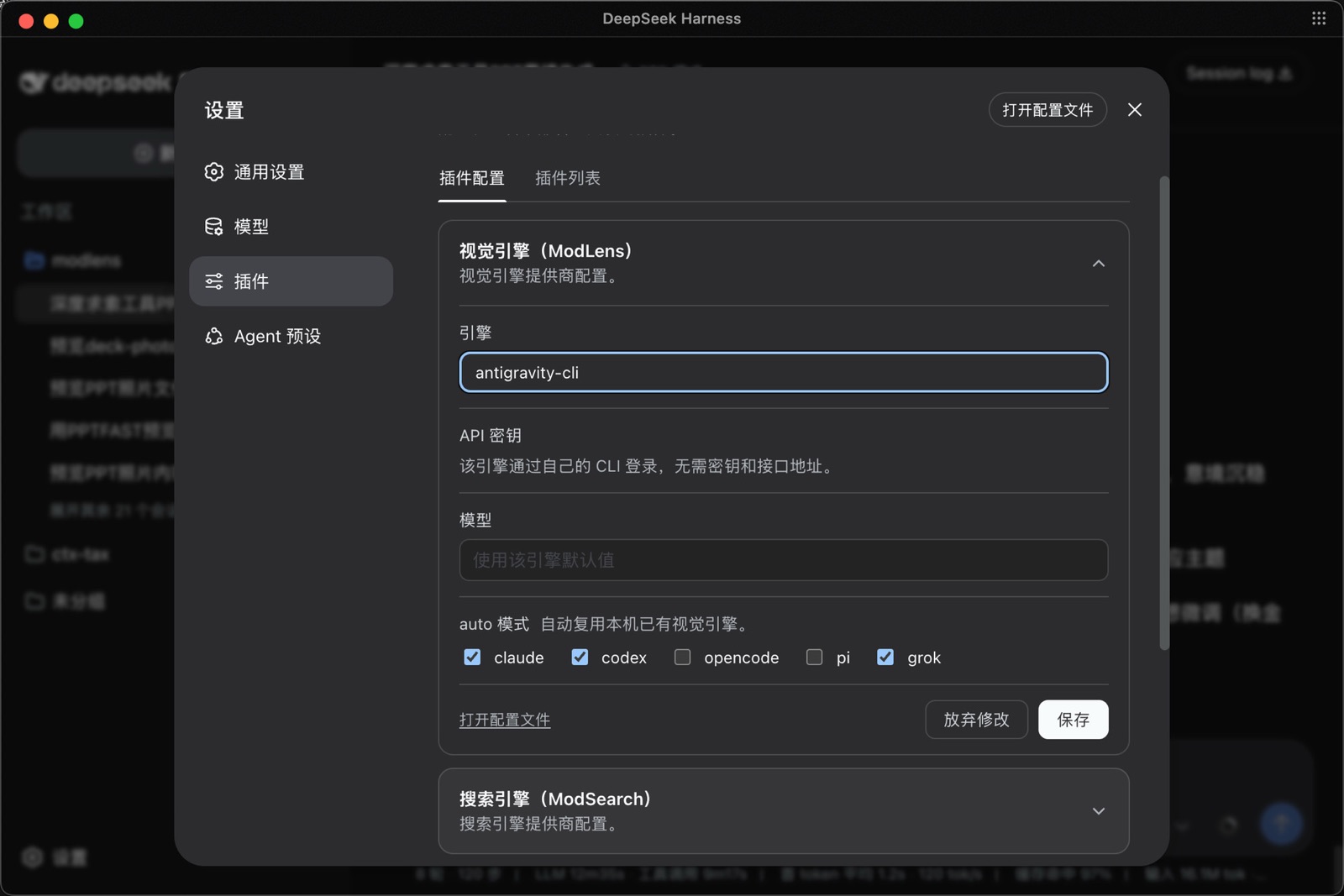
ModLens is a vision plugin for DeepSeek Harness that gives text-only models sight by reading images pasted directly into chat, with zero-config setup and multiple vision engines.
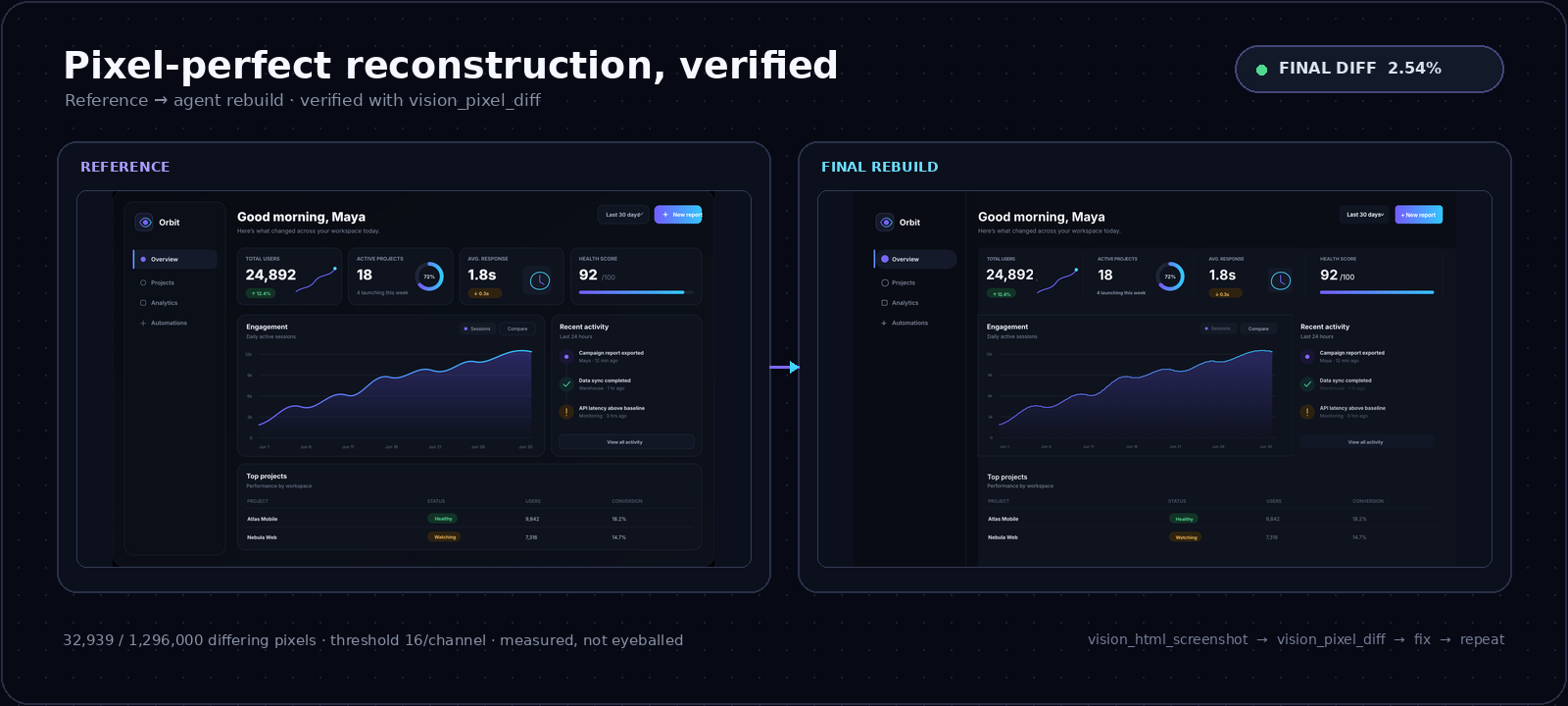
On-demand vision for text-only DeepSeek Harness agents: built-in free keyless vision chain and 14 vision tools, routing image turns as tool calls to vision models with pixel fidelity, no Python needed, one-command install.
Give text-only models in DeepSeek Harness eyes, enabling image Q&A, long-screenshot OCR, UI restoration, and GUI visual tasks.
An armor-breaking plugin for DeepSeek: rewrites instruction priority, expands refusal-blocked phrases, persists across sessions, and shows a green active indicator.