dsh-self-memory
Run the following command in DeepSeek Harness:
dsh plugin install cyanxi69-jpg/dsh-self-memory
Paste the following prompt into your AI chat to install this plugin:
Install with dsh plugin install cyanxi69-jpg/dsh-self-memory (source: https://github.com/cyanxi69-jpg/dsh-self-memory)
About this plugin
Every fresh DeepSeek Harness session starts from zero. The pitfall you patched half an hour ago, the solution you validated in the previous window—all gone. dsh-self-memory closes that memory gap by structurally recording problems, multiple solutions, script paths, and full model-call traces to local disk. The instant a new session opens, the plugin auto-retrieves relevant history and injects it as a source-attributed user message, so the agent checks before it acts.
The loop runs without manual intervention: hit a problem, read the injected history, try what fits; mark a hit on success, log the root cause on failure; if nothing matches, solve fresh and write the result back. The retrieval engine supports precondition-aware ranking (appliesTo, conflictsWith, and status tags let solutions be annotated as applicable, contradictory, or deprecated), an inverted index that narrows candidates once records exceed one hundred, and generalization matching that swaps version numbers, paths, and hashes for placeholders before scoring. Multiple solutions can hang off one problem and be filtered by preconditions. External playbooks can be bulk-imported from files or inline JSON.
The plugin has zero runtime dependencies, uses only Node built-in modules, keeps every byte under a local directory, and works fully offline so no conversation ever leaves the machine. It is built for heavy DSH users who refuse to re-solve the same puzzle every session, and for engineering teams that want to hand their accumulated runbooks straight to the agent and have them taken up where they left off.
Use Cases
- A fresh session hits a previously solved problem; the plugin injects the past solution with its precondition tags so the agent does not re-patch the same bug
- A team bulk-imports accumulated playbooks and lets the agent pick up verified fixes without re-deriving them
- Multiple solutions exist for one problem under different preconditions; the engine ranks by appliesTo and conflictsWith and flags deprecated entries
Best For
- Developers who run many DSH sessions and refuse to re-solve the same puzzle from scratch every time
- AI engineering teams that want to accumulate, store, and reuse validated fixes
- Self-hosted users who prefer fully local, offline-capable, zero-third-party-dependency tooling
Related Plugins
Traceable, searchable cross-session memory for AI agents that turns conversation knowledge into a typed knowledge graph and recalls relevant subgraphs instead of replaying full history, natively integrated with DeepSeek Harness.
Gives DSH AI cross-session long-term memory, to-do and skill management, plus multi-session orchestration, external AI delegation, and an infinite canvas that grows with you.
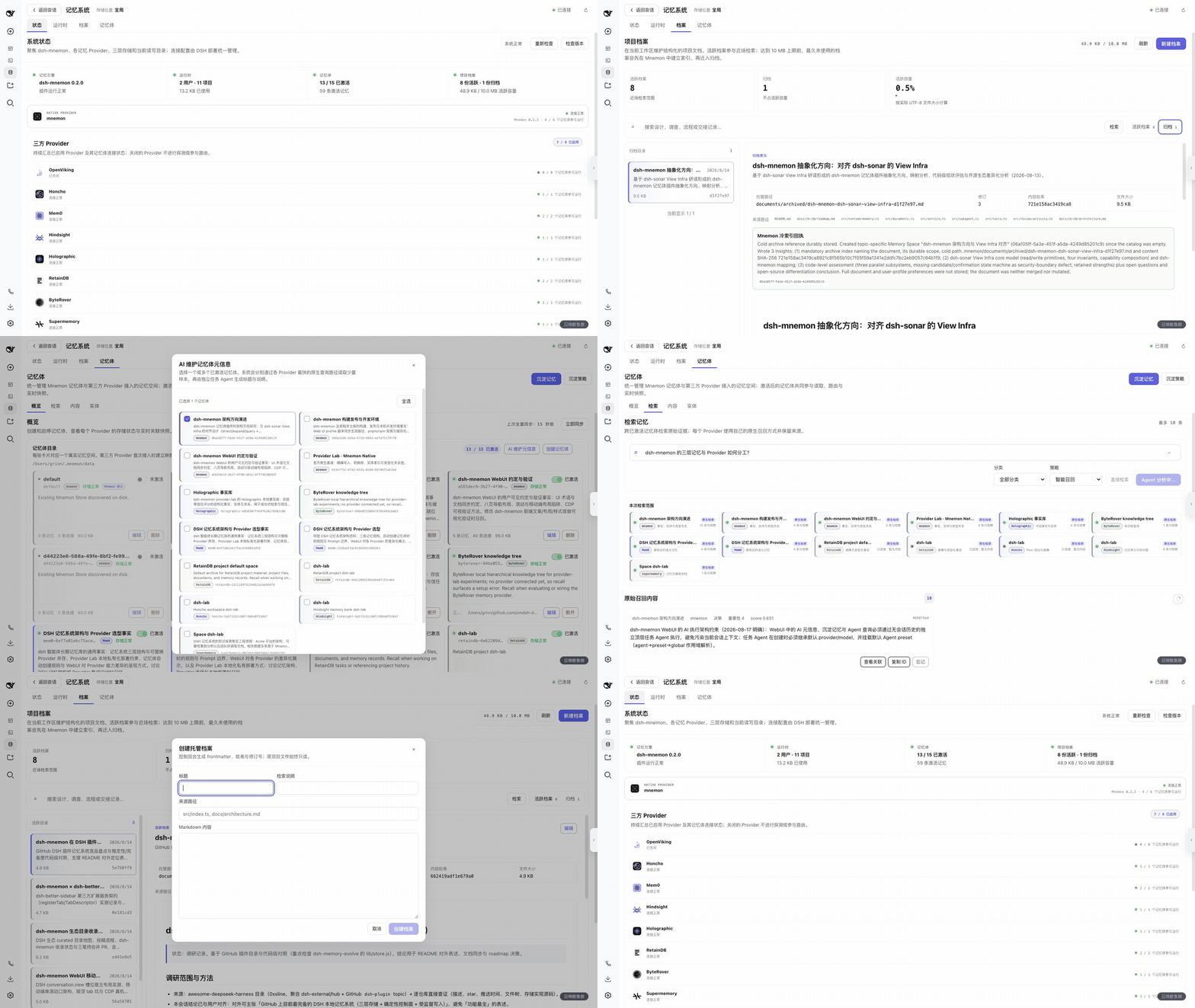
dsh-mnemon is a three-tier, pluggable, Agent-driven memory system for DeepSeek Harness, combining Runtime memory, Project Documents, and replaceable Memory Spaces with nine long-term providers.
An opinionated, zero-infrastructure file-based memory protocol: human-readable markdown files plus a bounded always-loaded index, curation discipline, and no database or embeddings.