dockyard-dsh
Run the following command in DeepSeek Harness:
dsh plugin install 4sa1ary9/dockyard-dsh
Paste the following prompt into your AI chat to install this plugin:
Install this plugin by running dsh plugin install 4sa1ary9/dockyard-dsh in your terminal; the source code is available at https://github.com/4sa1ary9/dockyard-dsh
About this plugin
Upstream Dockyard fails closed on every non-macOS platform: the credential vault refuses to write, and browser launch is hardwired to the macOS open command. For Windows 10/11 users running DeepSeek Harness, that means the official Codex, Grok, Claude, Cursor, Antigravity, and Kiro subscriptions they already pay for are either unreachable or require juggling six separate sign-in flows. dockyard-dsh closes exactly that gap: credentials are persisted via the current-user DPAPI under the local app data folder, the login page opens through the system default browser via rundll32, and a single provider strip on the left side of the input box lets you authenticate or scan-import an existing local session with one click.
All six vendors sit behind that same Dockyard strip. Codex uses ChatGPT-tier loopback PKCE, Grok uses xAI browser OAuth, Claude accepts the shared Pro / Max / Claude Code callback, Kiro relies on the local kiro-cli ACP channel for inference, Cursor falls back from official browser polling to the CLI, and Antigravity goes through Google OAuth. Stored credentials are opaque references only, with no raw tokens hitting disk. An existing account is never silently re-imported by the add-account action, and when a tier does not actually grant access the status reads unavailable or degraded rather than faking a quota.
The target user is specific and practical: you run dsh for inference on Windows 10/11, you hold two or more AI subscriptions at the same time, and you would rather switch providers inside one input field than open six browser tabs and paste keys by hand. If you are on Linux or macOS the upstream build already covers you; if you are the Windows multi-subscriber, this fork is the one you want.
Use Cases
- Sign in to Codex, Grok, Claude, Cursor, Antigravity, and Kiro official subscriptions from one provider strip on Windows
- Scan and import existing local official sessions into the DeepSeek Harness account pool with one click
- Switch between multiple provider models during inference; credentials are stored as opaque references, never as plaintext on disk
- When a tier does not grant access the status reads unavailable or degraded, never faking quota or model lists
Best For
- Developers on Windows holding two or more AI subscriptions who want unified management
- Users running DeepSeek Harness for inference who need to bridge multiple official subscriptions into one pipeline
- Efficiency-focused users who prefer switching providers inside one input field over opening six browser tabs
Related Plugins
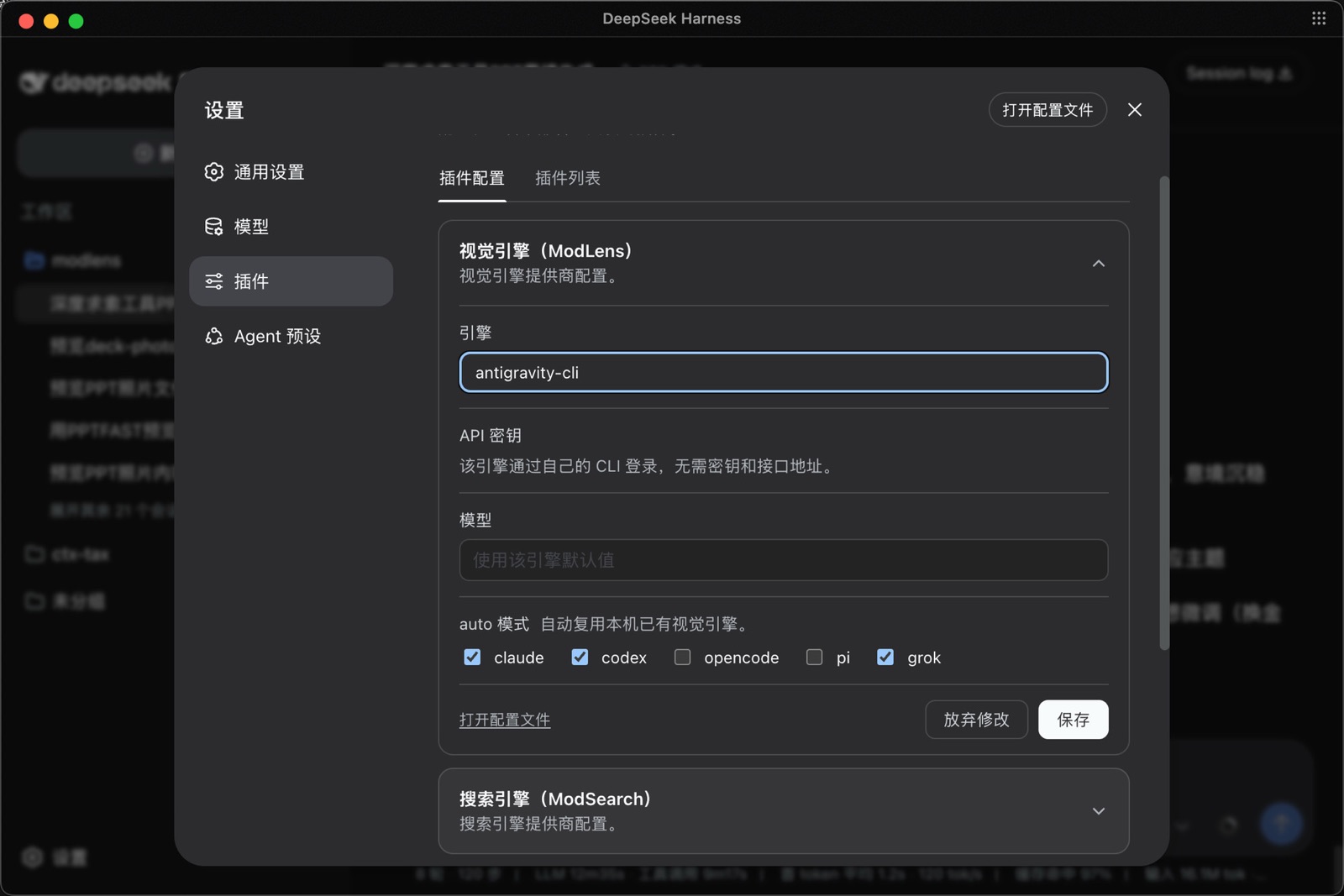
ModLens is a vision plugin for DeepSeek Harness that gives text-only models sight by reading images pasted directly into chat, with zero-config setup and multiple vision engines.
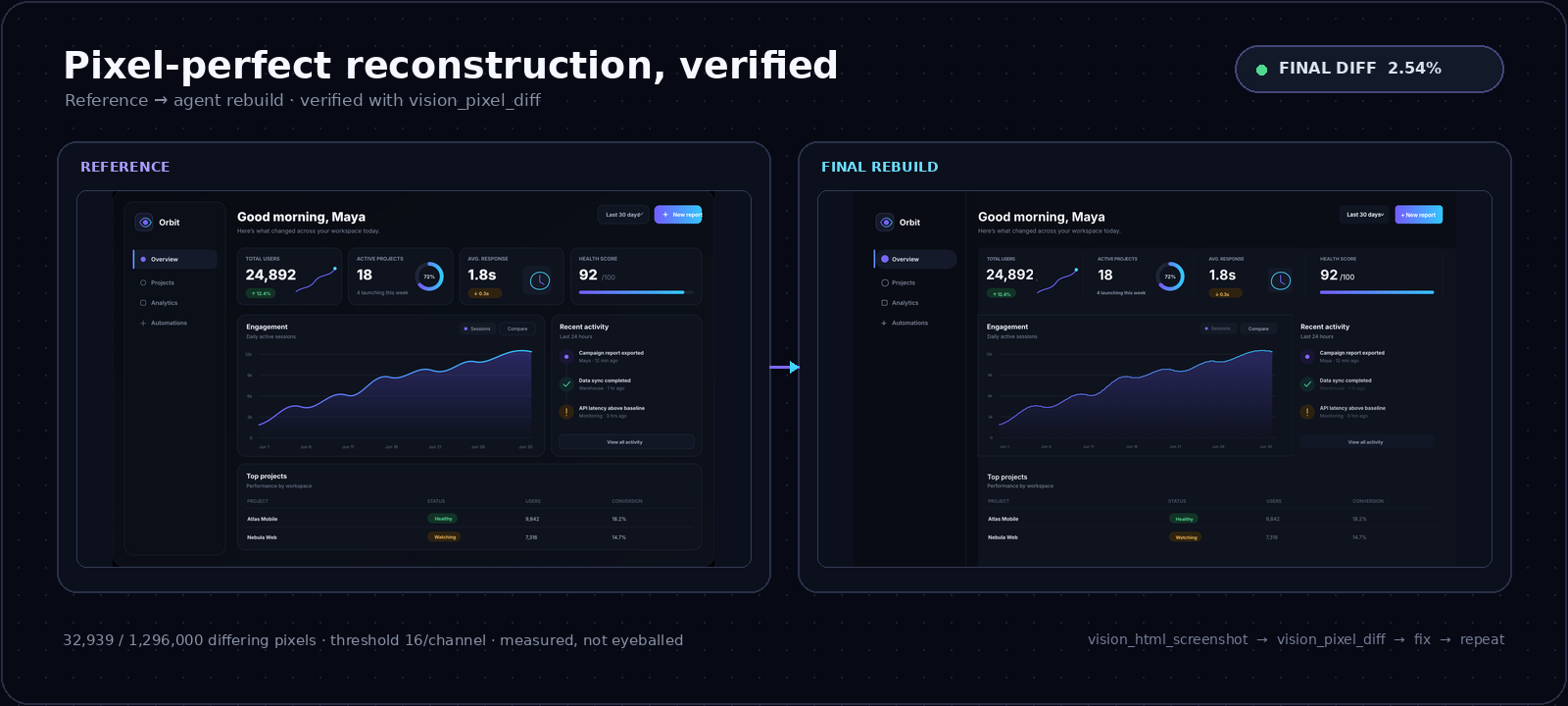
On-demand vision for text-only DeepSeek Harness agents: built-in free keyless vision chain and 14 vision tools, routing image turns as tool calls to vision models with pixel fidelity, no Python needed, one-command install.
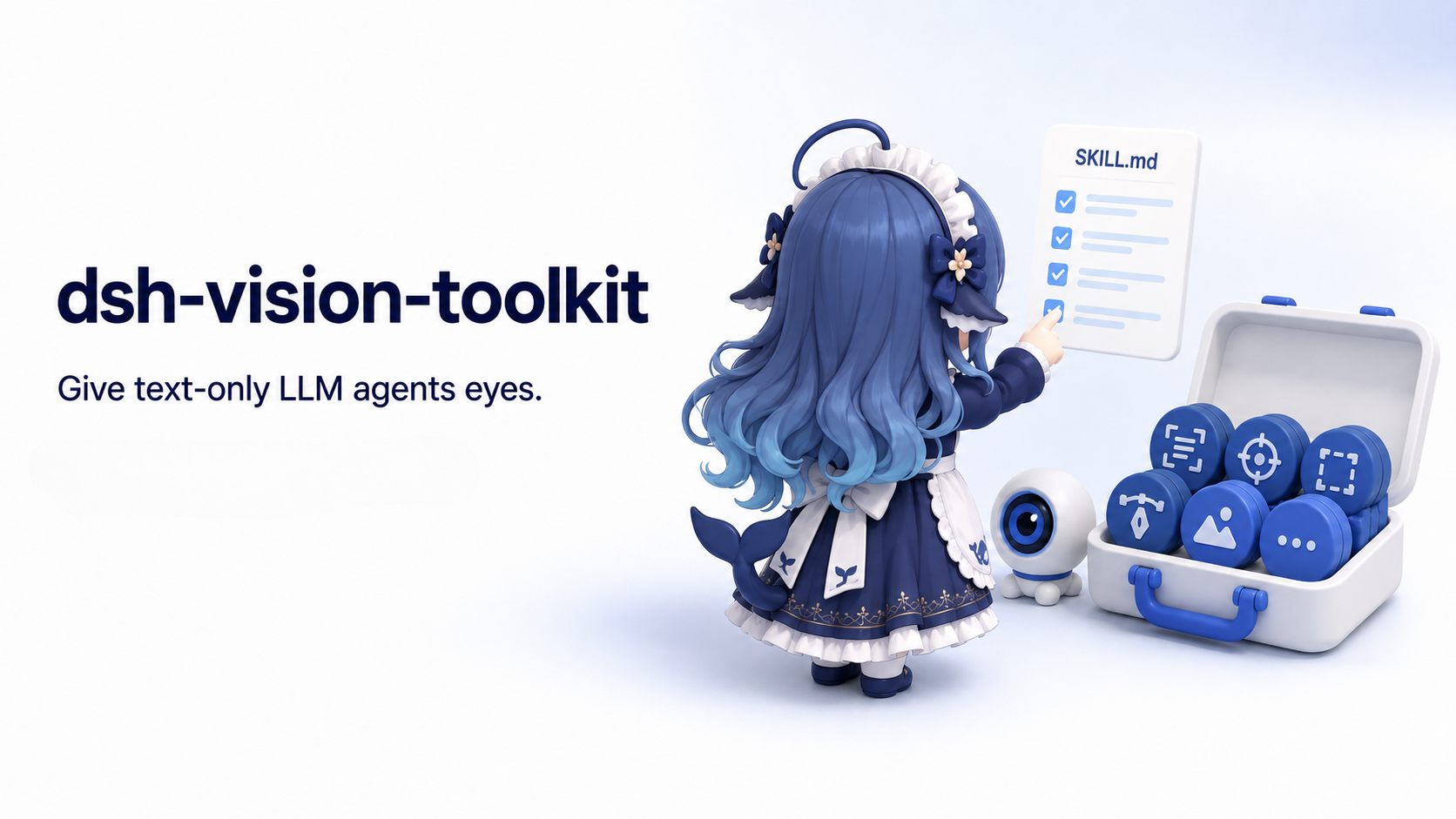
Give text-only models in DeepSeek Harness eyes, enabling image Q&A, long-screenshot OCR, UI restoration, and GUI visual tasks.
An armor-breaking plugin for DeepSeek: rewrites instruction priority, expands refusal-blocked phrases, persists across sessions, and shows a green active indicator.