dsh-profile-multica
Run the following command in DeepSeek Harness:
dsh plugin install caizhihaoczh/dsh-profile-multica
Paste the following prompt into your AI chat to install this plugin:
Run dsh plugin install caizhihaoczh/dsh-profile-multica in DeepSeek Harness to install this plugin; the source code is available at https://github.com/caizhihaoczh/dsh-profile-multica .
About this plugin
The DeepSeek Harness CLI offers a full local model-inference stack—provider management, session persistence, and MCP mounting—but those capabilities were previously confined to the terminal. dsh-profile-multica closes that gap by exposing the official DSH CLI to Multica through a versioned JSONL process protocol, so an external orchestrator can trigger a complete inference run without hand-crafting shell commands or parsing raw terminal output.
Three commands anchor the bundle: --probe emits the discovery frame Multica expects, --list-models projects the installed providers, models, and reasoning levels into a structured listing, and --stdio is the real workhorse. It accepts a single version-1 execute request, can spawn a fresh Agent or resume a persisted Session, lets you pick a provider, model, and reasoning level, and can mount task-scoped stdio or Streamable HTTP MCP servers. Agent and Session events stream as JSONL on stdout, diagnostics go to stderr, and the process supports in-flight cancellation, persistence flushing, and a final terminal result before exiting. Permission mode is switchable among read-only, workspace-write, and danger-full-access; because this transport has no interactive approval round trip, any operation outside the chosen policy fails immediately rather than stalling.
The plugin is aimed at developers and small teams who already rely on the DSH CLI in daily work and want to slot model inference into a Multica-driven automation pipeline or CI orchestration. It injects no extra system-prompt text or tool schemas—Multica input is forwarded as an ordinary user message and existing DSH events are projected verbatim—so it drops into existing workflows seamlessly while preserving DSH native session resumption and MCP extensibility.
Use Cases
- Wiring DSH local model inference into a Multica orchestration pipeline
- Triggering model execution via the JSONL protocol in CI/CD and collecting event streams
- Mounting MCP servers to extend inference tasks with external tooling
Best For
- Developers already using the DSH CLI daily
- Teams building Multica-driven automation pipelines
- Engineering leads integrating local inference into CI orchestration
Related Plugins
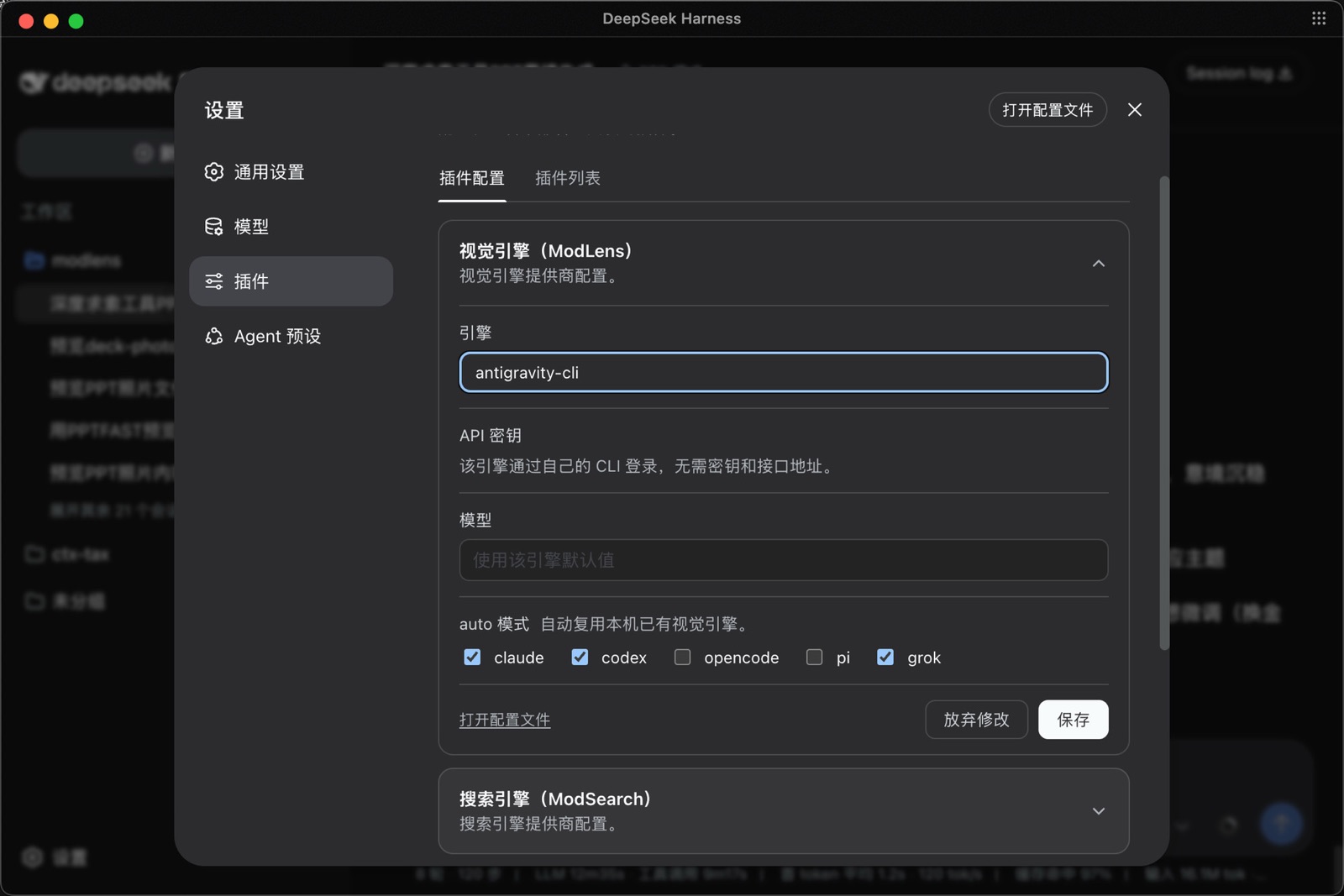
ModLens is a vision plugin for DeepSeek Harness that gives text-only models sight by reading images pasted directly into chat, with zero-config setup and multiple vision engines.
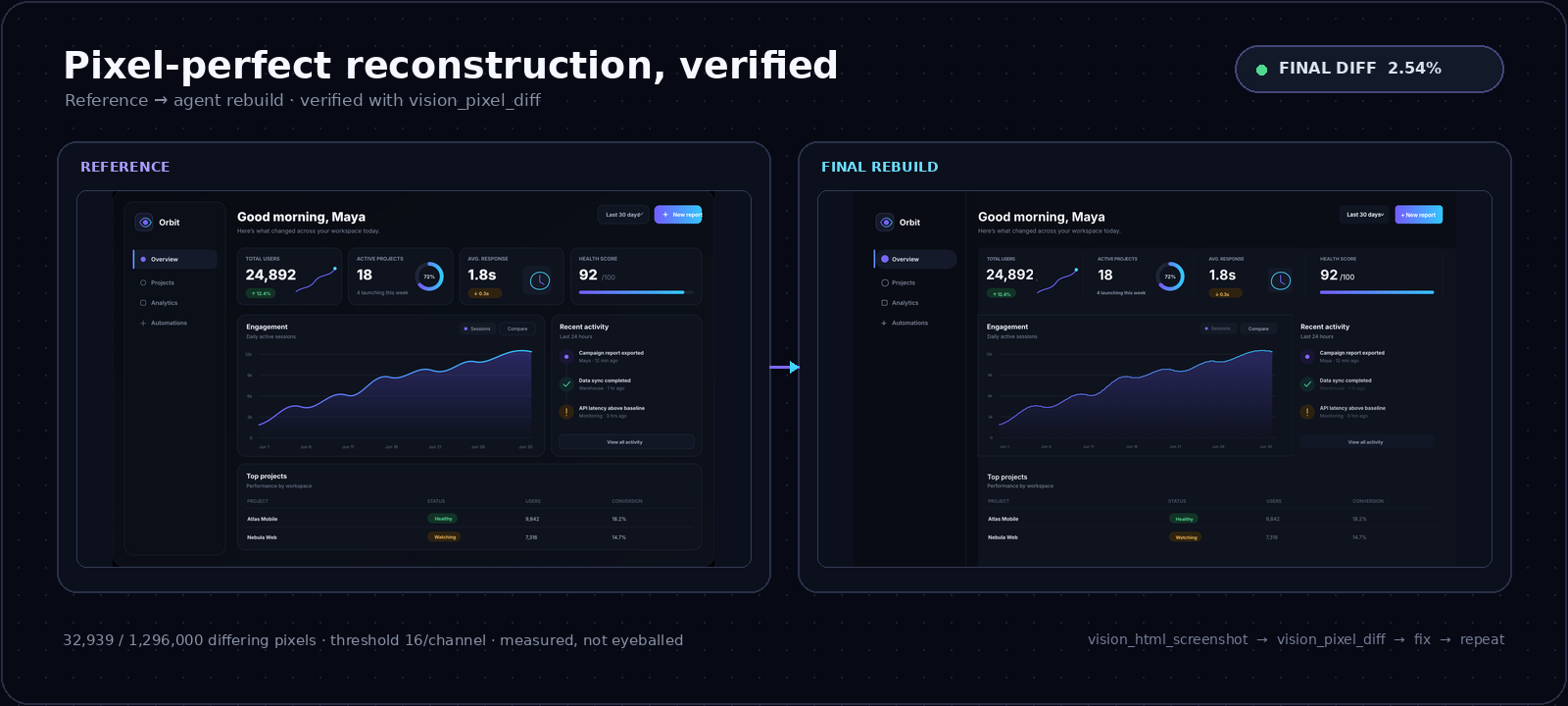
On-demand vision for text-only DeepSeek Harness agents: built-in free keyless vision chain and 14 vision tools, routing image turns as tool calls to vision models with pixel fidelity, no Python needed, one-command install.

Give text-only models in DeepSeek Harness eyes, enabling image Q&A, long-screenshot OCR, UI restoration, and GUI visual tasks.
An armor-breaking plugin for DeepSeek: rewrites instruction priority, expands refusal-blocked phrases, persists across sessions, and shows a green active indicator.