dsh-ref-lib
Run the following command in DeepSeek Harness:
dsh plugin install hpyperry/dsh-ref-lib
Paste the following prompt into your AI chat to install this plugin:
Run dsh plugin install hpyperry/dsh-ref-lib in the DeepSeek Harness terminal to install the plugin; the source repository is available at https://github.com/hpyperry/dsh-ref-lib. Restart dsh web after installation to activate it.
About this plugin
When you use DeepSeek Harness to work through your codebase or look up internal APIs, a quiet concern lingers: the agent might fabricate details, or grab a stale web result that does not match your actual project. dsh-ref-lib takes a straightforward approach. You register local directories (project source, internal docs, API specs) as a read-only reference library, and the agent is required to consult those directories before answering. Only when the answer cannot be found locally may it fall back to external sources, and it must say so explicitly. Every response now has a traceable ground truth.
Each session owns its own set of reference libraries in isolation; forked sessions inherit a snapshot from the parent at creation and then evolve independently. Adding a directory can be done through the in-app browser, the OS-native picker, or by pasting a path. An optional one-line note on each library helps the agent route the current question to the right source. Cross-session import provides item-by-item conflict comparison so nothing is overwritten blindly. The reference directories are strictly read-only for the agent: the sandbox enforces this at the process level, and the injected context adds a second soft constraint for a two-layer guarantee.
If you maintain multiple codebases, internal wikis, or API specifications and want every agent answer anchored in material you actually own rather than a plausible-sounding invention, dsh-ref-lib is the plugin that makes the agent open the book before it speaks.
Use Cases
- Make the agent consult your source tree before answering code questions
- Ground Q&A in internal wikis or API specs instead of generic web results
- Reuse and independently evolve a shared set of reference libraries across sessions
Best For
- Solo developers maintaining multiple codebases
- Small teams that rely on internal docs for daily Q&A
- Engineering leads who want traceable, non-hallucinated AI output
Related Plugins
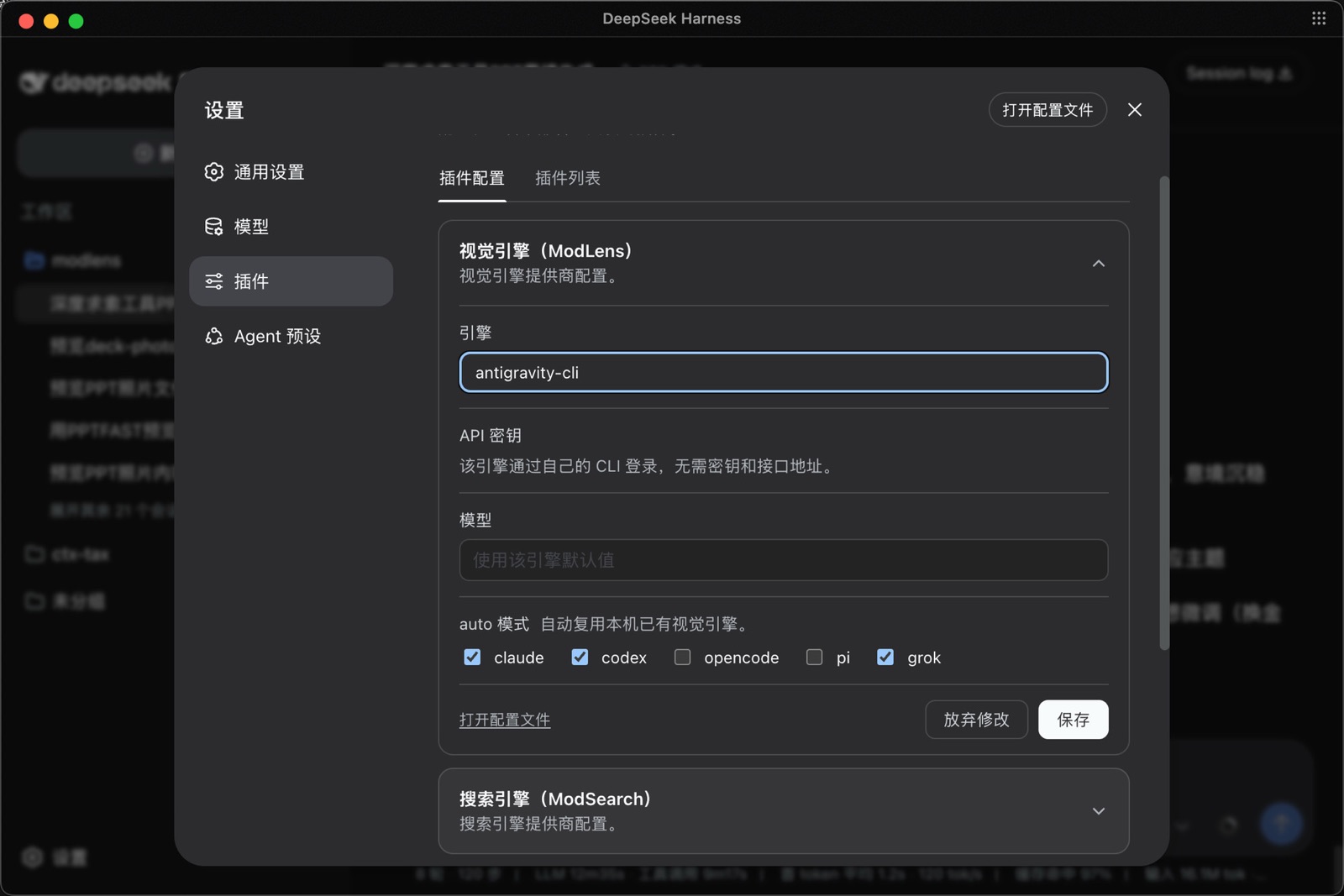
ModLens is a vision plugin for DeepSeek Harness that gives text-only models sight by reading images pasted directly into chat, with zero-config setup and multiple vision engines.
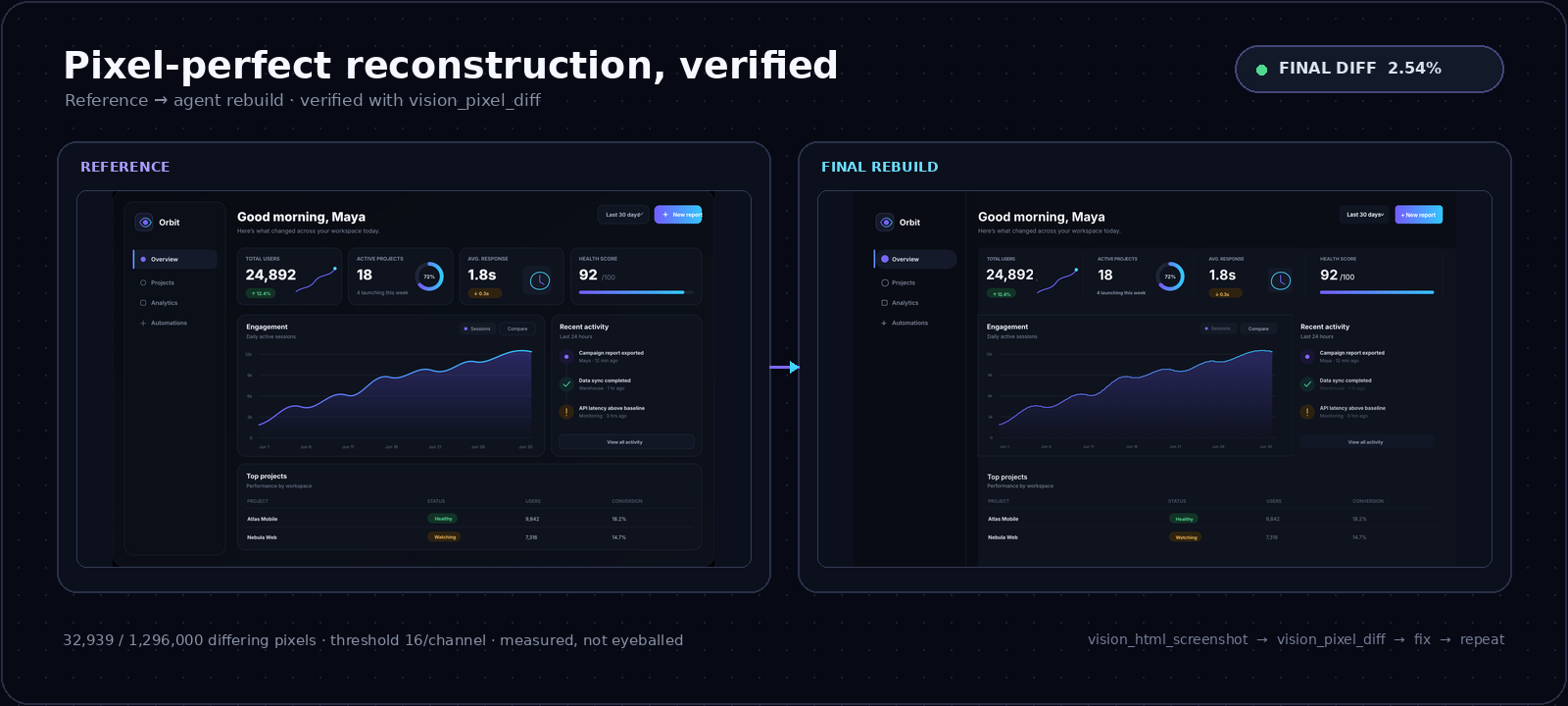
On-demand vision for text-only DeepSeek Harness agents: built-in free keyless vision chain and 14 vision tools, routing image turns as tool calls to vision models with pixel fidelity, no Python needed, one-command install.
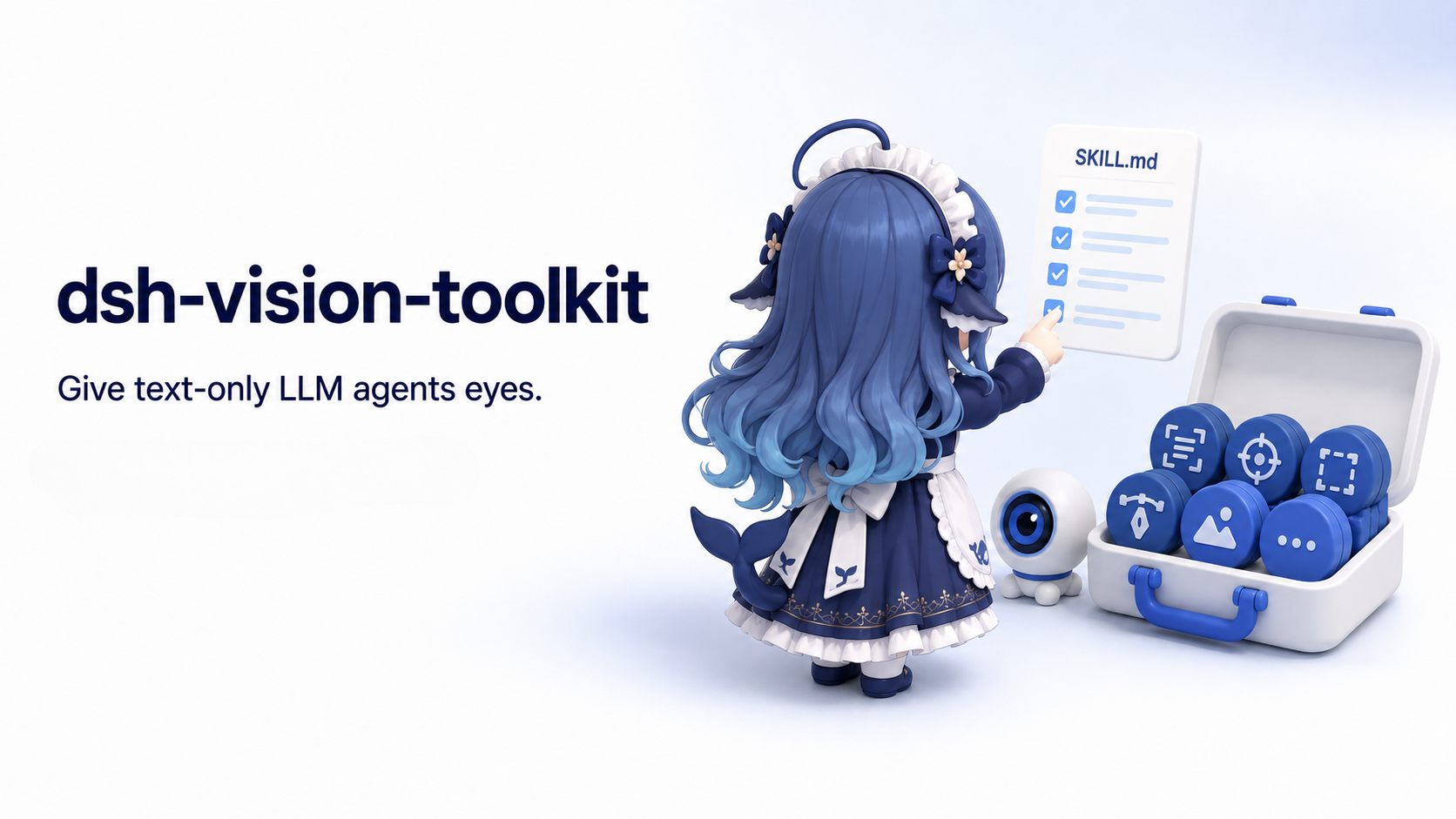
Give text-only models in DeepSeek Harness eyes, enabling image Q&A, long-screenshot OCR, UI restoration, and GUI visual tasks.
An armor-breaking plugin for DeepSeek: rewrites instruction priority, expands refusal-blocked phrases, persists across sessions, and shows a green active indicator.