dsh-obsidian
Run the following command in DeepSeek Harness:
dsh plugin install mingzeng21/dsh-obsidian
Paste the following prompt into your AI chat to install this plugin:
To install this plugin in DeepSeek Harness, run the command dsh plugin install mingzeng21/dsh-obsidian; the full open-source repository is available at https://github.com/mingzeng21/dsh-obsidian.
About this plugin
For users building local knowledge bases with Obsidian, enabling AI assistants to directly interact with notes often requires configuring cumbersome MCP servers or third-party REST API plugins. dsh-obsidian breaks down this barrier by reading and writing directly to the local file system, seamlessly connecting DeepSeek Harness (dsh) to your Obsidian vault and delivering a truly zero-server-dependency minimalist experience.
The plugin equips your agent with 12 dedicated tools covering essential daily operations, including full-text search, content reading and writing, appending, backlink queries, and tag management. While empowering AI with robust execution capabilities, it enforces strict security measures: all operations are confined within the vault root, deletions merely move files to the trash, and existing YAML properties and wikilinks are perfectly preserved, giving you peace of mind when handing over note management to AI.
If you are a dedicated Obsidian user eager to have an AI Agent deeply participate in your knowledge management, note organization, or automated workflows—while strictly valuing local data privacy and a lightweight system—this plugin is your ideal choice. It transforms AI into a true administrator of your knowledge base, rather than just an external chat interface.
Use Cases
- Let AI automatically organize and categorize scattered notes in your vault.
- Globally search the knowledge base via natural language and extract key context.
- Batch update note properties or rename files while automatically fixing backlinks.
Best For
- Heavy users who build personal knowledge bases with Obsidian.
- Developers looking to automate local Markdown file processing via AI.
- Privacy-conscious users who want to avoid deploying extra local servers.
Related Plugins

Memory layer for coding agents that indexes local session history and auto-recalls relevant context before edits, commands, and failures, with no manual search needed.
Traceable, searchable cross-session memory for AI agents that turns conversation knowledge into a typed knowledge graph and recalls relevant subgraphs instead of replaying full history, natively integrated with DeepSeek Harness.
Gives DSH AI cross-session long-term memory, to-do and skill management, plus multi-session orchestration, external AI delegation, and an infinite canvas that grows with you.
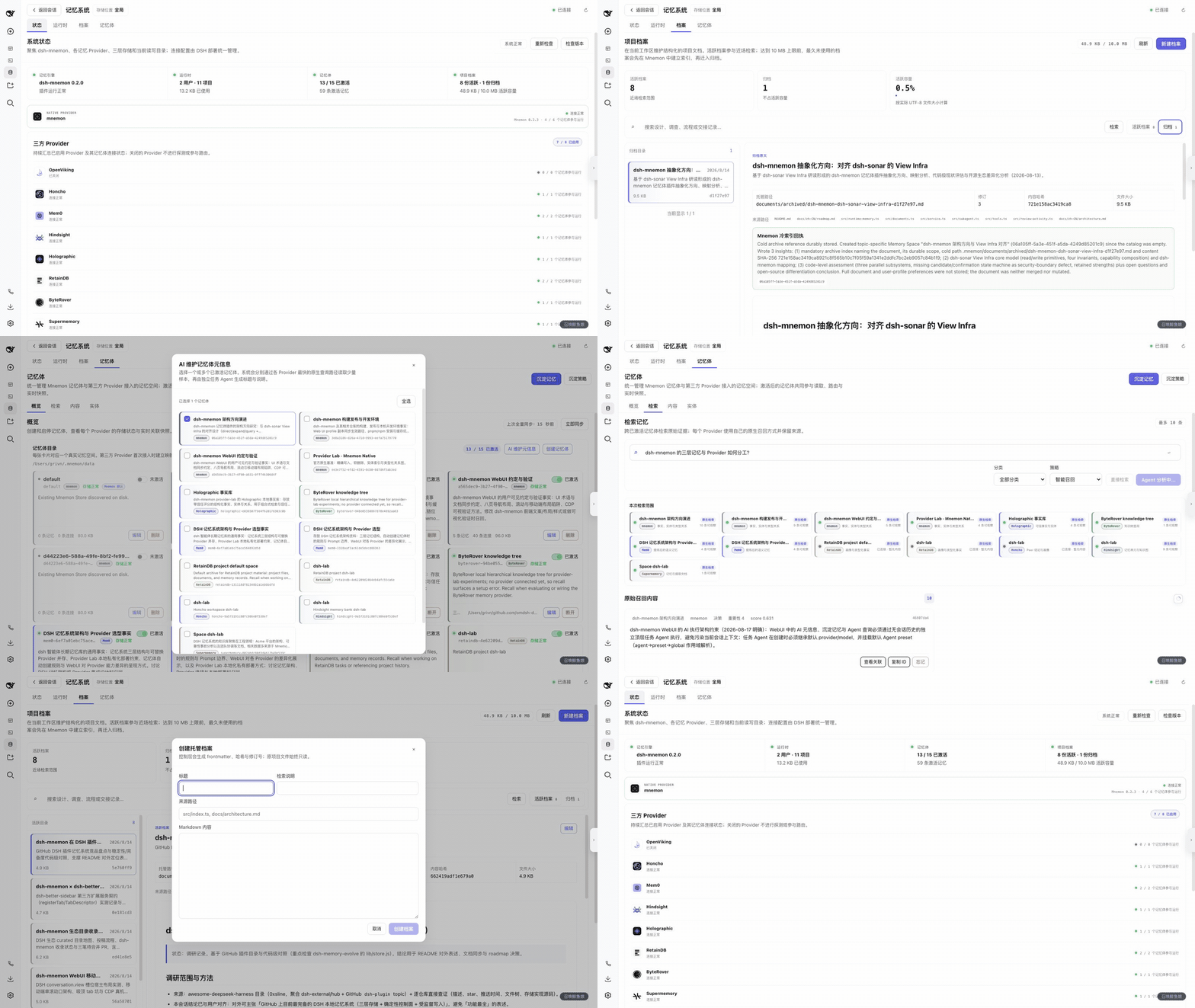
dsh-mnemon is a three-tier, pluggable, Agent-driven memory system for DeepSeek Harness, combining Runtime memory, Project Documents, and replaceable Memory Spaces with nine long-term providers.