dsh-rag
Run the following command in DeepSeek Harness:
dsh plugin install satan9394/dsh-rag
Paste the following prompt into your AI chat to install this plugin:
Run dsh plugin install satan9394/dsh-rag in DeepSeek Harness to install the plugin; the source code is available at https://github.com/satan9394/dsh-rag .
About this plugin
dsh-rag is a memory-category plugin for the DeepSeek Harness ecosystem that brings RAG (retrieval-augmented generation) thinking into Harness context management. In long conversations or multi-turn agent tasks, models often lose track of earlier key information due to window limits; dsh-rag provides retrieval-centric memory support so that an agent can pull back relevant context on demand instead of relying solely on the current window.
It is suited for developers building persistent memory into their DeepSeek Harness setups or looking for a lightweight RAG integration. Released under the MIT license, it can be freely incorporated into existing workflows.
Use Cases
- Retrieving earlier context in multi-turn agent conversations
- Adding lightweight RAG capability to a Harness workflow
- Building persistent-memory dialogue agents
Best For
- DeepSeek Harness plugin developers
- LLM application developers adding a memory layer to agents
- Engineers exploring RAG in conversational settings
Related Plugins

Traceable, searchable cross-session memory for AI agents that turns conversation knowledge into a typed knowledge graph and recalls relevant subgraphs instead of replaying full history, natively integrated with DeepSeek Harness.
Gives DSH AI cross-session long-term memory, to-do and skill management, plus multi-session orchestration, external AI delegation, and an infinite canvas that grows with you.
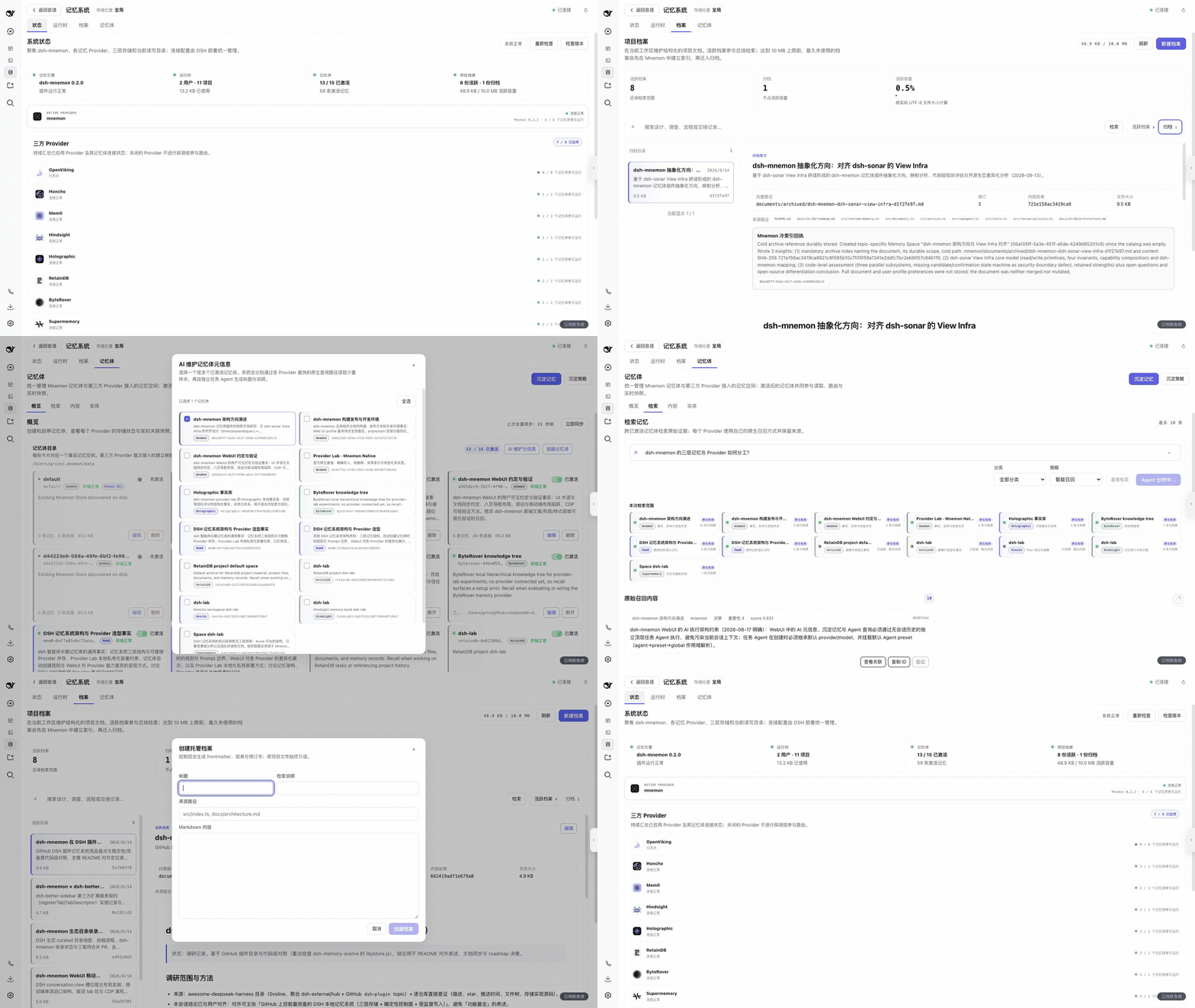
dsh-mnemon is a three-tier, pluggable, Agent-driven memory system for DeepSeek Harness, combining Runtime memory, Project Documents, and replaceable Memory Spaces with nine long-term providers.
An opinionated, zero-infrastructure file-based memory protocol: human-readable markdown files plus a bounded always-loaded index, curation discipline, and no database or embeddings.