dsh-memory-s3
Run the following command in DeepSeek Harness:
dsh plugin install Re-s/dsh-memory-s3
Paste the following prompt into your AI chat to install this plugin:
Install the plugin by running dsh plugin install Re-s/dsh-memory-s3 in DeepSeek Harness; the source code is available at https://github.com/Re-s/dsh-memory-s3.
About this plugin
DeepSeek Harness memory has long been confined to a single local filesystem: swap machines, change a deployment, or spin up another DSH instance, and every accumulated user preference, project decision, and meaningful moment is lost. dsh-memory-s3 relocates the persistence endpoint to any S3-compatible object store (AWS S3, MinIO, Cloudflare R2, Alibaba Cloud OSS). Share one bucket key and every instance can read and extend the same living memory, eliminating the single-device ceiling entirely.
Core capabilities include a structured memory model with five entry types (preference, project, decision, history, moment) enriched with importance, tags, subject, timeline, linked references, and lock protection; pluggable embedder-driven vector semantic search with cosine top-k and metadata/keyword hybrid recall, optimized for Chinese text; a local cache projection that degrades to read-only when offline; a mandatory write-approval gate routed through the DSH approval seam; a three-chain audit trail (approval pairs, audit ledger, snapshots) that can reconstruct every write from session logs; photo and file attachments stored as immutable S3 objects with triple validation (extension whitelist, magic-byte sniffing, 20 MB size cap); and an automatic backlink index for querying which entries reference a given one. Tiered snapshot injection projects content in three layers (Bonds, Moments, Facts) with association markers and lock guards preventing accidental overwrites.
Ideal for developers and teams who need persistent cross-session memory across multiple devices or deployments: whether syncing between a local workstation and a cloud container, or sharing a single project context within a team, one bucket and credential setup is all it takes for every instance to participate in the same ever-growing memory.
Use Cases
- Share the same user preferences and project memory across multiple devices
- Synchronize project decisions and historical context across team instances
- Fall back to read-only cached memory snapshots when offline
Best For
- DSH developers who need persistent cross-device memory
- Engineering teams syncing context across multiple deployments
- Users who prefer object storage over local files for persistence
Related Plugins
Traceable, searchable cross-session memory for AI agents that turns conversation knowledge into a typed knowledge graph and recalls relevant subgraphs instead of replaying full history, natively integrated with DeepSeek Harness.
Gives DSH AI cross-session long-term memory, to-do and skill management, plus multi-session orchestration, external AI delegation, and an infinite canvas that grows with you.
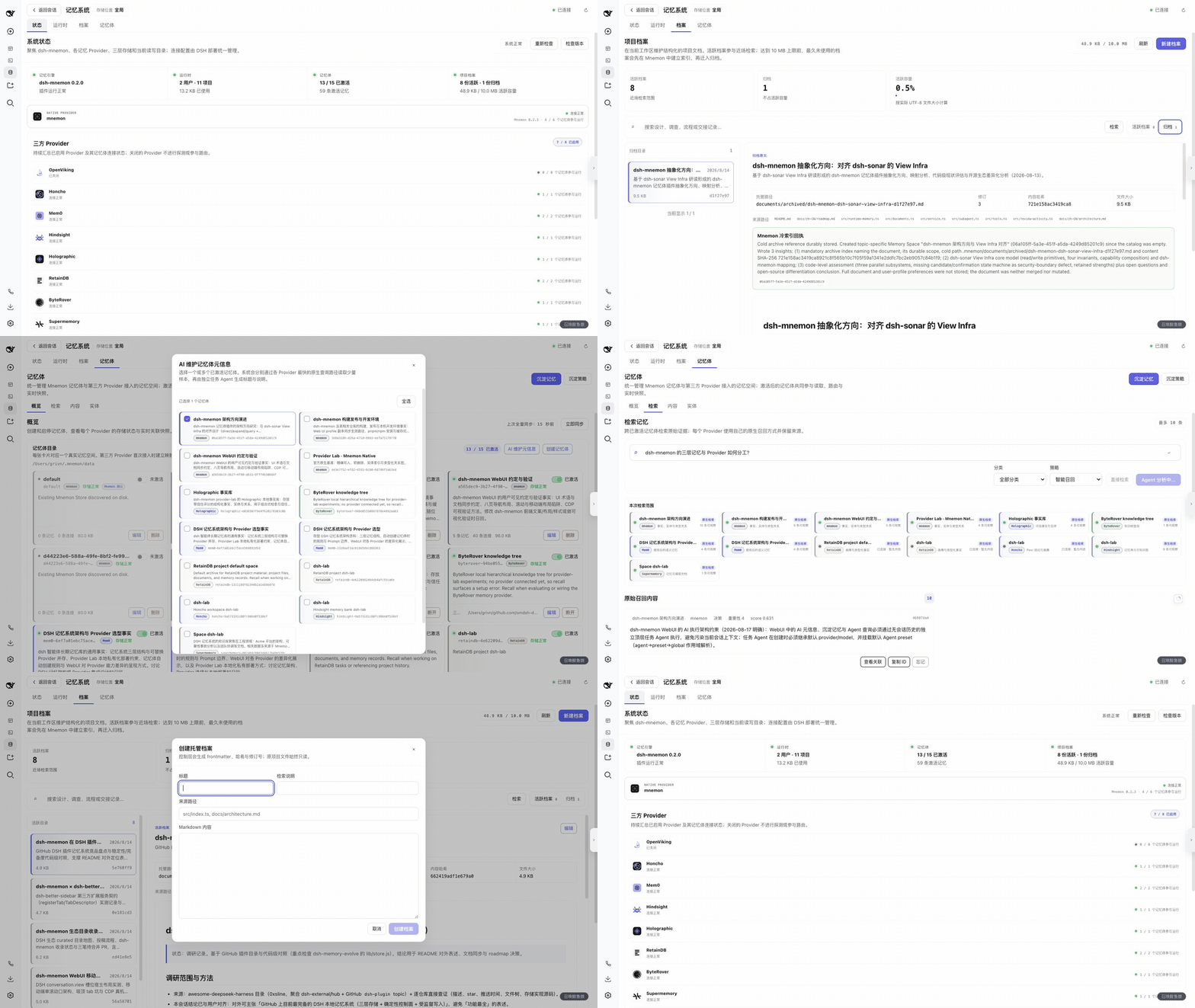
dsh-mnemon is a three-tier, pluggable, Agent-driven memory system for DeepSeek Harness, combining Runtime memory, Project Documents, and replaceable Memory Spaces with nine long-term providers.
An opinionated, zero-infrastructure file-based memory protocol: human-readable markdown files plus a bounded always-loaded index, curation discipline, and no database or embeddings.