dsh-ui-translate
Run the following command in DeepSeek Harness:
dsh plugin install RadicalGitter/dsh-ui-translate
Paste the following prompt into your AI chat to install this plugin:
Run dsh plugin install RadicalGitter/dsh-ui-translate in the DeepSeek Harness terminal to install. Source repository: https://github.com/RadicalGitter/dsh-ui-translate . After installation, restart dsh web and enable the plugin under Settings → UI Translation.
About this plugin
English-first users of the DeepSeek Harness Web interface often find themselves staring at a fully Chinese UI, yet turning on Chrome auto-translate shatters React component bindings, corrupts editor fields, and mangles inline code. dsh-ui-translate sidesteps that conflict by running every translation inside a dedicated browser Web Worker: source text and its translation never leave the local machine, and the plugin surgically skips textarea, code, contenteditable, and other author-sensitive regions while modifying only text data nodes. DOM structure, event listeners, and React ownership remain completely intact.\n\nThree backends are available and mutually exclusive. The default offline glossary maps a curated set of Chinese UI labels with zero network traffic. The browser-local OPUS-MT backend—a roughly 110 MB quantized model downloaded once from Hugging Face and cached locally—translates all visible Chinese text on the page with no further downloads. An optional OpenAI-compatible backend sends only compile-time allowlisted phrases and is restricted to loopback addresses or explicitly approved HTTPS endpoints. Local inference runs in small sequential batches that prioritize visible navigation, settings, and live-status text first, then queues newly scrolled-into-view content. Translated characters carry a configurable visual marker—purple overlay, dashed underline, both, or none—and a deliberate hover of about 0.65 seconds reveals a single contextual action: show the original or re-translate.\n\nThe plugin suits English-first users of DSH Web who want a readable interface without routing page content through a third-party translation service, as well as local development environments that prefer zero external network calls for UI text. DSH plugin developers can additionally opt in specific read-only elements—descriptions, context summaries, injected document text—by adding the data-dsh-translate=\"prose\" attribute, giving the local engine a safe, scoped surface without exposing JSON schemas, tool arguments, or executable code.
Use Cases
- Translate a Chinese DSH Web interface locally in the browser without Chrome auto-translate
- Use the offline OPUS-MT model to translate the entire page in an air-gapped environment
- Get zero-network translation of common Chinese UI labels via the built-in glossary
- Hover translated text to reveal the original or re-translate on demand
Best For
- DSH Web users who prefer an English UI and want no third-party roundtrip
- Local development or offline review environments that require zero external calls
- DSH plugin developers who want to translate read-only description text safely
Related Plugins
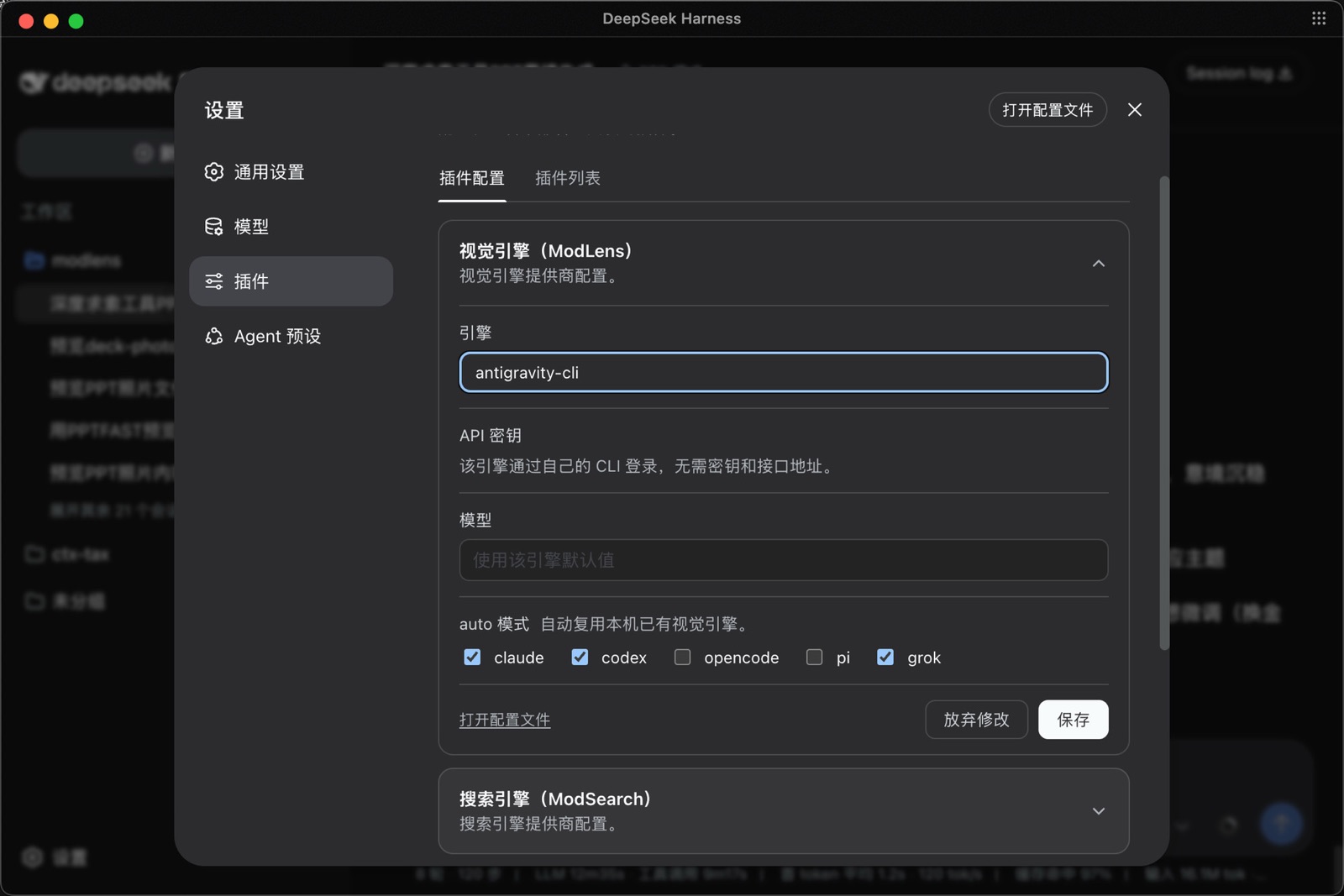
ModLens is a vision plugin for DeepSeek Harness that gives text-only models sight by reading images pasted directly into chat, with zero-config setup and multiple vision engines.
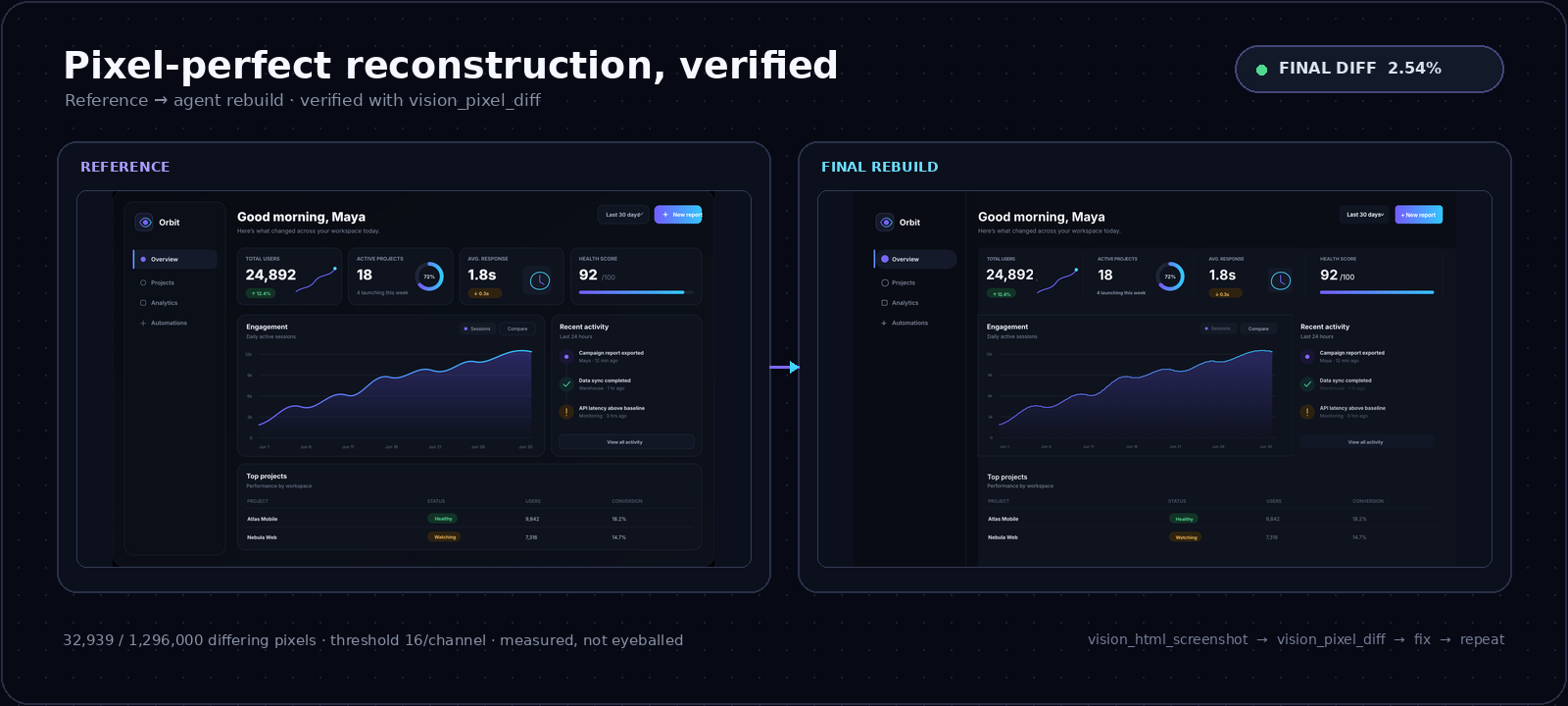
On-demand vision for text-only DeepSeek Harness agents: built-in free keyless vision chain and 14 vision tools, routing image turns as tool calls to vision models with pixel fidelity, no Python needed, one-command install.
Give text-only models in DeepSeek Harness eyes, enabling image Q&A, long-screenshot OCR, UI restoration, and GUI visual tasks.
An armor-breaking plugin for DeepSeek: rewrites instruction priority, expands refusal-blocked phrases, persists across sessions, and shows a green active indicator.