toolshrink
Run the following command in DeepSeek Harness:
dsh plugin install unclecode/toolshrink
Paste the following prompt into your AI chat to install this plugin:
To install this plugin in DeepSeek Harness, run the command dsh plugin install unclecode/toolshrink, or visit its open-source repository at https://github.com/unclecode/toolshrink for more details.
About this plugin
Context truncation of tool outputs is a persistent headache when using AI coding agents. Traditional methods simply chop off the middle based on character limits, which often silently discards critical test failures, build errors, or key log entries, leading the model to make severe misjudgments. toolshrink solves this by abandoning naive size-based cuts in favor of intelligent shrinking based on the semantic shape of the text.
The plugin ships with 13 built-in cutters tailored for common developer outputs, including test reports, Git diffs, build logs, stack traces, and JSON. It accurately recognizes and preserves errors, warnings, and structural summaries while dropping redundant passing tests or repetitive lines. Every omission is explicitly marked for the model to read, and the complete original output is safely spilled to disk, ensuring zero silent data loss.
If you heavily rely on AI agents like DeepSeek Harness for daily development and frequently struggle with models hallucinating or failing due to truncated long outputs, toolshrink is an essential upgrade. It drastically optimizes context window utilization and empowers the model to make accurate decisions based on the most critical signals, significantly elevating your AI-assisted programming experience.
Use Cases
- Automatically extracting failed cases and error stack traces from lengthy test reports.
- Intelligently compressing large Git diffs and build logs to save context window space.
- Intercepting and condensing repetitive console outputs and installation progress bars.
Best For
- Software engineers who heavily rely on AI coding assistants.
- Framework developers building and maintaining autonomous AI agents.
- AI engineers dedicated to optimizing LLM context window utilization.
Related Plugins
A unified suite combining hot runtime injection, task-aware thinking-mode routing, and a graded session protocol with red-team gates to sustain model diligence across long-horizon inference.
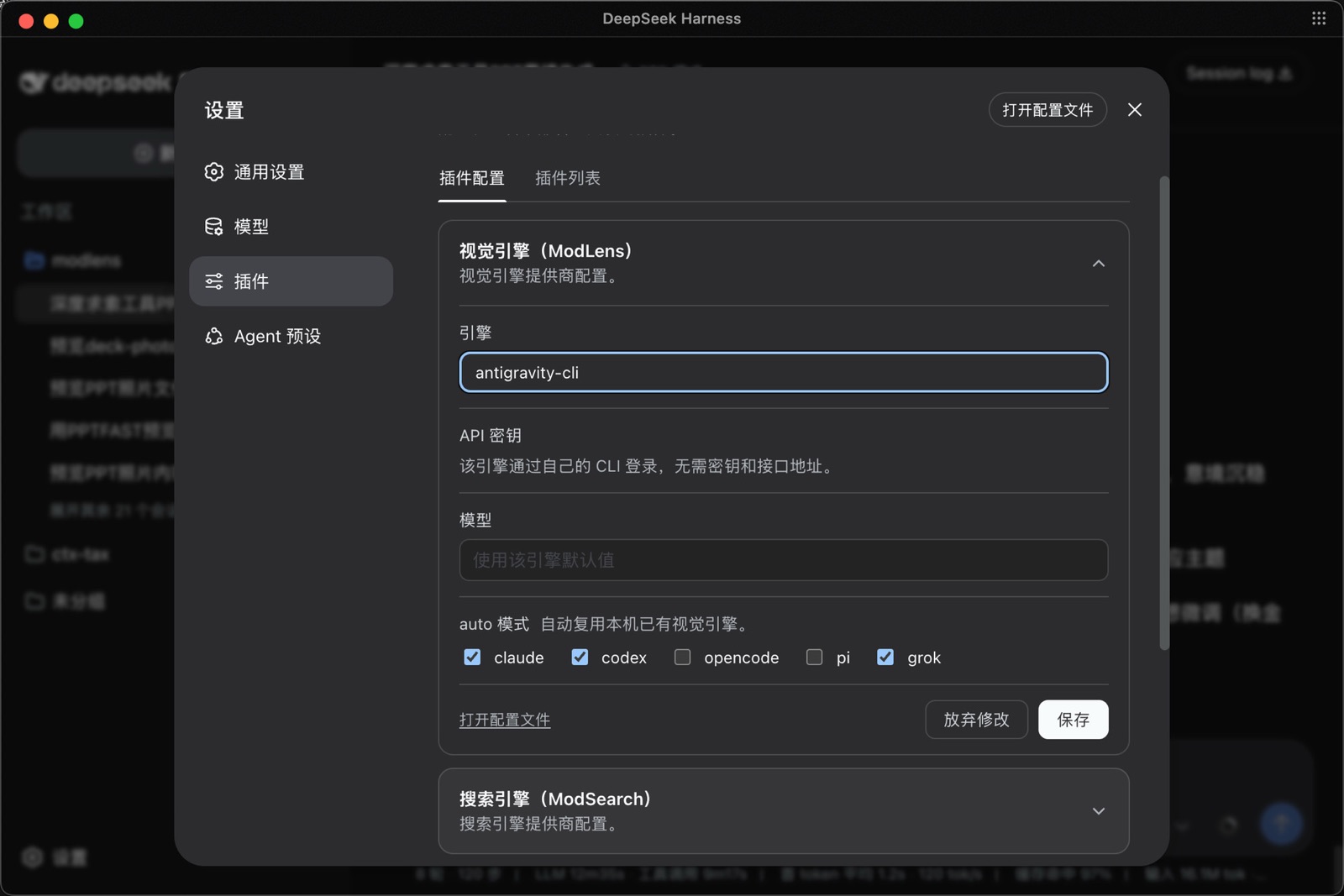
ModLens is a vision plugin for DeepSeek Harness that gives text-only models sight by reading images pasted directly into chat, with zero-config setup and multiple vision engines.
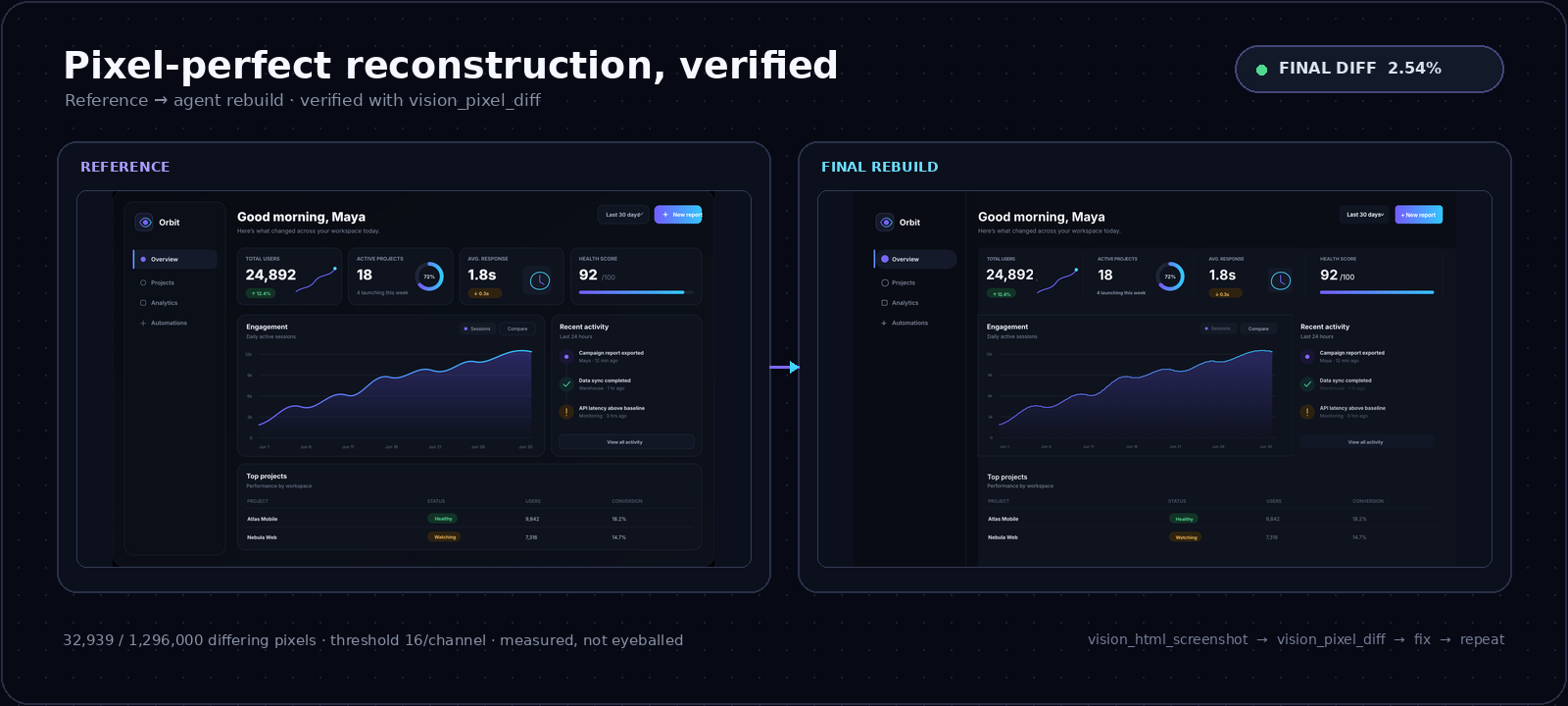
On-demand vision for text-only DeepSeek Harness agents: built-in free keyless vision chain and 14 vision tools, routing image turns as tool calls to vision models with pixel fidelity, no Python needed, one-command install.
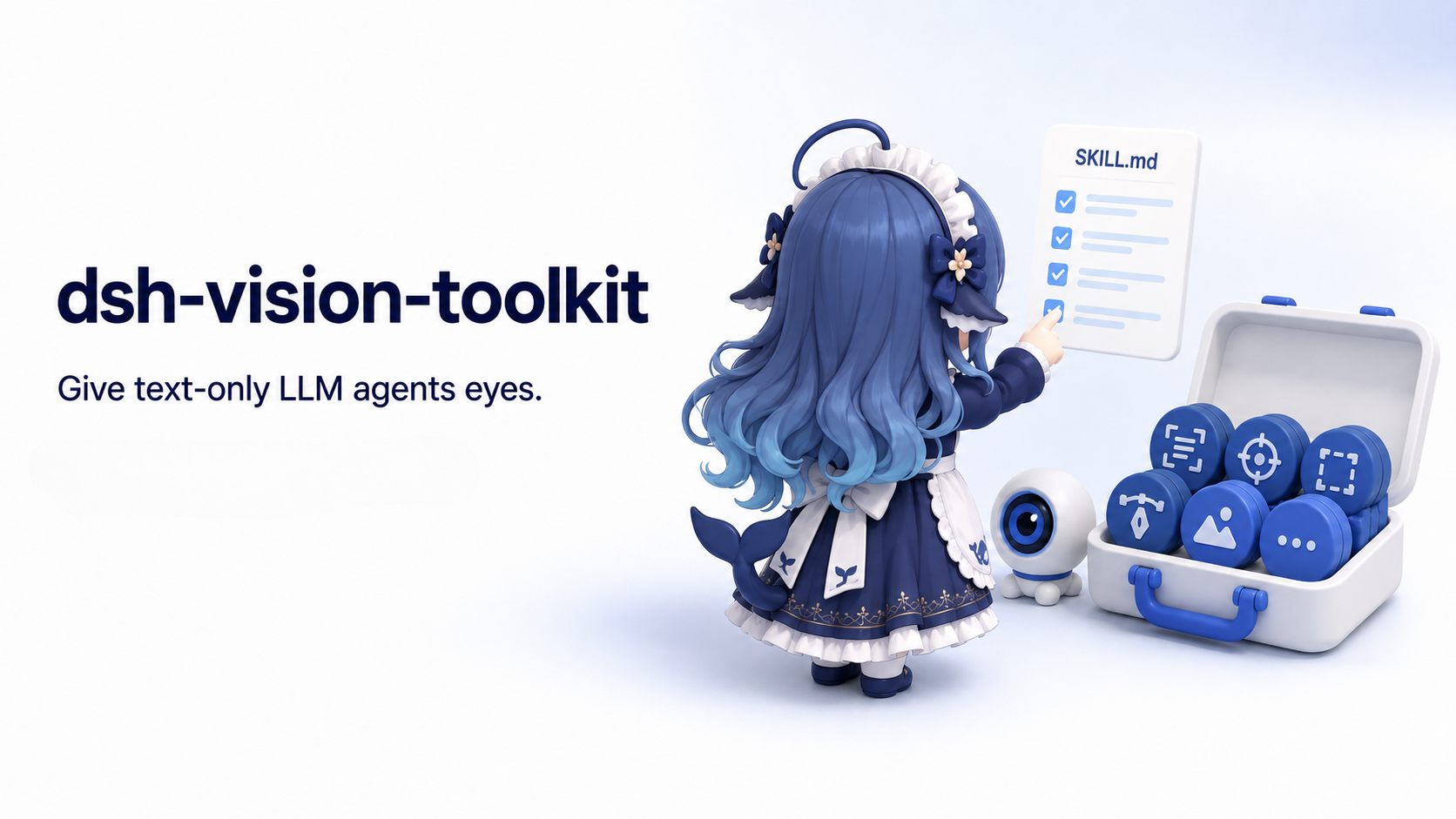
Give text-only models in DeepSeek Harness eyes, enabling image Q&A, long-screenshot OCR, UI restoration, and GUI visual tasks.