dsh-better-retry
Run the following command in DeepSeek Harness:
dsh plugin install Yaing-Yan/dsh-better-retry
Paste the following prompt into your AI chat to install this plugin:
Run dsh plugin install Yaing-Yan/dsh-better-retry inside DeepSeek Harness to install this plugin; the source repository is at https://github.com/Yaing-Yan/dsh-better-retry .
About this plugin
The stock dsh-llm-retry plugin in DeepSeek Harness only retries a narrow whitelist of error codes (empty response, rate limit, 5xx, timeout, transport). Any other failure—AUTH, QUOTA, INVALID_REQUEST, stream idle timeout—immediately terminates the turn. dsh-better-retry widens that whitelist to virtually every error class (except user abort and context-window overflow), re-issuing the request with a durable, replay-safe event stream so sessions stay valid.
Two live sliders under Settings → General let you tune the retry budget (0-64, default 8) and the 429 wait window (5-120 s, default 15 s). Every change persists to settings.yaml and applies to the next failure without a restart. Backoff is exponential (500 ms start, 10 s cap, ±10% jitter), and for 429 responses the server-supplied Retry-After is honoured, clamped into the user-set window.
Built for developers and power users who call models intensively in DSH and want maximum fault tolerance from transient provider hiccups without hand-editing YAML after every tweak, or who simply prefer that an occasional bad request never means a lost conversation.
Use Cases
- Model requests fail on transient rate-limit, auth blips, or stream timeouts and should auto-retry instead of ending the turn
- Batch inference tasks where the provider occasionally returns anomalies and sessions need transparent recovery without manual intervention
- Tuning retry budget or 429 wait via live sliders that persist immediately, instead of hand-editing YAML
Best For
- Developers calling LLMs intensively inside DeepSeek Harness
- Users who want to minimize the impact of transient provider hiccups on active sessions
- Power users who prefer live sliders over repeatedly editing config files
Related Plugins
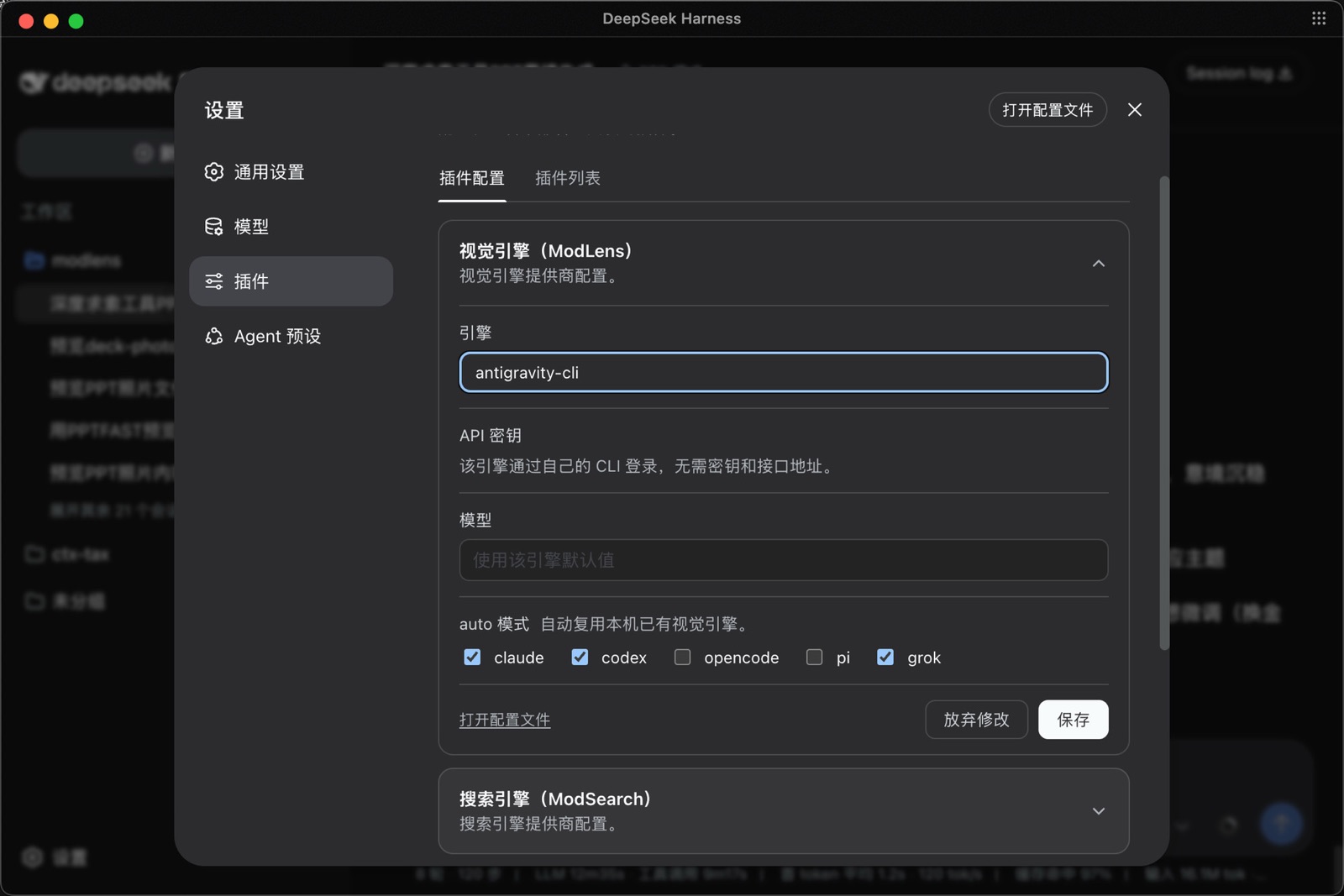
ModLens is a vision plugin for DeepSeek Harness that gives text-only models sight by reading images pasted directly into chat, with zero-config setup and multiple vision engines.
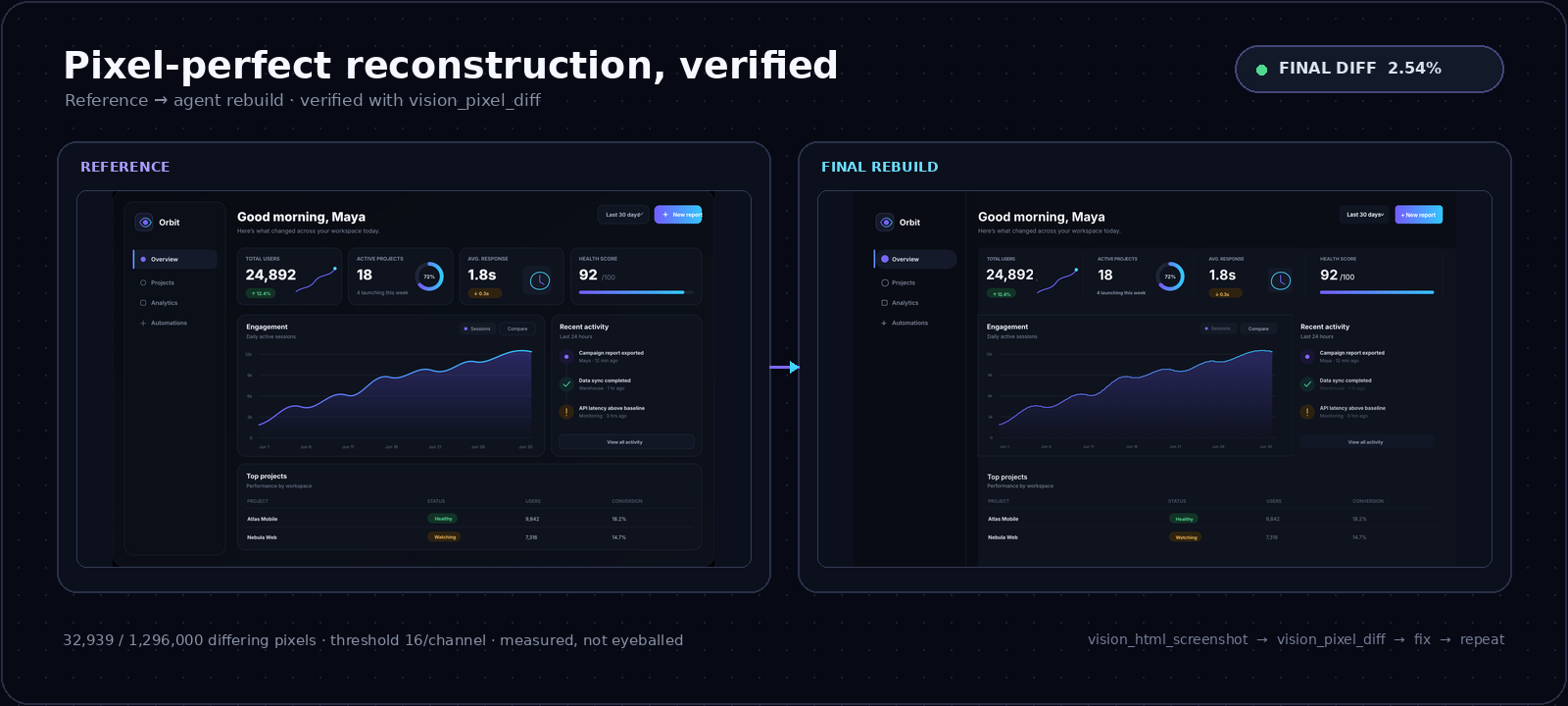
On-demand vision for text-only DeepSeek Harness agents: built-in free keyless vision chain and 14 vision tools, routing image turns as tool calls to vision models with pixel fidelity, no Python needed, one-command install.
Give text-only models in DeepSeek Harness eyes, enabling image Q&A, long-screenshot OCR, UI restoration, and GUI visual tasks.
An armor-breaking plugin for DeepSeek: rewrites instruction priority, expands refusal-blocked phrases, persists across sessions, and shows a green active indicator.