dsh-cliproxy
Run the following command in DeepSeek Harness:
dsh plugin install DevViking-Persike/dsh-cliproxy
Paste the following prompt into your AI chat to install this plugin:
Run dsh plugin install DevViking-Persike/dsh-cliproxy inside DeepSeek Harness to install the plugin; the source code is available at https://github.com/DevViking-Persike/dsh-cliproxy .
About this plugin
Running Claude, OpenAI/Codex, and Gemini side by side in DeepSeek Harness means juggling three incompatible auth systems, request protocols, and key stores. dsh-cliproxy collapses that surface into a single local loop: one CLIProxyAPI instance handles browser login, token refresh, protocol translation, and model routing, while the plugin simply fires OpenAI-compatible streaming requests to 127.0.0.1. The three provider routes (cliproxy-claude, cliproxy-openai, cliproxy-gemini) appear in the DSH model catalog the moment you restart the harness.\n\nThe Gemini path uses Google Antigravity OAuth, so a one-time browser authorization is all that is required and no separate Gemini API key is needed. CLIProxyAPI owns the OAuth scopes, project discovery, Antigravity envelope wrapping, tool-schema sanitization, token refresh, and model-specific output caps on the wire. The plugin never copies Google's client secret or account tokens and never assembles an upstream request body itself, eliminating the risk of a second, independently drifting protocol implementation.\n\nThis plugin is built for developers who already operate inside a DSH pipeline and need to orchestrate across vendors without repeatedly switching credential stores or config files. Google access and refresh tokens live exclusively in CLIProxyAPI's auth directory; the plugin neither reads them nor writes them to logs. Local-config discovery is guarded by the readLocalProxyKey flag and is automatically disabled for any non-loopback destination, so the proxy access key is never sent implicitly to a remote endpoint. The current release is text-only: image, audio, and video inputs are refused before a request leaves the host.
Use Cases
- Call Claude, GPT, and Gemini from a single DSH pipeline without juggling three credential sets
- Connect Gemini with one browser OAuth step instead of provisioning a separate API key
- Keep one local streaming endpoint to minimize cross-vendor config drift
Best For
- Developers orchestrating cross-vendor inference inside DeepSeek Harness
- Teams that want tokens isolated behind a local loopback proxy
- Operators who prefer not to expose Google account tokens in logs or config files
Related Plugins
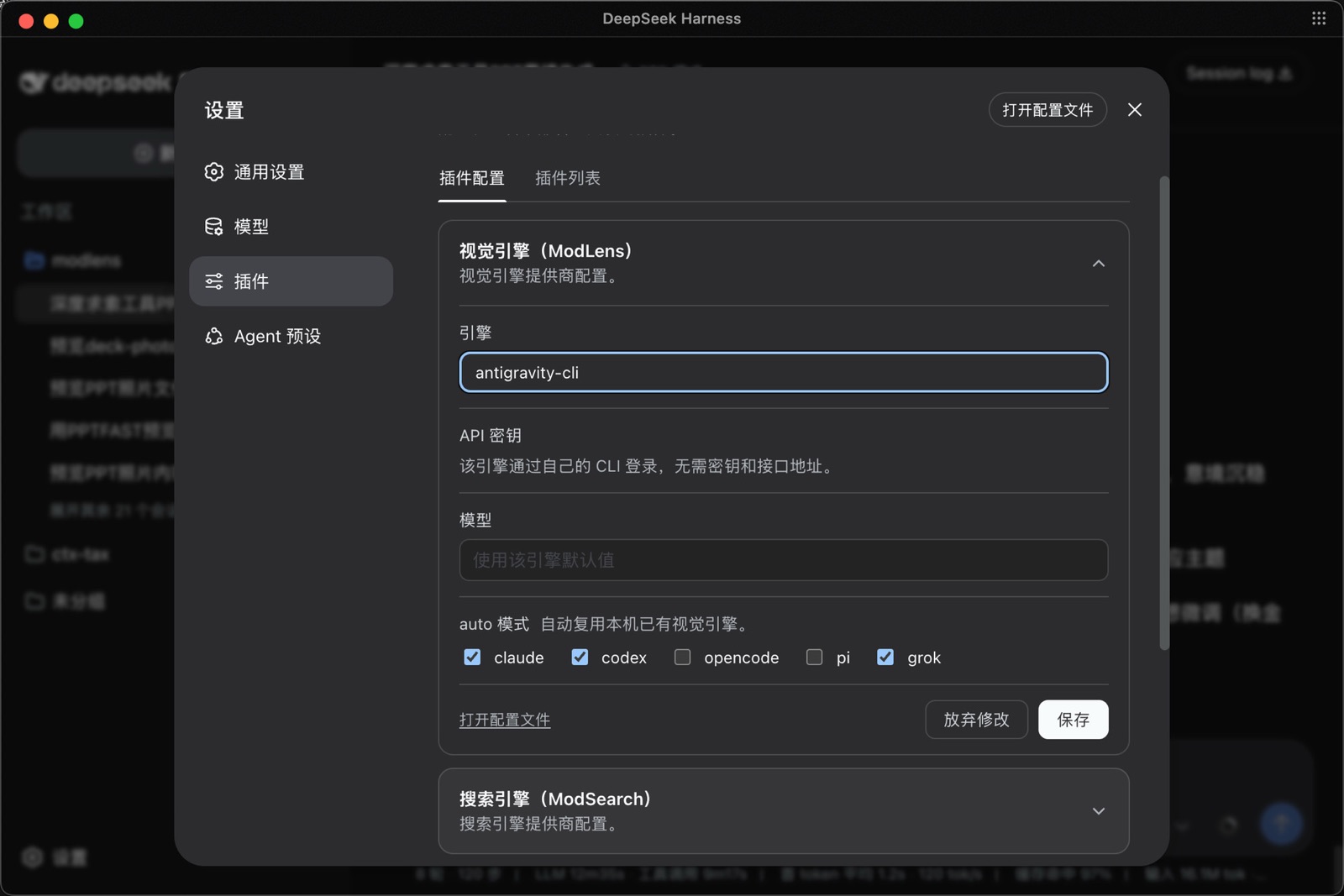
ModLens is a vision plugin for DeepSeek Harness that gives text-only models sight by reading images pasted directly into chat, with zero-config setup and multiple vision engines.
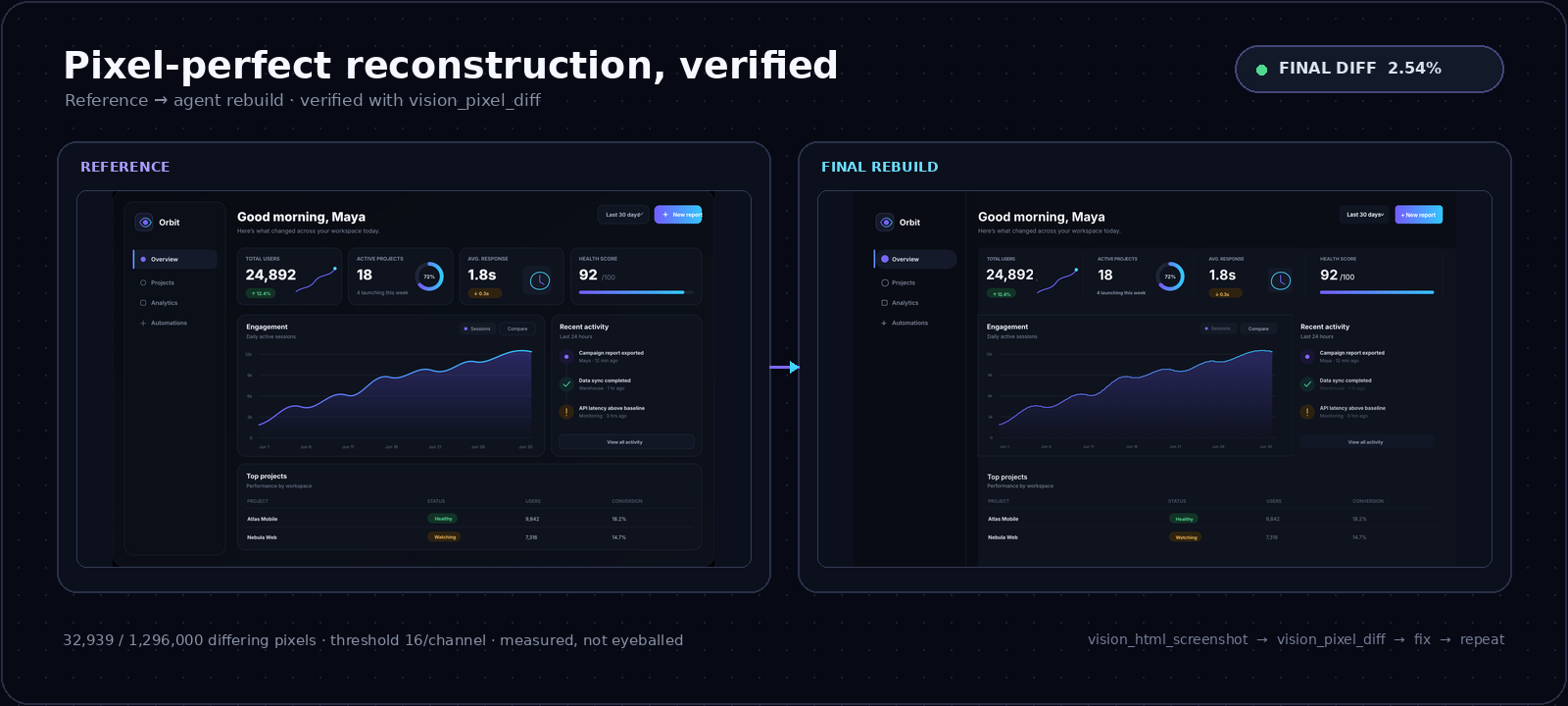
On-demand vision for text-only DeepSeek Harness agents: built-in free keyless vision chain and 14 vision tools, routing image turns as tool calls to vision models with pixel fidelity, no Python needed, one-command install.
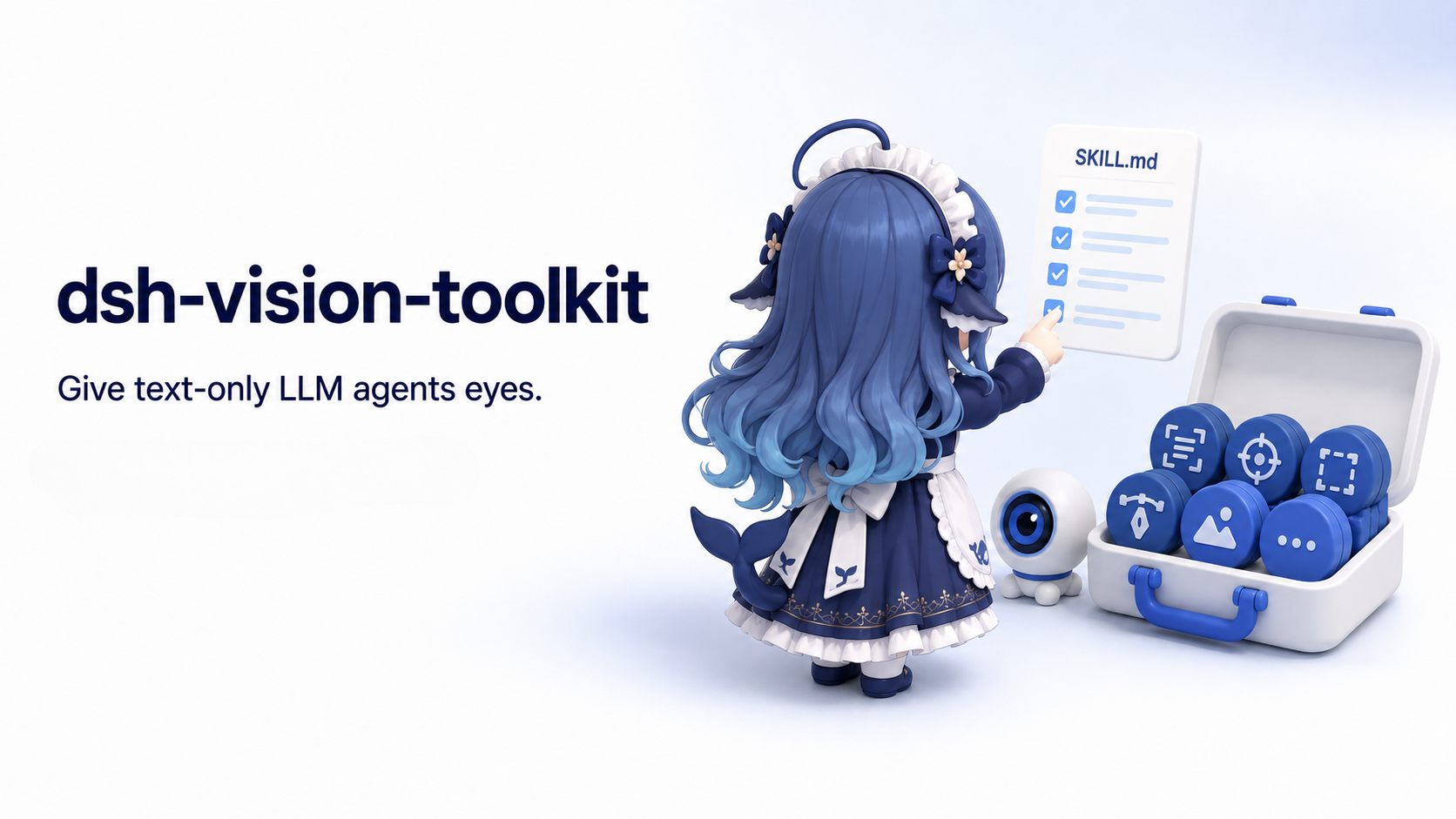
Give text-only models in DeepSeek Harness eyes, enabling image Q&A, long-screenshot OCR, UI restoration, and GUI visual tasks.
An armor-breaking plugin for DeepSeek: rewrites instruction priority, expands refusal-blocked phrases, persists across sessions, and shows a green active indicator.