harness-session-delete
Run the following command in DeepSeek Harness:
dsh plugin install Seetraum/harness-session-delete
Paste the following prompt into your AI chat to install this plugin:
Open Settings → Plugin Market in DeepSeek Harness and search for dsh-session-recycle-bin to install; or manually fetch the plugin from https://github.com/Seetraum/harness-session-delete and run dsh plugin install Seetraum/harness-session-delete, then restart the Web app.
About this plugin
After weeks of heavy use, the DeepSeek Harness sidebar becomes a graveyard of old sessions. harness-session-recycle-bin adds a safe middle ground: hover any row and it drops into a recycle bin instantly, ready for batch restore or true permanent purge of on-disk logs and projection cache. The Settings panel lists each entry with ID and path, supports multi-select with per-session fault tolerance, and blocks deletion of sessions whose agents are still live. Ideal for developers who juggle dozens of sessions daily and want a clutter-free sidebar without the anxiety of irreversible deletes.
Use Cases
- Cleaning up a cluttered sidebar full of old sessions
- Accidentally deleting a session and needing instant restore
- Batch-archiving stale sessions and purging residual disk logs
Best For
- Heavy Harness users juggling dozens of sessions daily
- Developers who need undo-able deletes to avoid costly mistakes
- Team leads standardizing session cleanup workflows
Related Plugins

Traceable, searchable cross-session memory for AI agents that turns conversation knowledge into a typed knowledge graph and recalls relevant subgraphs instead of replaying full history, natively integrated with DeepSeek Harness.
Gives DSH AI cross-session long-term memory, to-do and skill management, plus multi-session orchestration, external AI delegation, and an infinite canvas that grows with you.
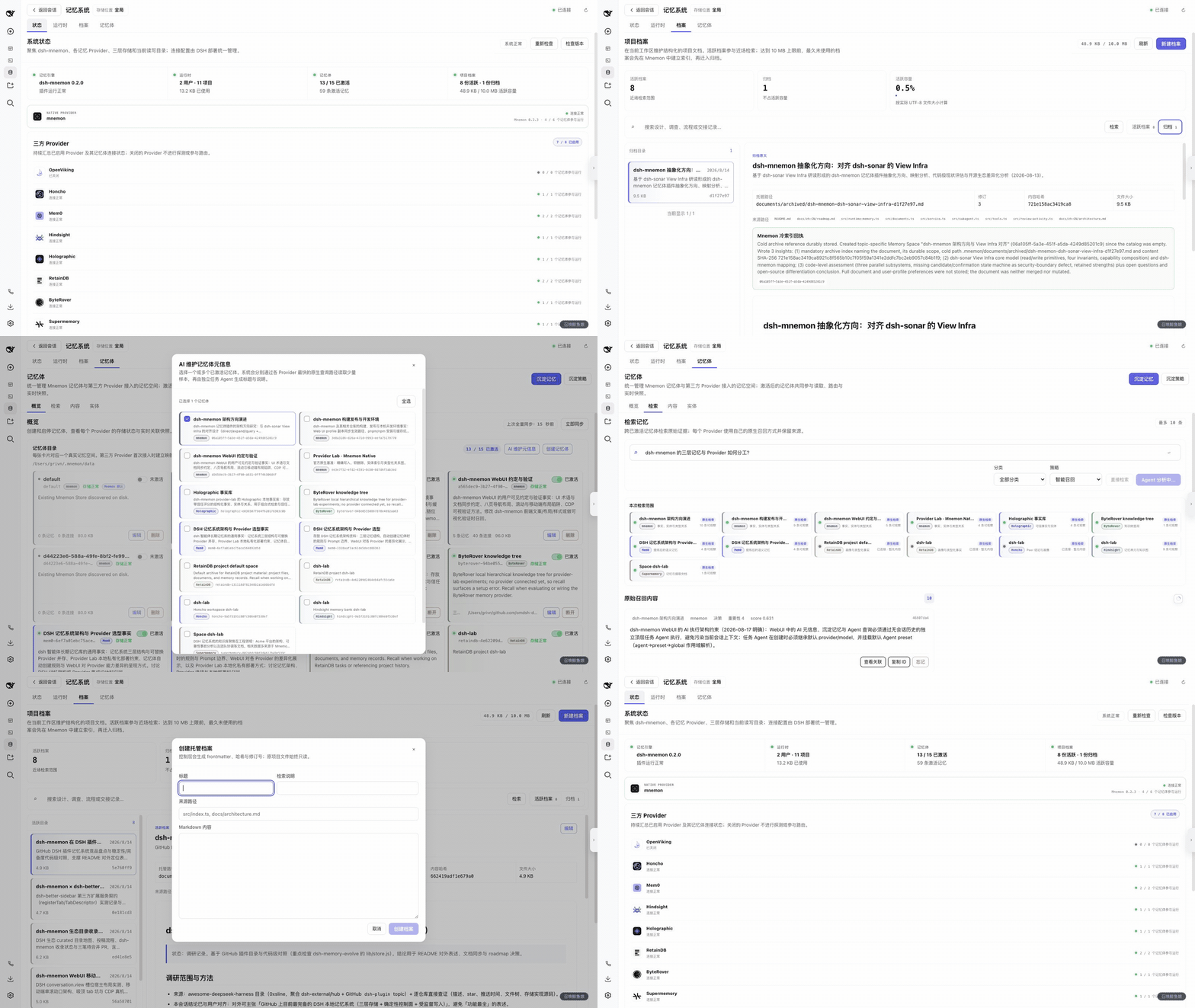
dsh-mnemon is a three-tier, pluggable, Agent-driven memory system for DeepSeek Harness, combining Runtime memory, Project Documents, and replaceable Memory Spaces with nine long-term providers.
An opinionated, zero-infrastructure file-based memory protocol: human-readable markdown files plus a bounded always-loaded index, curation discipline, and no database or embeddings.