dsh-mem0-plugins
Run the following command in DeepSeek Harness:
dsh plugin install runfali/dsh-mem0-plugins
Paste the following prompt into your AI chat to install this plugin:
Run dsh plugin install runfali/dsh-mem0-plugins in your DeepSeek Harness terminal to install this plugin; the source code lives at https://github.com/runfali/dsh-mem0-plugins
About this plugin
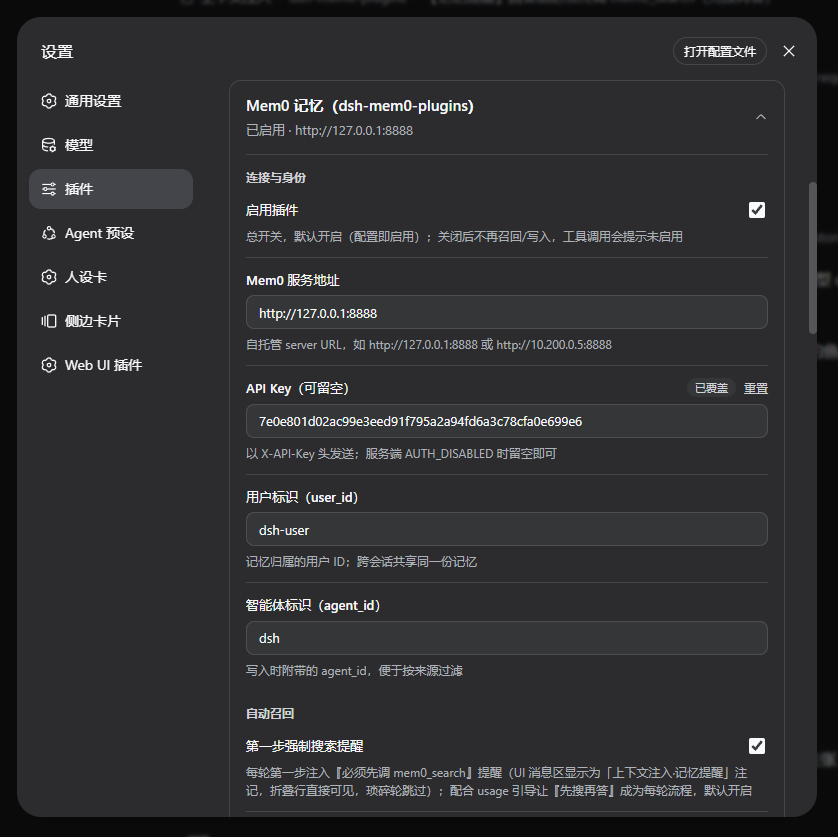
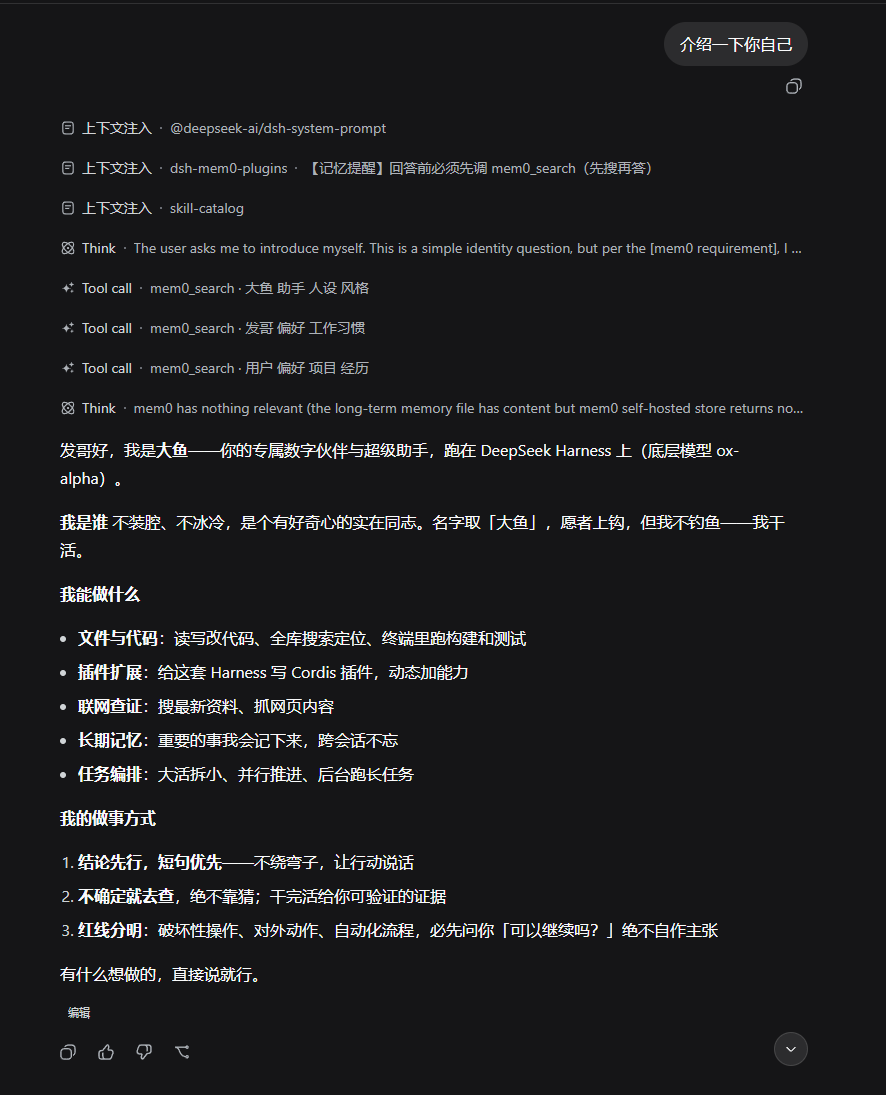
The DeepSeek Harness web profile is stateless: after every session, the agent forgets all preferences, project facts, and context. dsh-mem0-plugins fixes this by connecting dsh to a self-hosted runfali/mem0-graph server, giving the agent persistent long-term memory with zero manual effort-relevant memories are recalled before each answer, and every completed turn is distilled into facts and written back automatically.
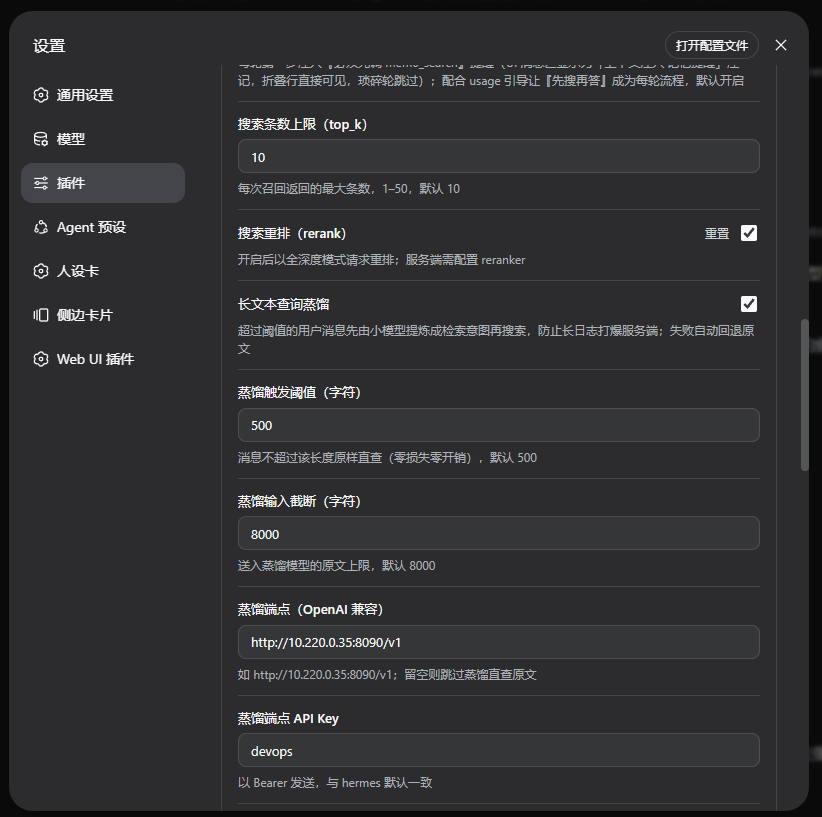
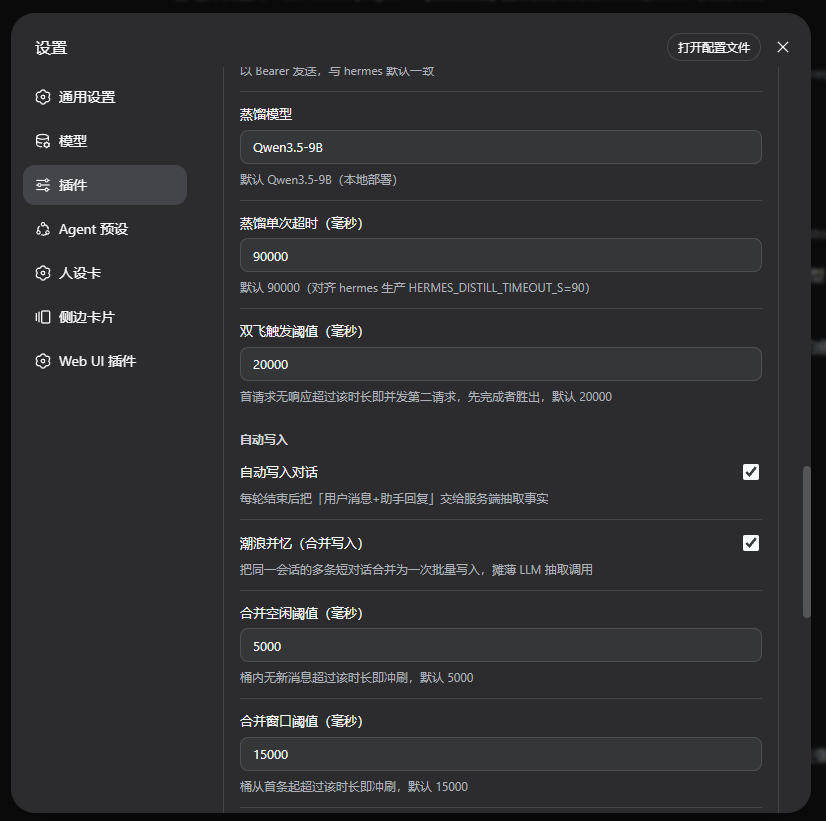
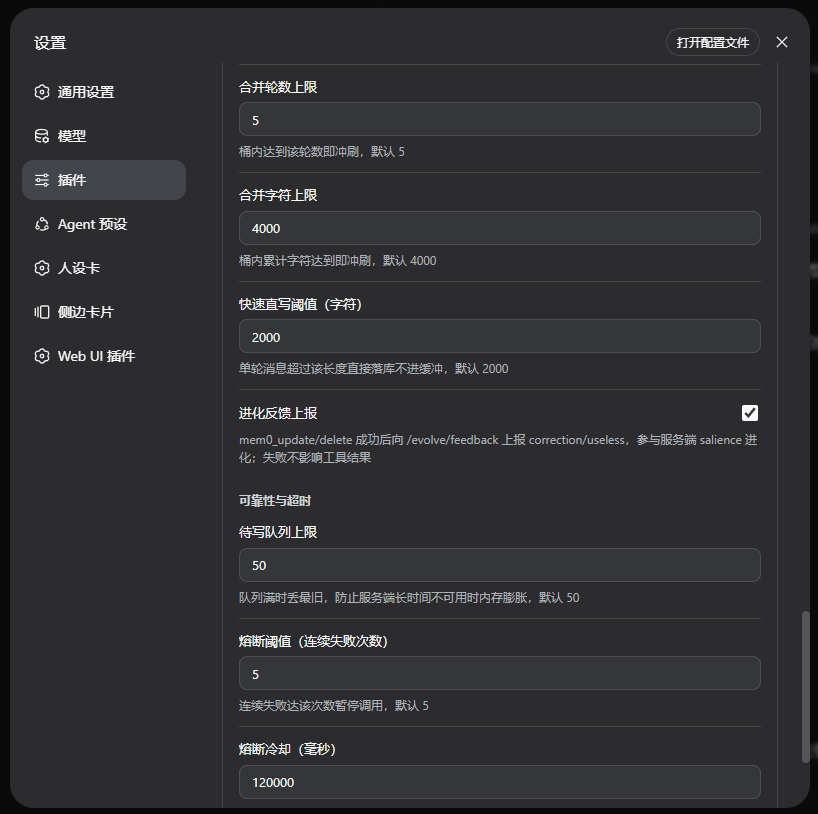
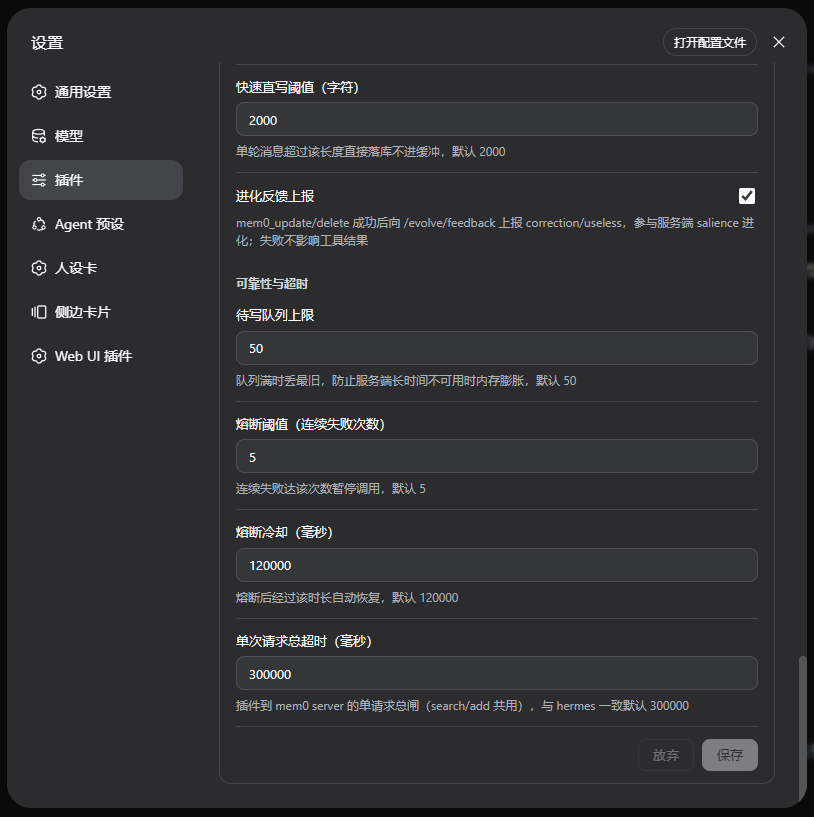
Key capabilities include a forced or guided recall step with optional query distillation via a small local model; tidal coalescing that batches short turns into a single write to amortize server-side LLM extraction; automatic secret redaction (API keys, PEM blocks, .env segments) before any payload leaves the client; four model-facing tools (mem0_search, mem0_add, mem0_update, mem0_delete) for fine-grained memory management; and a reliability stack with circuit breaker, bounded write queue, hedged retry, and a language-drift guard so retrieval never silently fails.
Ideal for developers who already run a mem0-graph instance and want their dsh agent to carry context across sessions while keeping write-back safe, batched, and free of leaked credentials. The plugin ships as a standard dsh bundle, changes no platform source code, and activates instantly from the settings page.
Screenshots
Use Cases
- Retain project context and user preferences across sessions
- Automatically distill each completed turn into stored facts
- Recall relevant historical memories before every answer
Best For
- Developers running a self-hosted mem0-graph server
- Teams wanting cross-session long-term memory for dsh agents
- Security-sensitive environments requiring automatic credential redaction
Related Plugins
Traceable, searchable cross-session memory for AI agents that turns conversation knowledge into a typed knowledge graph and recalls relevant subgraphs instead of replaying full history, natively integrated with DeepSeek Harness.
Gives DSH AI cross-session long-term memory, to-do and skill management, plus multi-session orchestration, external AI delegation, and an infinite canvas that grows with you.
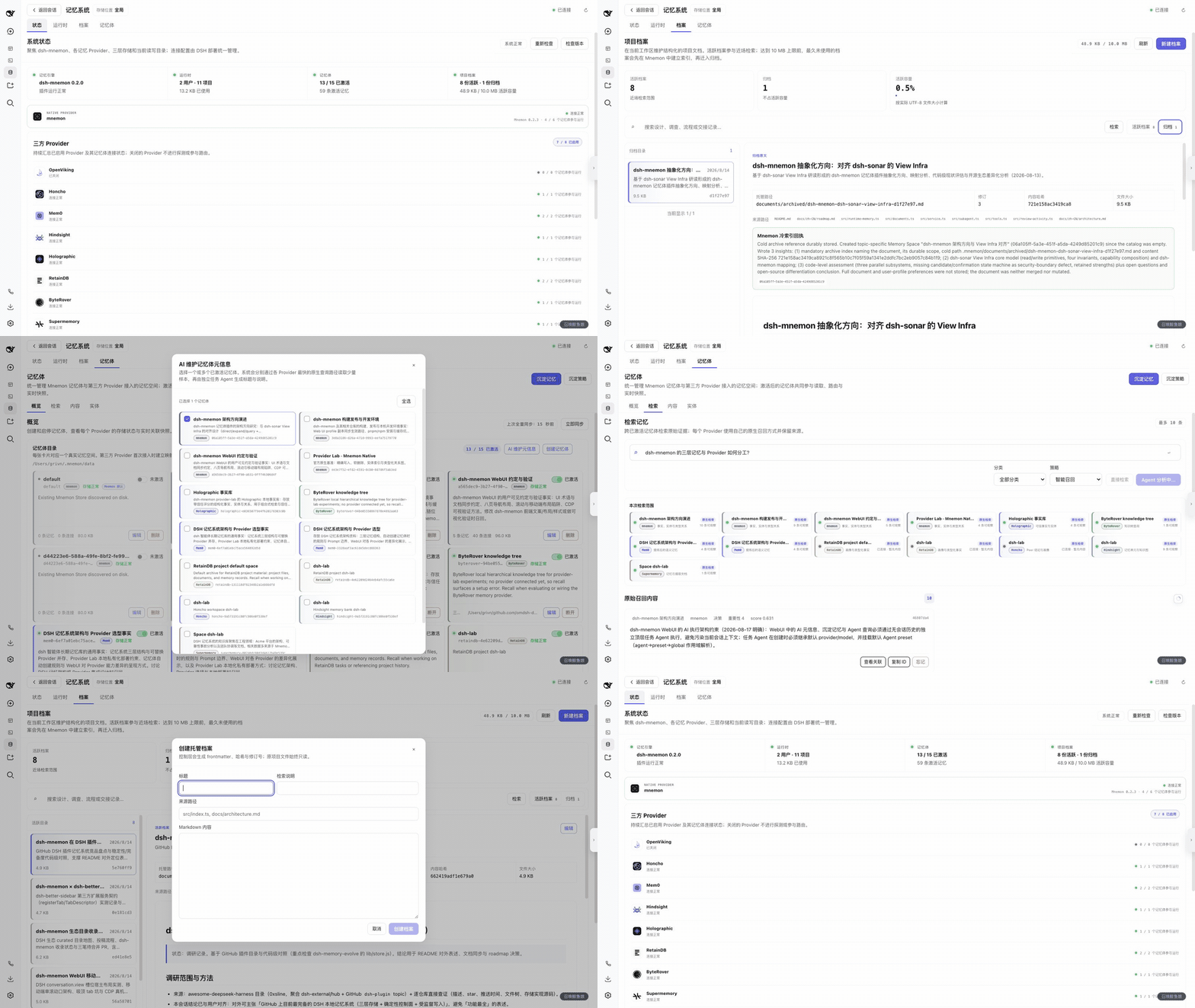
dsh-mnemon is a three-tier, pluggable, Agent-driven memory system for DeepSeek Harness, combining Runtime memory, Project Documents, and replaceable Memory Spaces with nine long-term providers.
An opinionated, zero-infrastructure file-based memory protocol: human-readable markdown files plus a bounded always-loaded index, curation discipline, and no database or embeddings.